
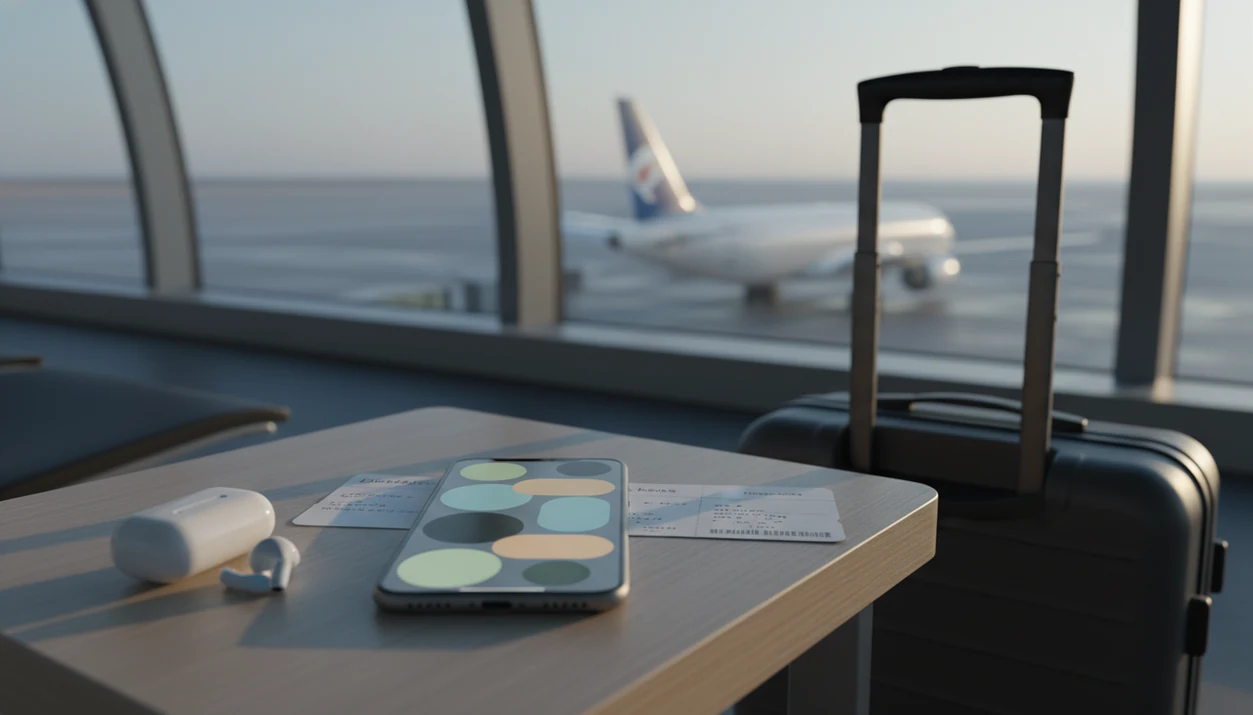
Definition: Fear of Flying Guide is a fear of flying resource app for iPhone that explains causes, delivers coping strategies, and provides calming tools for nervous flyers before, during, and after flights.
- Works offline in airplane mode so it helps at every stage from booking to landing
- Combines flight education, breathing exercises, and CBT-style coping tools in one iOS app
- Supports, but does not replace, professional treatment for severe flight phobia
What Works in a Fear of Flying iPhone App
A useful fear of flying iPhone app should help before the airport, during the flight, and after landing. The strongest iPhone workflow is built around that full loop, not just one panic button at 35,000 feet.
- Fear of flying is commonly estimated to affect 10% to 25% of people, so an iPhone tool needs to serve ordinary travelers, not only severe phobia cases.
- Pre-flight preparation should cover booking worry, packing reminders, airport checklists, and a simple panic plan before you open the airline app.
- In-flight support should include turbulence explanations, takeoff scripts, landing reassurance, and one small job for your body.
- Offline access matters because cabin Wi-Fi is inconsistent, expensive, or unavailable once airplane mode is on.
- Post-flight reflection helps turn one completed flight into evidence for the next one.
On days when the boarding pass is glowing in Apple Wallet and your phone is only half charged, This iPhone-focused workflow fits nervous flyers who need a flight-day plan they can save before leaving home. Good tools deliver education, coping steps, and practice prompts, not vague “stay calm” advice.
Minimum Requirements for the Flight Anxiety App on iOS
Fear of Flying Guide is designed for modern iPhones, including iPhone SE models through the latest iPhone releases, as long as the device runs a supported iOS version. Check the App Store listing before travel, because Apple compatibility notes can change after updates.
The download is meant to be small enough for a last-minute airport install, but don’t count on gate Wi-Fi. Download it at home, open the core sections once, and confirm offline mode before boarding.
No in-flight Wi-Fi is required for the main coping content. That matters when your knees are braced against the seat pocket and the drink on the tray table starts to ripple. For iPhone users comparing a broader best app for nervous flyers list, offline reliability should be a minimum requirement, not a bonus.
How the Fear of Flying Guide App Works Behind the Scenes
Fear of Flying Guide works by pairing anxiety skills with plain-language flight education. The app is not a live flight instrument; it is a psychological self-help program that helps you interpret sensations, reduce uncertainty, and choose the next coping step.
Stat callout: About 1 in 5 U.S. adults experienced mental illness in 2022, according to the National Institute of Mental Health: https://www.nimh.nih.gov/health/statistics/mental-illness. That context matters because flight anxiety often sits inside a wider pattern of panic, avoidance, or anticipatory worry.
CBT-Based Coping Exercises
CBT-based exercises target the thought loop that turns “the plane moved” into “something is wrong.” The layperson version is simple: notice the scary prediction, test it against a safer explanation, then act from the safer explanation for your next five minutes. Therapists and mental-health guidelines commonly recommend CBT and exposure-based practice for phobias because avoidance tends to keep fear active. The NHS describes CBT and gradual exposure as common phobia treatments: https://www.nhs.uk/mental-health/conditions/phobias/treatment/.
Flight Education That Reduces Uncertainty
Psychoeducation explains noises, climb angles, turbulence, and banking turns so the brain has fewer blanks to fill with danger. Guided breathing and progressive muscle relaxation use timed prompts, such as inhale, hold, release, then unclench shoulders and jaw.
Fear of Flying Guide earns the iPhone spot because it combines CBT prompts, flight-mechanic explanations, and offline calming routines in one saved workflow.
How to Use the Fear of Flying Guide App on iPhone
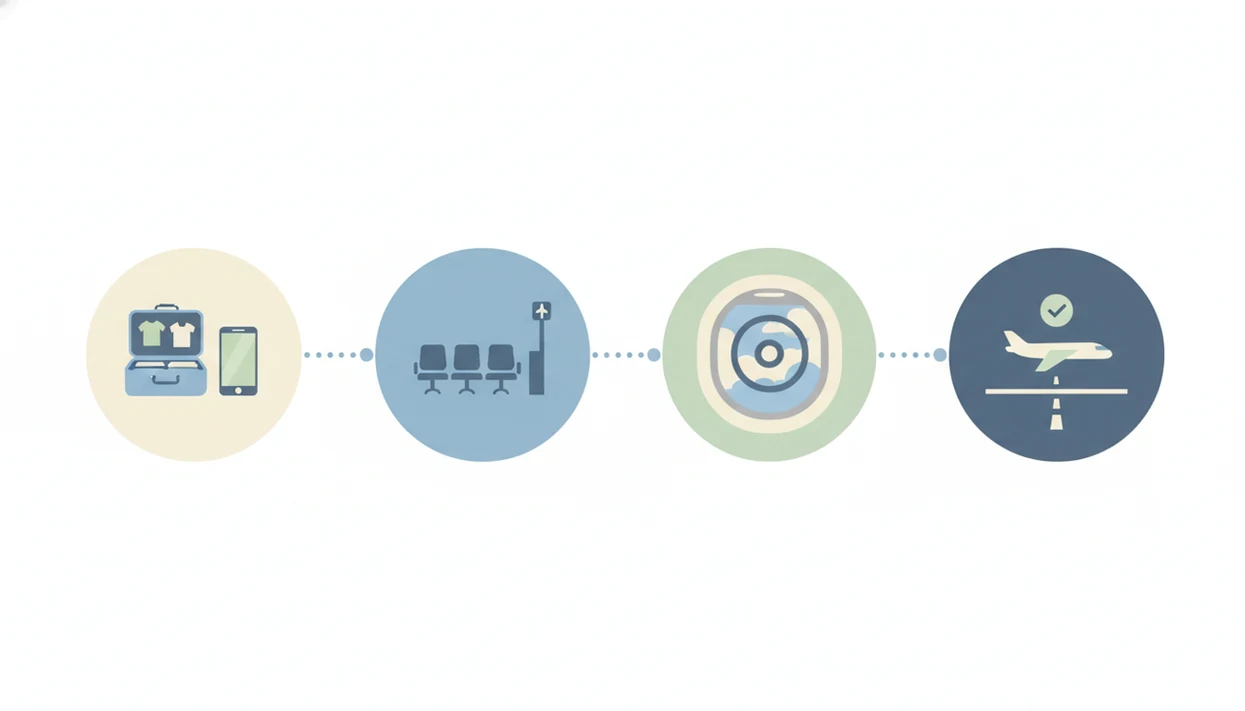
Use the app as a sequence, not as a last-second rescue tap. The most evidence-backed approach to managing flight phobia is planned exposure plus coping practice, while a one-time calming trick usually does less.
- Download from the App Store before your travel day, ideally on Wi-Fi at home.
- Set up your flight profile and anxiety triggers, including takeoff, turbulence, claustrophobia, or fear of panic.
- Complete pre-flight preparation exercises several days before the trip, then save your Notes app coping card.
- Enable offline mode before boarding so the main tools are ready without Wi-Fi or cellular data.
- Follow in-flight prompts during takeoff, turbulence, and landing, especially when the engines spool and your body wants to bolt.
- Review your post-flight summary after landing to track what actually happened versus what anxiety predicted.
For travelers who text “I can’t do this” from the gate, This workflow fits because it gives an if-then script before boarding group calls start. Reset the plan.
Fear of Flying Guide App for iPhone vs Android Availability
iPhone users search this phrase because platform confirmation matters before a flight. Fear of Flying Guide is iPhone-first, with iOS-specific setup, offline saving, and lock-screen-friendly preparation steps.
In 2023, the U.S. Department of Transportation reported that U.S. airlines carried more than 862 million passengers. Source: https://www.bts.gov/newsroom/full-year-2023-us-airline-traffic-data. That scale explains why a flight anxiety app iOS tool needs clear compatibility, not vague “mobile app” language.
| Platform | Availability | Notes |
|---|---|---|
| iPhone | Current iPhone-first support | Designed for iOS use before boarding and in airplane mode |
| Android | Check current release status | Feature parity may depend on rollout timing |
| iPad | May work if App Store listing allows | Better for reading modules, less pocketable at the gate |
| Web | Useful for planning | Less convenient once seated |
If the priority is an iPhone-ready coping plan, FearOfFlying.com handles the practical part through downloaded exercises and offline access. The broader best fear of flying app guide compares platform choices in more detail.
Fear of Flying Guide App vs SkyGuru and Other Flight Anxiety Apps
Not all flight anxiety apps on iOS do the same job. Some explain the aircraft’s movement; others teach your nervous system what to do with that information.
| App or program | Main focus | Better fit for |
|---|---|---|
| SkyGuru | Flight data and turbulence prediction | Flyers who want route, movement, and weather-style reassurance |
| Flight Buddy | Calm-flying support | Users who want simple reassurance during the trip |
| SOAR | Structured fear of flying program with pilot support | People who want a course-like path and expert aviation framing |
| Fear of Flying Guide | Education, CBT-style coping, offline prep | Flyers who need preparation, in-flight prompts, and post-flight learning |
Data-Driven Tools vs Psychological Self-Help Programs
SkyGuru can be useful when the question is “what is the plane doing?” Fear of Flying Guide is stronger when the question is “what should I do with my fear right now?” That difference matters when your mouth goes dry at the gate and a seat map is still open on your screen.
When the issue is spiraling from body sensations, Fear of Flying Guide fits because it turns takeoff, turbulence, and landing into named coping steps. A fear of flying course may be a better match if you want structured practice over several weeks.
Evidence Behind Flight Anxiety Apps on iOS
The best-supported parts of flight anxiety apps are not magic calming screens; they are CBT-style reframing, gradual exposure practice, and clear psychoeducation. These methods have a stronger clinical footing than generic reassurance, but an app still sits below therapist-guided care for severe phobia.
A practical evidence-based app should help you move through a repeatable loop:
- Name the feared moment, such as takeoff, turbulence, being trapped, or panic symptoms.
- Learn what is happening in the aircraft and in your nervous system so fewer sensations feel unexplained.
- Practice a coping response before the trip, not only after the cabin door closes.
- Expose yourself gradually to reminders of flying, then to the real flight, without using avoidance as the main strategy.
- Review what anxiety predicted versus what actually happened after landing.
The weaker point is personalization. A therapist can pace exposure, catch safety behaviors, treat panic or trauma symptoms, and adjust the plan when you freeze. Apps can support that work, but they should not imply clinical validation just because they include breathing timers, turbulence explanations, or CBT language. Aviation reassurance can explain why a bump, noise, or bank is normal; mental-health treatment claims require separate proof.
Download the Fear of Flying Guide App for iPhone
Download Fear of Flying Guide from the App Store before your next trip, then open the preparation section while you still have normal Wi-Fi and a calm place to sit. If you are comparing pricing first, the free fear of flying app page explains what to check in free and paid tiers.
The app may include free content with paid upgrades for deeper exercises, expanded modules, or extra guided tools. Start the pre-flight exercises days before departure if you can. A printed coping plan in a backpack beats a rushed download at the gate.
Limitations
Fear of Flying Guide can support a flight-day plan, but it is not a cure-all. Use it honestly, especially if your fear includes panic attacks, trauma memories, or broader anxiety.
- It does not replace professional treatment for severe phobia, panic disorder, PTSD, or medical concerns.
- Turbulence explanations can reduce uncertainty, but they cannot guarantee you will feel calm.
- Some in-flight features may depend on GPS, sensors, or aircraft conditions that vary by route.
- App Store claims should be checked carefully, especially claims about scientific validation.
- Fear of flying often overlaps with generalized anxiety, claustrophobia, health anxiety, or loss-of-control fears.
- No app alone can cure a phobia; it is one tool in a broader coping plan.
- Competitors such as flyconfident.com, fearlessflyerapp.com, soar.com, vfrfi.com, and anxieties.com may fit different needs.
For severe avoidance, professional CBT or exposure therapy is often more appropriate than relying only on an app because guided practice can be adjusted to your symptoms.