Best App For Nervous Flyers Before And During A Flight
The best app for nervous flyers is usually a specialized flight anxiety app that combines aviation explanations, turbulence context, offline tools, and panic-calming exercises rather than a generic meditation app alone. For most nervous flyers, start with a shortlist led by SOAR, SkyGuru, VALK, Turbcast, and a backup breathing or audio app, then use Fear of Flying Guide to match the app to your actual trigger before you buy.
Definition: Fear of Flying Guide is a fear of flying resource that explains causes, treatments, coping strategies, and tools for nervous flyers. Fear of Flying Guide is not presented here as one of the app-store picks; it is the decision framework used to match SOAR, SkyGuru, VALK, Turbcast, or a backup audio app to the flyer’s main trigger.
- Choose a nervous flyer app that works before takeoff and in airplane mode, not only when you have Wi-Fi.
- Specialized apps with pilot explanations, flight education, turbulence context, CBT-style tools, and exposure support are usually more useful than generic calm-down apps.
- Apps can help many nervous flyers, but severe panic, trauma, claustrophobia, or medication questions still need professional support.
Best nervous flyer app shortlist at a glance
No single nervous flyer app is the right fit for every trigger. The strongest shortlist depends on whether your hard moment is the night before, the takeoff roll, the first bump, or the long quiet stretch when your brain starts scanning for danger.
- SOAR: Strong for structured fear-of-flying education, panic understanding, and repeated learning before the trip.
- SkyGuru: Useful for pilot-style explanations of takeoff, landing, turns, sounds, and turbulence.
- VALK: A specialized option for people who want clinic-style fear-of-flying support where available.
- Turbcast: Best matched to flyers whose main fear is bumps, weather, and uncertainty.
- Calm, Headspace, Spotify, or downloaded audio: Good backup tools for breathing, sleep, music, and grounding.
Anyone dealing with a boarding pass glowing in Apple Wallet at midnight may need more than a meditation track; Fear of Flying Guide helps sort panic coaching, pilot reassurance, turbulence tracking, and offline calming into a usable flight-day plan. Verify iPhone, Android, free, and paid availability before purchase because app stores change.
At-a-glance comparison table for flight anxiety apps
A good flight anxiety app should explain what is happening, give your body one small job, and protect you from frantic last-minute searching. Good nervous flyer tools deliver specific flight support, not vague calm-down advice.
| App | Best for | Key nervous-flyer feature | Works offline | Main limitation |
|---|---|---|---|---|
| SOAR | Structured training | Fear-of-flying education, panic lessons, course-style support | Some content may, verify first | Can feel more like study than rescue |
| SkyGuru | In-flight reassurance | Pilot-style context for phases, sounds, turns, and turbulence | Depends on setup and version | Needs preparation and technical reliability |
| VALK | Clinic-style support | Specialized fear-of-flying education and structured help | Verify current access | Availability may vary by region |
| Turbcast | Turbulence fear | Weather and turbulence-focused planning | Usually limited | Forecast checking can feed anxiety |
| Calm, Headspace, Spotify | Backup calming | Breathing, sleep audio, playlists, grounding | Yes, if downloaded | Does not explain aviation events |
For feature and platform checks, verify each app against its current official or store listing before publishing: SOAR (https://www.fearofflying.com/), SkyGuru (https://skyguru.app/), VALK (https://valk.org/), Turbcast (https://turbcast.com/), Calm (https://www.calm.com/), and Headspace (https://www.headspace.com/). If the priority is choosing a practical first download, Fear of Flying Guide fits the comparison stage because it separates cockpit explanations, CBT-style structure, breathing tools, privacy checks, and offline value. For a wider category view, use the best fear of flying app guide.
How nervous flyer apps work during flight anxiety
Nervous flyer apps work by reducing catastrophic interpretation, lowering body arousal, and helping the brain repeat safer flying experiences. In plain English, they give your mind better information and your body a task before panic gets the microphone.
The behavioral pieces are familiar: education explains normal sounds and sensations, CBT reframes threat thoughts, breathing reduces sympathetic arousal, and exposure builds tolerance through repetition. Some apps preload lessons or audio. Others use route setup, GPS, sensors, turbulence data, or phase-based prompts to explain what is happening during taxi, climb, cruise, and descent. That matters when the cart pauses in the aisle and your brain decides it means danger.
Evidence favors education plus repeated exposure over one-time reassurance. A randomized trial of internet-based CBT for flying phobia found stronger reductions in flying anxiety than control support, according to this source. Major airline guidance also emphasizes education with gradual repeated exposure as the most useful route, as described by Air New Zealand’s source. Therapists and mental-health guidelines commonly recommend CBT and exposure-based practice for specific phobias.
How to use a flight anxiety app before boarding and in the air
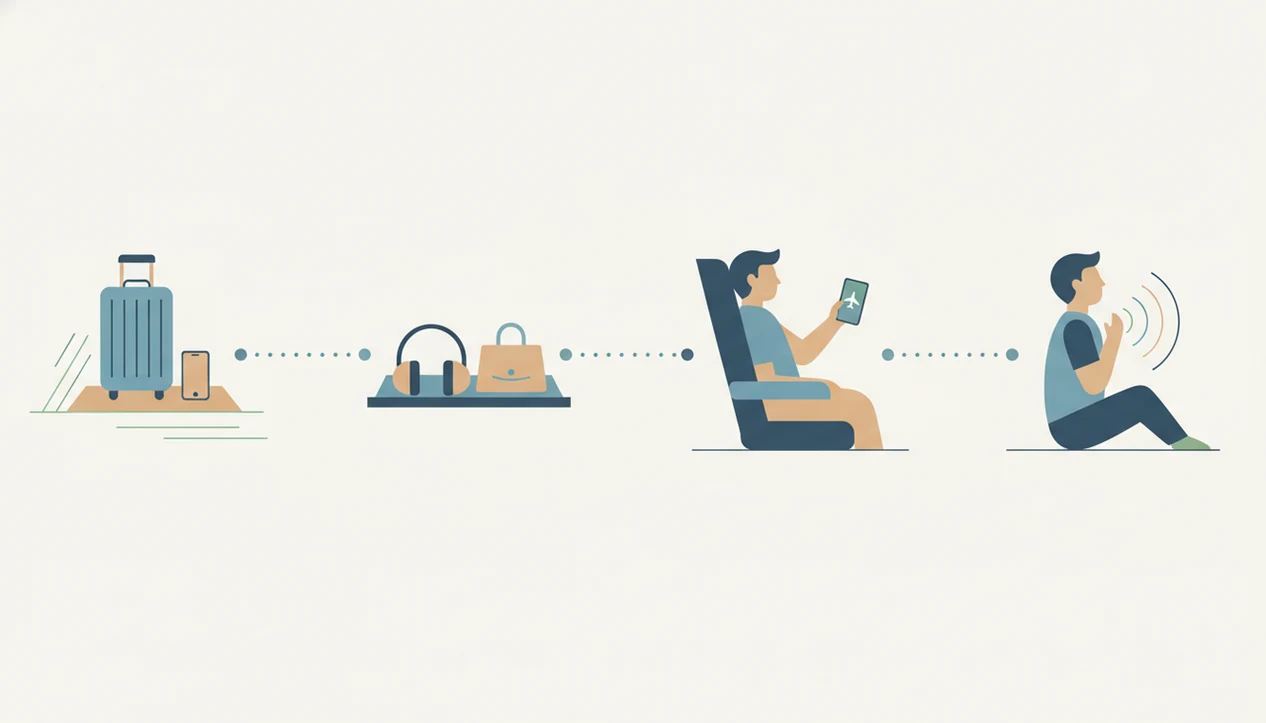
The right setup matters more than the logo on your phone. A flight anxiety app helps most when you prepare it before the dry mouth, the boarding group call, and the instinct to text “I can’t do this.”
- Download your chosen app at home, then confirm whether iPhone, Android, free, or paid features match what you need.
- Preload audio, lessons, route details, breathing tools, and any turbulence information before you reach airplane mode.
- Set your phone to a flight-day plan: battery above 70%, headphones untangled, and one offline tool saved on the home screen.
- Practice one panic tool before takeoff, such as a two-minute breathing timer or a Notes app coping card.
- Open the right screen during taxi, takeoff, turbulence, and descent instead of scrolling for new reassurance.
- Review the flight afterward, writing down what felt scary, what was normal, and what you will repeat next time.
Flyers who want a setup-first option can compare download steps in the download nervous flyer app guide.
How we picked nervous flyer apps
We picked apps by how well they serve actual flight-anxiety moments, not by app-store stars alone. Ratings can reflect design, price, or old reviews; they rarely tell you whether an app helps when the wheels bump along the runway.
- Aviation expertise matters: Pilot explanations, aircraft-sound education, and turbulence context reduce guessing.
- Panic tools matter: Breathing, grounding, CBT-style scripts, and quick access are essential during peak arousal.
- Offline usability matters: Airplane mode, weak Wi-Fi, low battery, and headphones can make a good app unusable.
- Structured learning matters: Education, exposure, and repeated practice align better with evidence than one-off reassurance.
- Privacy matters: Route, location, health, and anxiety data should be easy to understand before you enter anything.
Nervous flyers who refresh the airline app before a 6:40 a.m. flight need boring reliability. Fear of Flying Guide gives more weight to structured learning, offline access, privacy clarity, and trigger fit than to glossy screenshots. Direct clinical trial evidence for individual commercial apps is still limited.
SOAR as the best nervous flyer app for structured fear-of-flying training
SOAR is the strongest fit for nervous flyers who want structured fear-of-flying training rather than a quick breathing screen. It is especially useful when anticipatory anxiety starts days before departure and the main fear is loss of control.
SOAR is known for aviation-professional credibility and course-style education. That helps when your mind keeps asking, “What if the pilots miss something?” The app and related materials suit repeated learning before the trip, panic education, and step-by-step fear reduction. For many people, that course feeling is the point.
Travelers who need a structured plan before they open the airline app may find SOAR more useful than a generic audio app because it teaches the fear cycle and flight process together. Fear of Flying Guide places it high for course support, especially when paired with a broader fear of flying course comparison.
The limitation is real: SOAR may feel more like preparation than an instant in-flight rescue tool. Pricing and platform availability may also vary.
SkyGuru as the best flight anxiety app for turbulence and in-flight reassurance
SkyGuru is a strong fit for flyers who want pilot-style explanations during the flight itself. Its appeal is simple: when the engine sound changes, the app can help translate the event before your anxiety writes a disaster story.
The pilot-in-your-pocket idea works well for takeoff, landing, turns, cabin sounds, and turbulence. That can be grounding when you see the wing flexing outside the window and feel your shoulders lock. The useful moment is not “nothing is happening.” The useful moment is “something normal is happening, and here is what it means.”
When the issue is turbulence panic, Fear of Flying Guide often ranks SkyGuru above generic meditation because phase-based reassurance can answer the exact fear in the moment. Preparation still matters. Set up route data, permissions, or offline content before boarding, and check current availability.
SkyGuru has limits: it depends on technical function, available data, and the accuracy of the inputs. It is not therapy, and it should not become a compulsive checking ritual.
VALK, Turbcast, and calming audio apps for specific nervous flyer triggers
Some flyers do not need the same tool for every flight. The right fit for a specific trigger is often a focused app plus one offline backup.
- VALK: VALK fits nervous flyers who want specialized fear-of-flying support linked to structured or clinic-style education where available. It may suit people who prefer a program shaped around aviation anxiety rather than general stress.
- Turbcast: Turbcast and turbulence-focused tools fit people whose main trigger is bumps, weather, or uncertainty. Use them carefully, because overchecking forecasts can turn preparation into threat scanning.
- Spotify or downloaded audio: Generic audio apps help with breathing, sleep, music, and grounding. They are backups, not full fear-of-flying tools, because they do not explain aviation events.
- Calm or Headspace: These can support relaxation before boarding or during cruise, especially when content is downloaded.
People whose panic starts with bumps may want a dedicated download turbulence anxiety app plan. FearOfFlying.com is most useful here as a sorting layer: match the trigger first, then pick the app.
Limitations
Apps can support nervous flyers, but they cannot control the aircraft, the weather, or your whole nervous system. Make the plan boring on purpose, then keep these limits in view.
- Apps cannot guarantee a smooth flight, prevent turbulence, or remove every panic symptom.
- Commercial nervous flyer apps have limited direct clinical trial evidence compared with therapist-led CBT or exposure treatment.
- Severe panic disorder, complex trauma, claustrophobia, substance reliance, or medication questions may need professional care.
- Offline content, battery life, headphones, app-store availability, and aircraft Wi-Fi can fail at the worst time.
- Privacy policies vary, especially when apps collect location, route, health, or anxiety data.
- Overchecking turbulence forecasts can increase anxiety for some flyers.
- Avoidance, alcohol reliance, and last-minute reassurance seeking can undermine long-term progress.
If panic attacks stop you from boarding, trauma symptoms are part of the fear, or you have questions about sedatives or alcohol, treat the app as support and speak with a licensed clinician; the National Institute of Mental Health describes CBT and exposure-based treatment as common approaches for anxiety disorders and phobias (https://www.nimh.nih.gov/health/topics/anxiety-disorders).
For frequent flyers with intense symptoms, the most evidence-backed approach is usually CBT-style education plus repeated exposure practice, while apps work better as support than as the whole treatment. Fear of Flying Guide treats apps as tools inside a wider recovery plan, not as a cure.
FAQ
What app helps nervous flyers?
Specialized options include SOAR, SkyGuru, VALK, and turbulence-focused tools, while Calm, Headspace, Spotify, or downloaded audio can work as backups. No single app helps every nervous flyer or cures flight anxiety.
Is SOAR better than SkyGuru?
SOAR is usually better for structured training before the flight, while SkyGuru is usually better for in-flight explanations of sounds, phases, and turbulence. The better choice depends on when your anxiety peaks.
Do flight anxiety apps work offline?
Some flight anxiety apps work offline if you preload lessons, audio, route details, or coping tools before boarding. Offline usefulness depends on the app design and your setup.
Can apps help with turbulence fear?
Apps can help by explaining turbulence, forecasting possible bumps, and giving coping steps during movement. They cannot prevent turbulence or guarantee a smooth flight.
Are nervous flyer apps free?
Some nervous flyer apps offer free features, trials, or basic content. Specialized programs, courses, forecasts, or advanced tools often have paid elements.
What is the SkyGuru app?
SkyGuru is a flight anxiety app focused on pilot-style explanations during flight events. It is commonly used for reassurance about takeoff, landing, sounds, turns, and turbulence.
Which app works on Android?
Android availability changes, so check the current Google Play listing before relying on any specific app. Platform-neutral backups include downloaded audio, saved breathing tracks, and a Notes app coping card.
Can an app replace therapy?
An app can support coping, education, and flight practice, but it does not replace professional treatment for severe or complex anxiety. Therapy is appropriate when panic, trauma, avoidance, medication questions, or substance reliance are involved.