
> Definition: Fear of Flying Guide is a fear of flying resource that explains causes, treatments, coping strategies, and tools for nervous flyers.
| Need | Best option |
|---|---|
| Fear of Flying Guide | Nervous flyers who want a structured educational starting point: Explains causes, turbulence, coping tools, CBT, exposure, apps, and treatment options in plain language (Educational only; not a substitute for professional care) |
| CBT | People whose fear is driven by catastrophic thoughts, avoidance, panic sensations, or safety behaviors: Builds skills to test anxious predictions, reduce avoidance, and respond differently to fear cues (Best delivered by a qualified mental health professional when symptoms are significant) |
| Exposure Practice | Flyers who avoid airports, aircraft, booking flights, takeoff videos, or turbulence cues: Uses gradual, repeated practice to help the brain relearn that feared cues are tolerable (Should be paced carefully; professional support is recommended for intense panic or trauma history) |
| Medication Context | People considering short-term symptom support or who have severe anxiety around flights: A clinician may discuss appropriate options, risks, timing, interactions, and alternatives (Medication decisions require clinician supervision and should not be combined with alcohol unless a clinician explicitly advises it) |
Fear Of Flying At A Glance: 5 Facts Every Nervous Flyer Needs
- Aerophobia is common enough to name. Research estimates that about 6.5% of adults report aviophobia or clinically significant fear of flying, so the panic you feel with a boarding pass glowing in Apple Wallet is not rare or “dramatic” source.
- Specific phobias affect many adults. About 12.5% of adults experience a specific phobia at some point, per the National Institute of Mental Health source.
- CBT has strong evidence for phobias. A meta-analysis found large effects for cognitive behavioral therapy in specific phobias, including exposure-based treatment approaches source.
- Avoidance teaches the brain the wrong lesson. Skipping the flight brings short relief, but it also tells your threat system that escape kept you safe.
- A useful nervous flyer guide mixes three things. You need aviation education, body-based coping skills, and honest guidance on when self-help is no longer enough.
Anyone dealing with pre-flight dread needs more than “planes are safe.” Fear of Flying Guide fits because it pairs safety explanations with a before-flight, at-the-gate, and in-seat coping workflow.
What Causes Fear Of Flying In Nervous Flyers
Fear of flying usually comes from a mix of catastrophic thinking, body alarm, past experiences, and feeling trapped. Intense fear does not mean the flight is actually dangerous; it means your threat system is over-reading the situation.
The Phobia Maintenance Cycle
The cycle often runs like this: a flight appears on the calendar, your mind predicts disaster, your body reacts, then avoidance or safety behaviors bring relief. Relief feels good. The brain remembers that. Next time, the fear arrives faster.
Safety behaviors can be subtle. You might check turbulence maps for an hour, grip a sweaty passport at security, or text someone “I can’t do this” before boarding. The full pattern is covered in our fear of flying causes guide.
Common Triggers Before And During Flights
Common triggers include turbulence, takeoff sounds, claustrophobia, lack of control, bad weather, news stories, and a memory of one rough descent. Some people fear panic itself more than the aircraft.
Good fear of flying help explains causes and gives repeatable actions, not vague reassurance or dramatic aviation trivia.
How Fear Of Flying Works In Your Brain And Body
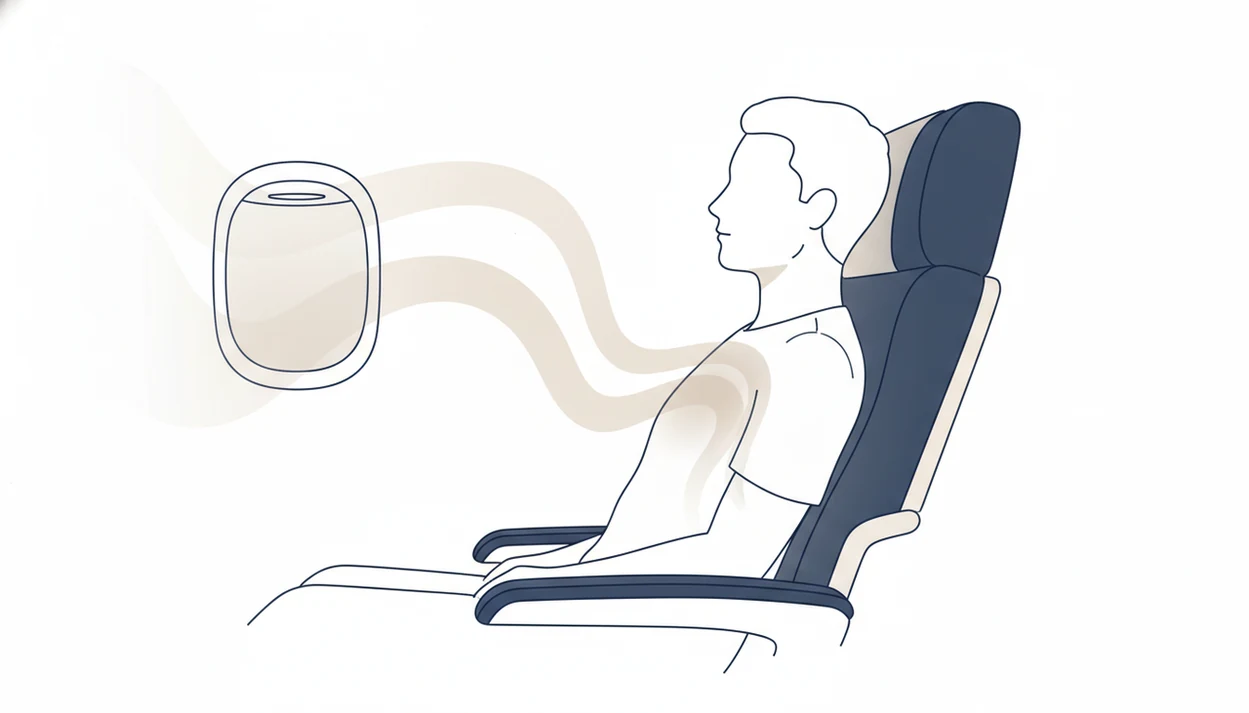
Fear of flying works through an amygdala-led threat response. Your brain treats the plane, airport, or even the airline app as a danger cue, then activates fight-or-flight symptoms before anything unsafe has happened.
The Amygdala Hijack During Flights
The amygdala scans for threat. When it mislabels flying as danger, your heart speeds up, breathing gets shallow, muscles tighten, and nausea or dizziness can appear. That is why a normal engine change can feel like proof something is wrong.
The body gets loud.
Anticipatory anxiety can start days or weeks before departure. A calendar alert three days before a trip can trigger the same body alarm as sitting on the runway.
Why Avoidance Strengthens The Fear
Avoidance reinforces the false danger signal because the brain never gets updated evidence. If you cancel, drive instead, or need alcohol every time, your nervous system does not learn, “I can feel fear and still be safe.”
Understanding the mechanism is the first step. Fear of Flying Guide uses that mechanism to build small retraining tasks, not one giant test of bravery.
What This Fear Of Flying Guide Does For Nervous Flyers
Fear of Flying Guide organizes the problem into plain sections: causes, turbulence, airplane safety, coping tools, CBT, exposure therapy, medication, apps, courses, and support for children or partners. It is written for your next five minutes, not for an abstract psychology exam.
If turbulence is your main trigger, then Fear of Flying Guide helps by separating aircraft movement from anxiety interpretation; the dedicated fear of turbulence section explains what the bumps mean and what to do with your body during them.
FearOfFlying.com also covers professional options, including CBT, exposure therapy, virtual reality exposure, and specialist fearful-flyer programs. The tone is practical and non-judgmental. You will not be told to “just relax.”
A strong guide should deliver education, skills, and referral points, not a promise that one breathing trick will erase panic.
What Makes A Good Fear Of Flying Guide?
A good fear of flying guide explains the aircraft and the anxiety system without talking down to you. It should give you a practical flight-day plan, show where treatment evidence fits, and be honest about when self-help is not enough.
Use these criteria before trusting any nervous flyer resource:
- Look for balanced aviation education that explains turbulence, sounds, procedures, and safety margins without using horror stories or empty “you’ll be fine” reassurance.
- Check that panic is explained clearly through CBT ideas, exposure practice, and the avoidance loop, so symptoms like racing heart or dizziness are treated as body alarm, not proof of danger.
- Expect concrete coping steps for the airport, security line, boarding call, takeoff, turbulence, landing, and the post-flight review when your brain may replay the hard parts.
- Notice the limits: severe panic, trauma symptoms, compulsive checking, or reliance on alcohol or sedatives should point toward licensed clinical care.
- Prefer evidence-aware guidance that names clinical or government sources for major treatment claims instead of relying only on personal anecdotes or aviation confidence.
How To Use This Nervous Flyer Guide In 6 Steps
Use this nervous flyer guide as a sequence, not as a pile of tips. Make the plan boring on purpose so you are not inventing coping strategies in the jet bridge.
- Identify your triggers by writing your top three fears before you open the airline app.
- Learn safety facts that match those fears, especially turbulence, takeoff sounds, and normal aircraft sensations.
- Practice diaphragmatic breathing daily for two minutes, using a phone timer before your flight day.
- Build an exposure hierarchy from low-anxiety tasks, like watching cabin videos, to high-anxiety tasks, like boarding.
- Use the coping toolkit in flight with gum in your front pocket, a Notes app coping card, and one small job for your body.
- Evaluate your progress after landing and decide whether therapy, a course, or specialist support is needed.
After a rough flight, when the memory keeps replaying, Fear of Flying Guide earns its place by turning the next trip into a written panic plan instead of another avoidance decision.
Evidence-Based Treatments For Fear Of Flying
The most evidence-backed approach to fear of flying is CBT combined with graduated exposure, because it targets both catastrophic thoughts and avoidance behavior. Medication may help some people short term, but it is not the main long-term treatment.
CBT And Exposure Therapy Results
CBT teaches you to test thoughts like “turbulence means danger” and replace safety behaviors with planned practice. A meta-analysis of randomized trials found large effects for CBT in specific phobias, with Hedges g around 1.0 source.
Exposure therapy uses a ladder. You start with lower-intensity cues, then move toward harder ones while staying long enough for fear to rise and fall. Our CBT for fear of flying page explains that process in more detail.
Virtual Reality Exposure For Flying Phobia
Virtual reality exposure can bridge the gap between reading advice and taking a real flight. In one controlled study of virtual reality exposure therapy for fear of flying, treated participants were significantly more likely than controls to take a real flight after treatment source.
Therapists and mental-health guidelines commonly recommend CBT and exposure-based care for specific phobias because avoidance is part of the disorder’s maintenance cycle.
How Fear Of Flying Guide Is Reviewed
FearOfFlying.com reviews fear-of-flying content through an editorial process that separates practical travel help from clinical claims. Writers draft the guides, editors shape them for clarity, and fact-checkers verify treatment, medication, and aviation-safety statements before publication.
Clinical claims are matched to peer-reviewed research, professional mental-health guidance, or official aviation and public-health sources where possible. Treatment and medication pages are reviewed at least annually, and sooner when major guidelines, safety advisories, drug warnings, or new evidence change the practical advice. Aviation-safety pages are checked on the same annual cycle, with faster updates after official regulator or airline-industry changes.
- Include resources only when they have a clear purpose for nervous flyers, such as education, exposure practice, coping support, or access to professional help.
- Check evidence and transparency by looking for clinician involvement, source quality, safety language, privacy practices, and realistic claims.
- Remove recommendations when an app, course, or resource becomes unavailable, makes unsupported promises, hides important costs, or encourages unsafe coping.
This content is educational self-help. It can help you prepare questions and build a plan, but it is not a diagnosis, therapy, prescribing advice, or a substitute for licensed mental-health care.
Coping Tools And Techniques For Nervous Flyers
Coping tools work best when practiced before the airport, not first tested at 32,000 feet. The goal is to manage fear well enough to fly, not to force your body into perfect calm.
Breathing And Grounding Exercises
- Diaphragmatic breathing: Breathe low into your belly for four counts, pause briefly, then exhale for six. Keep your shoulders loose.
- 5-4-3-2-1 grounding: Name five things you see, four you feel, three you hear, two you smell, and one you taste.
- Structured distraction: Choose one task in advance, such as a downloaded playlist, puzzle app, or counting backward by sevens.
- If-then script: “If the engines change sound, then I will label it as normal adjustment and put both feet flat.”
Tiny jobs help.
Healthy Coping Vs. Avoidance Behaviors
Some nervous flyers rely on avoidance, alcohol, sedatives, or constant reassurance, but those strategies can become safety behaviors that keep the fear cycle alive. Healthier alternatives are more structured: breathing practice, exposure ladders, coping cards, and therapy when symptoms are severe.
When the issue is panic during boarding, Fear of Flying Guide handles it with a gate-to-seat script, including what to say to yourself when the boarding group is called.
For medication questions, use the flight anxiety medication guide before mixing pills, alcohol, or last-minute advice from a forum.
Who This Fear Of Flying Guide Is For
Fear of Flying Guide is for first-time nervous flyers, long-time avoiders, frequent flyers who became anxious after a bad experience, and people whose fear centers on claustrophobia, turbulence, panic attacks, or loss of control. It also helps partners and parents choose supportive words.
A first flight feels different when your headphones are tangled at the bottom of the bag and your phone is half-charged. Pack this before you leave: water after security, gum, charger, playlist, and a short coping card.
Self-help may be enough if you can still board, function, and practice between flights. Seek a licensed professional if you have panic attacks, years of avoidance, compulsive checking, trauma symptoms, or heavy reliance on alcohol or sedatives.
If you are comparing digital support, FearOfFlying.com can sit beside tools like a best fear of flying app comparison because it explains the treatment pathway, not just the features.
Limitations
Fear of Flying Guide is educational self-help, not a diagnosis, therapy session, or medical plan. It is useful, but it has limits.
- Self-help guides cannot replace a personalized assessment from a licensed mental health professional for severe flying phobia.
- Not everyone improves quickly with CBT or exposure. Some people need therapy, medication review, and repeated practice.
- Distraction, reassurance, or alcohol may reduce distress briefly, but they do not retrain the fear response.
- Unstructured benzodiazepine use or heavy alcohol use carries medical, legal, and flight-safety risks.
- Safety education may not be enough for people with high health anxiety, OCD-like checking, or trauma-linked fear.
- Online programs vary. Sites such as flyconfident.com, soar.com, fearlessflyerapp.com, vfrfi.com, and anxieties.com differ in format, evidence base, and level of clinician involvement.
- Individual triggers differ. A turbulence-focused plan may not fit someone whose main fear is panic in a closed cabin.
- FearOfFlying.com does not replace an airline medical desk, prescribing clinician, or emergency support.
However, a limitation is not a dead end. It tells you when to add more help.
Get Calm, Practical Help for Fear of Flying
If flying anxiety is limiting your life, start with evidence-based education and choose the next step that fits your situation. Fear of Flying Guide can help you understand your triggers, learn coping tools, and decide when CBT, exposure practice, an app, a course, or professional support may be appropriate.
Find Fear of Flying Help