Download a Turbulence Anxiety App for Bumpy Flights
If you are looking for a turbulence app download for flight anxiety, choose a tool that explains turbulence, helps you prepare for your route, and gives you seatbelt-safe calming tools in the air. Fear of Flying Guide focuses on practical, evidence-informed support for nervous flyers rather than generic travel tips.
Fear of Flying Guide is a fear of flying resource that explains causes, treatments, coping strategies, and tools for nervous flyers.
- A turbulence anxiety app can help you understand forecasted bumps, use grounding tools, and avoid panic spirals during rough air.
- Turbulence forecasts are useful for preparation, but they cannot predict every bump or make a flight smoother.
- For severe flying phobia, app support works best alongside CBT, graded exposure, or professional fear-of-flying help.
How a turbulence anxiety app download helps nervous flyers
A turbulence anxiety app download helps by explaining bumps, preparing you for possible rough patches, and giving you in-flight coping prompts. It does not control the aircraft, the weather, the pilots, or the seatbelt sign.
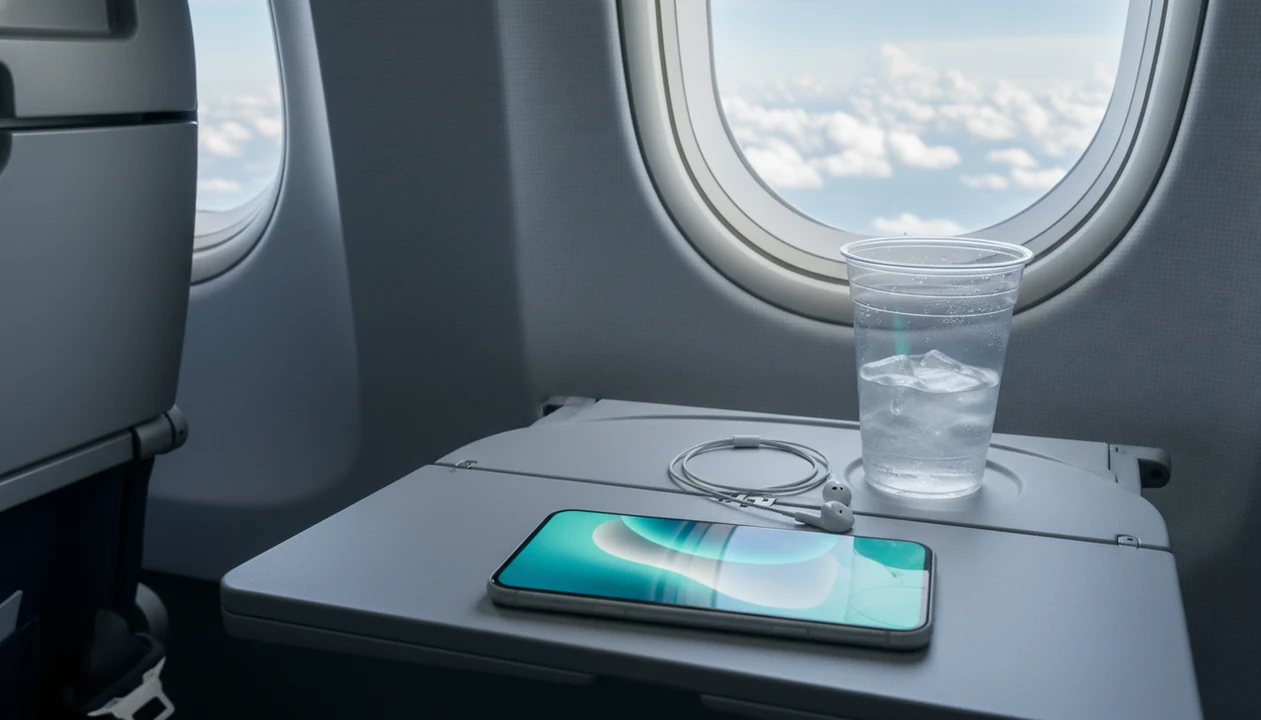
Turbulence fear usually grows from four things: uncertainty, body alarm, catastrophic thoughts, and overinterpreting movement. Ice cubes clicking in a cup can feel like evidence, even when it is only cabin motion. Many passengers feel some fear of flying; one large passenger survey found about 40% reported at least some fear source.
That matters. You are not strange.
Anyone dealing with route-specific dread can use Fear of Flying Guide as a practical starting point because it pairs turbulence explanations with a flight-day plan. Try it free, or use it alongside a wider plan such as our best app for nervous flyers guide.
How turbulence anxiety apps work behind the scenes
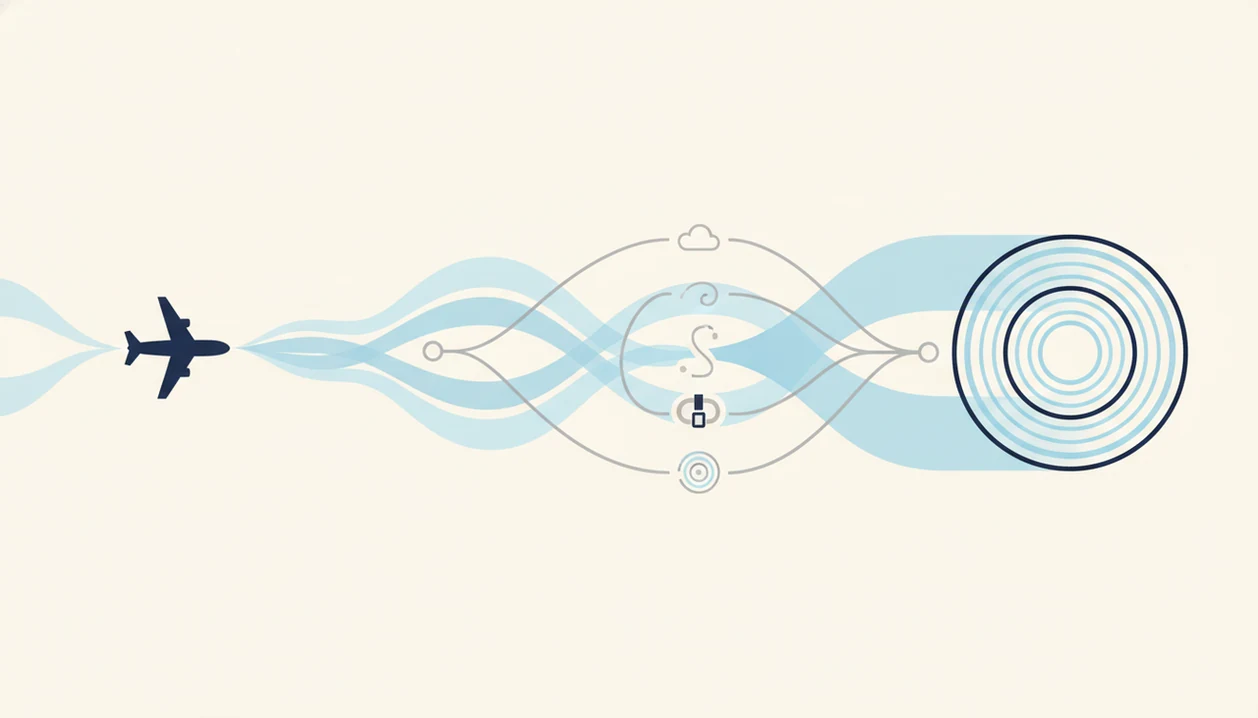
A turbulence anxiety app works through two linked systems: turbulence expectation and anxiety regulation. One part estimates likely air movement; the other helps your nervous system interpret that movement without spiraling.
Forecasting features may use aviation weather models, pilot reports, route information, altitude, and timing where available. The useful ones translate complex data into plain categories like smooth, light, moderate, or rougher patches. That is easier to understand at the gate than a wall of weather charts on a half-charged phone.
The anxiety side is different. It uses psychoeducation, CBT-style reframing, breathing, grounding, and preloaded coaching for moments when Wi-Fi drops. FearOfFlying.com leans into that second layer because nervous flyers need meaning, not just a map of possible bumps.
Turbulence forecasts are probabilistic, not promises, and they never replace crew instructions.
7 steps to use a fear of turbulence app before and during flight
Use a fear of turbulence app as a timed flight-day plan, not a slot machine for reassurance. Make the plan boring on purpose.
- Download the app before you open the airline app, then add your route, date, and flight time.
- Save offline content, including breathing prompts, grounding scripts, and turbulence explanations.
- Charge your phone, pack headphones, and put gum in the front pocket before leaving home.
- Review the forecast once with a five-minute timer, then stop checking.
- Write an if-then script in the Notes app: “If bumps start, I loosen my jaw, keep my belt fastened, and label this as air movement.”
- Use seatbelt-safe breathing and grounding during cruise, while listening to crew instructions first.
- Record one post-flight fact, such as “I felt scared and stayed seated.”
On days the boarding pass is already in Apple Wallet but your chest keeps tightening, Fear of Flying Guide fits because it turns the flight into small timed jobs.
When to download turbulence anxiety app support for a flight
“Should I download turbulence anxiety app support before my flight?” Yes, if uncertainty about bumps is the main trigger and you want a plan before boarding.
A turbulence app download is most useful when you are checking a specific route, flying soon, dreading cruise, or returning after a bad turbulence experience. It can also help with takeoff sensations, descent changes, and seatbelt sign anxiety. The captain explaining rough air ahead may still make your stomach drop; the goal is to know what to do next.
When the issue is uncertainty, Fear of Flying Guide earns its place because it gives you explanations and coping prompts rather than endless forecast refreshing. If panic attacks, avoidance, or life-limiting phobia are part of the picture, add structured help through a fear of flying course, CBT, or exposure therapy.
5 turbulence app download features to look for
A helpful turbulence app download should reduce uncertainty without training you to check constantly. Look for features that explain, prepare, and coach.
- Route-based turbulence expectation: The app should show likely smooth, light, moderate, or rougher sections for your route when data is available.
- Plain-English bump explanations: It should explain why air moves without turning every bump into a threat.
- Offline coping tools: Breathing, grounding, and scripts should be available when cabin Wi-Fi fails.
- Seatbelt-safe exercises: Good tools keep you seated, belted, and focused on one small job for your body.
- Evidence-informed education: A fear of turbulence app should teach anxiety patterns, not just display weather.
Turbulence forecast apps and fear-of-flying coaching apps solve different problems. If cost matters first, compare free fear of flying app options before paying for live data or premium coaching.
Fear of turbulence app versus turbulence forecast apps
A fear of turbulence app is for anxious interpretation; a turbulence forecast app is for likely air movement. Some nervous flyers need both, but they are not the same job.
| App category | Examples | Best for | Cannot do | Choose it if |
|---|---|---|---|---|
| Fear-of-turbulence apps | SOAR, Valk, PassengerGuard | Coaching, scripts, education, panic planning | Guarantee calm or treat severe phobia alone | You need help me calm down during turbulence support |
| Turbulence forecast apps | Flying Calmly, Turbulence Forecast, Turbli | Route-based bump expectations | Predict every bump or smooth the flight | You want preparation, not therapy |
| Airline or flight tracking tools | Airline apps, flight trackers | Gates, delays, aircraft status | Explain fear or body alarm | Logistics are your main worry |
| Therapy or exposure programs | Clinical CBT, exposure programs | Long-term phobia recovery | Provide instant route forecasts | Avoidance is limiting your life |
The most evidence-backed approach for entrenched flying phobia is CBT with graded exposure source, while app support fits people who need preparation and in-flight coaching.
What turbulence anxiety support looks like in Fear of Flying Guide
Fear of Flying Guide is built around causes, treatments, coping strategies, and tools for nervous flyers. For turbulence anxiety, that means clear bump explanations, calming prompts, flight-specific preparation, and post-flight learning.
The practical request is usually simple: help me understand bumps, help me calm down during turbulence, and help me stay in my seat safely. Not cure me in one flight. Not promise smooth air.
After a late-night search for turbulence safety before a 6:40 a.m. flight, FearOfFlying.com helps by giving you a calmer script before the airport email spiral starts. You can download it, try free support where available, or start with the turbulence tools inside a broader download fear of flying app plan.
Evidence behind turbulence fear, flight safety, and CBT support
Five facts matter when you are deciding whether a fear of turbulence app is enough.
- A large passenger survey found that about 40% reported some degree of fear of flying source.
- NIMH estimates that anxiety disorders affect 19.1% of U.S. adults in a given year, so clinically significant anxiety is common source.
- FAA turbulence safety data show serious turbulence injuries are tracked but uncommon; the practical safety advice is to keep your seatbelt fastened when seated source.
- ICAO reported a scheduled commercial airline fatal accident rate of roughly 0.18 accidents per million departures worldwide in 2020 source.
- A CBT meta-analysis found large effects for anxiety disorders, including specific phobias source.
Therapists and mental-health guidelines commonly recommend CBT and exposure-based work for specific phobias. Apps can reduce uncertainty and support coping, but CBT or graded exposure is usually the stronger long-term route for entrenched phobia.
When to seek professional help for fear of turbulence
Seek professional help when fear of turbulence is no longer just uncomfortable, but is changing your life. Red flags include avoiding flights, having panic attacks in the airport or cabin, cancelling necessary travel, or spending days in dread before a trip.
A turbulence anxiety app can support coping, planning, and calmer thinking, but it does not diagnose a phobia or provide clinical treatment. If symptoms are severe, repeated, or life-limiting, a licensed clinician can help you sort out whether this is a specific phobia, panic pattern, trauma response, or another anxiety problem.
- Notice whether fear is causing avoidance, major distress, or missed work, family, health, or emergency travel.
- Track what happens before, during, and after flights, including panic symptoms and reassurance-checking.
- Ask a licensed mental-health professional about CBT, graded exposure, or a structured fear-of-flying plan.
- Use apps as support between sessions, not as a replacement for diagnosis or treatment.
- Seek urgent help if anxiety comes with thoughts of self-harm, unsafe behavior, or feeling unable to stay safe.
Limitations
Fear of Flying Guide can support a nervous flyer, but app-based reassurance has real limits.
- Turbulence forecasts cannot predict every bump, especially sudden clear-air turbulence.
- No app can make the aircraft smoother, safer, faster, or change crew decisions.
- Over-checking forecasts can become reassurance-seeking and worsen anticipatory anxiety.
- Some apps rely on simplified third-party feeds, so data quality can vary.
- In-flight access may be limited by Wi-Fi, battery, offline downloads, app store availability, or airline rules.
- Fear-of-flying apps may not have randomized controlled trial evidence for every feature claim.
- Severe, life-limiting fear may require CBT, exposure therapy, medical advice, or a structured clinical program.
- Competitor tools such as flyconfident.com, fearlessflyerapp.com, soar.com, vfrfi.com, and anxieties.com may fit different needs, especially if you want live instruction or therapy-led support.
Pack the backup plan.
FAQ
Is turbulence dangerous when I am seated with my seatbelt fastened?
Turbulence is uncomfortable, but it is usually not dangerous when you are seated with your seatbelt fastened. The main injury risk comes from people or loose objects moving around the cabin, which is why crew instructions and the seatbelt sign matter.
Can an app predict turbulence on my exact flight?
An app can estimate likely turbulence using weather, route, altitude, timing, and available reports, but it cannot predict every bump on your exact flight. Treat the forecast as preparation, not a guarantee.
What is the best turbulence app for fear of flying?
The best turbulence app for fear of flying depends on whether you need forecasts, anxiety coaching, or both. Choose a forecast-first tool for route expectations, and choose Fear of Flying Guide or another coaching resource when you need explanations, scripts, and coping tools.
Are turbulence anxiety apps free to download?
Some turbulence anxiety apps are free to download, while others use free trials, subscriptions, or paid forecast features. Check the iPhone or Android app store listing before your flight so you are not setting up payment at the gate.
Do turbulence apps work offline on iPhone or Android?
Some coping exercises, saved scripts, audio files, and education pages may work offline on iPhone or Android. Live turbulence forecasts usually need connectivity or must be reviewed before boarding, so download offline flight anxiety app content in advance.
Can a turbulence anxiety app stop a panic attack in flight?
A turbulence anxiety app can help interrupt panic with breathing, grounding, and reframing prompts. It may not be enough for severe flying phobia, repeated panic attacks, or avoidance that affects work, family, or health decisions.
Should I check turbulence forecasts before I fly?
You can check turbulence forecasts briefly before flying if they help you prepare. Set a timer, review once, write your coping plan, and stop checking so the forecast does not become compulsive reassurance-seeking.