
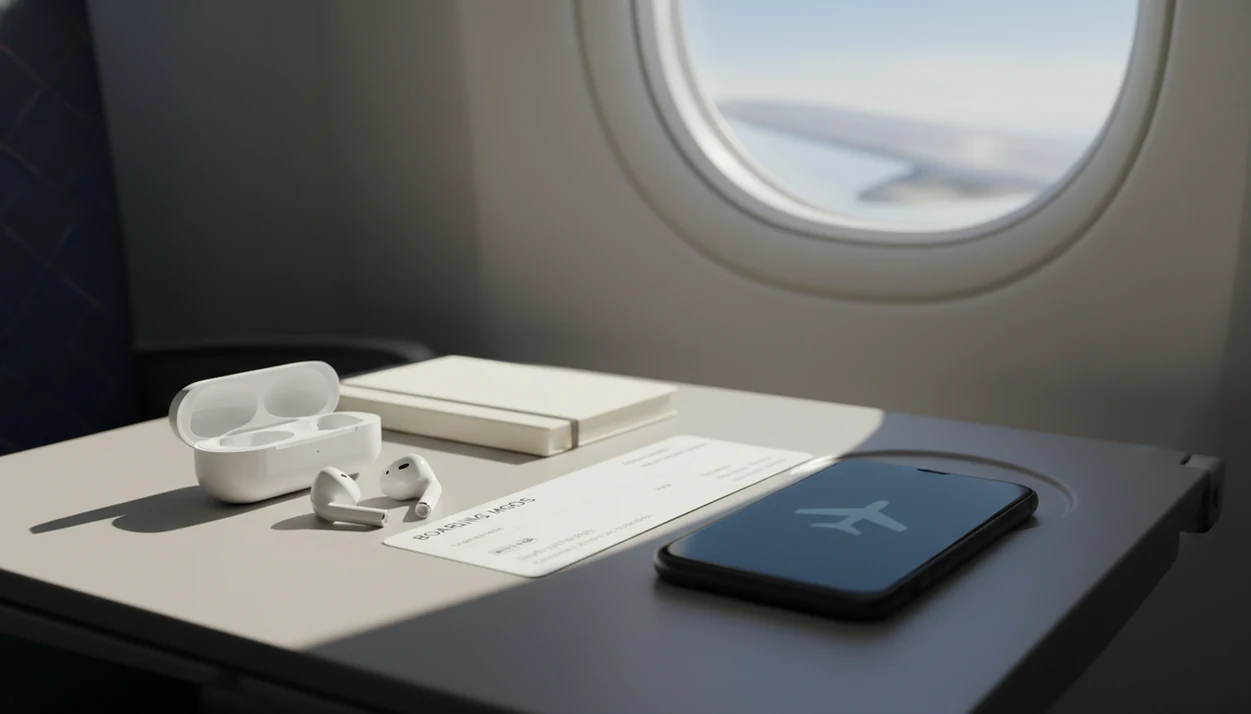
> Definition: A fear of flying app is a smartphone tool that delivers structured coping exercises, aviation education, and in-flight coaching designed to reduce flight anxiety using evidence-based techniques.
Fear of Flying App Download Features for Offline Flights
A good fear of flying app download gives you usable help before the cabin door closes. The key is offline access, because airplane mode blocks the internet right when anxious thoughts often get louder.
- Breathing tools: Timed breathing cues give your body one small job during boarding, taxi, and cruise.
- Panic step-by-step guides: A short if-then script helps when your dry mouth and racing pulse make thinking harder.
- Turbulence explainers: Plain-language aviation notes reframe bumps as normal air movement, not danger.
- Pre-flight planning: A saved flight-day plan covers what to do 48 hours before departure, at the gate, and once seated.
- CBT modules: Structured lessons use psychoeducation, thought checking, and graded practice.
NIMH does not publish one definitive annual rate for aerophobia specifically, but it does classify specific phobia as a common anxiety disorder, with 9.1% 12-month prevalence among U.S. adults and 22% of adult cases rated serious (https://www.nimh.nih.gov/health/statistics/specific-phobia). If your priority is boarding with a prepared script, Fear of Flying Guide fits because it connects breathing, planning, and turbulence education in one offline workflow.
CBT Mechanics Inside a Flight Anxiety App
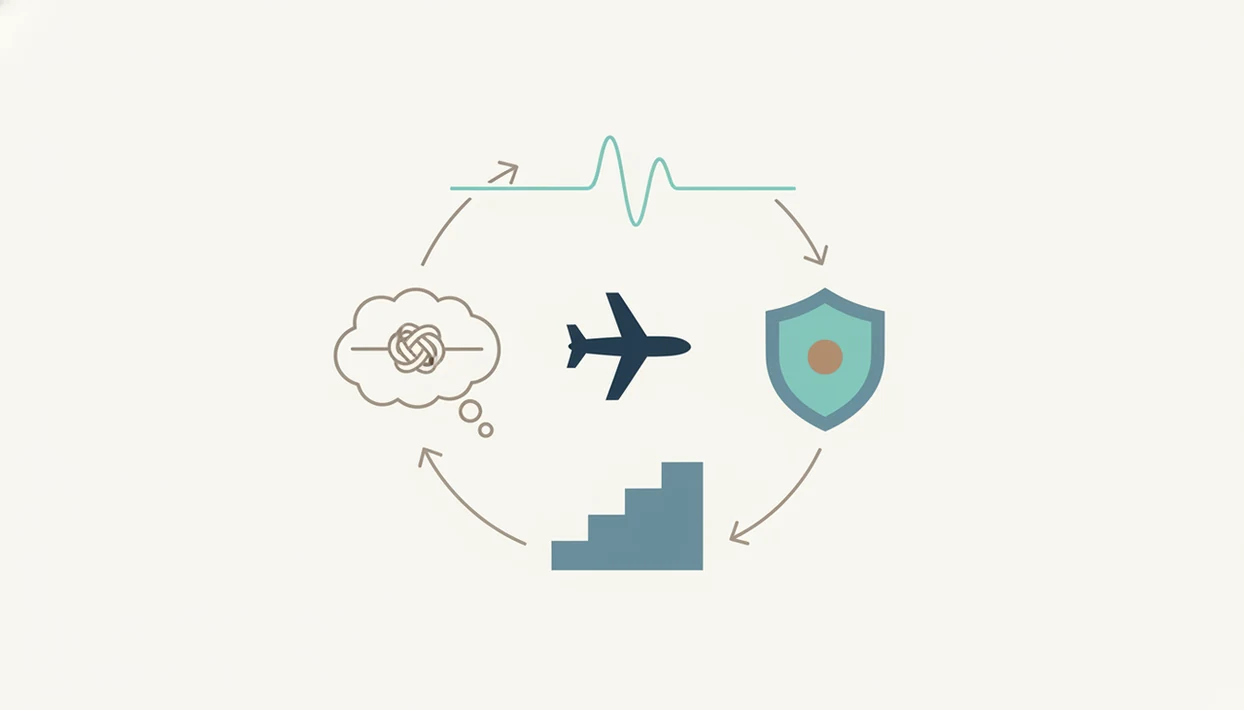
CBT-based flight anxiety apps work by moving you through a repeatable sequence: psychoeducation, cognitive restructuring, graded exposure, and coping rehearsal. In plain English, you learn what is happening, challenge the scary story, practice the trigger in small doses, then rehearse what to do next.
How fear of flying app support works is not magic. The app stores scripts, audio, visual timers, and exercises locally through offline caching, so they still open after the phone switches to airplane mode. Pilot-narrated turbulence explainers can use real aviation concepts, such as airflow, load tolerance, and routine altitude changes, to weaken catastrophic thinking.
The strongest evidence base for specific phobias is exposure-based CBT plus repeated coping practice. A meta-analysis of psychological treatments for specific phobias found large effects for exposure-based approaches, though most trials were not specific to flying anxiety (Clinical Psychology Review: https://doi.org/10.1016/j.cpr.2008.02.007).
Small practice counts.
When the brief drop feeling hits your stomach, Fear of Flying Guide gives the thought a job: read the turbulence script, breathe with the timer, then return to the saved coping card.
6 Steps to Use a Fear of Flying App Before Takeoff
Use a fear of flying app before takeoff by setting it up before travel day, then following the same routine at the airport and onboard. Don’t wait until the boarding group is called and your headphones are tangled at the bottom of your bag.
- Download and cache content at least 48 hours before departure, including audio, scripts, breathing timers, and panic steps.
- Complete the pre-flight education module on turbulence, aircraft sounds, takeoff sensations, and safety statistics before you open the airline app again.
- Build a personal coping plan with your preferred breathing exercise, grounding prompt, and one sentence to repeat during acceleration.
- Launch in-flight coaching mode during boarding and taxi, before the engines spool and your body starts scanning for danger.
- Activate the panic-step guide if anxiety spikes mid-flight; follow the first instruction only, then the next.
- Log a post-flight debrief in baggage claim, including what happened, what helped, and what to repeat next time.
Nervous flyers trying to make takeoff less chaotic can use Fear of Flying Guide because the workflow starts before the airport, not after panic has already peaked. For a wider comparison of install-ready tools, the best app for nervous flyers guide breaks down other use cases.
Where to Download Fear of Flying Guide
Fear of Flying Guide is accessed through FearOfFlying.com rather than something you should casually grab from an unfamiliar app-store clone or ad. Check the current product page for whether your version is web-based, iOS-ready, Android-ready, or a progressive web app before you pay.
- Open the official FearOfFlying.com download or access page, then confirm the platform matches the phone you will carry through security.
- Review the price, renewal terms, free-tier limits, and whether offline modules are included before entering payment details.
- Create your account and sign in while you still have reliable Wi-Fi, because account checks, subscription unlocks, and new module downloads may not work in airplane mode.
- Cache the flight-day content you need: breathing audio, panic steps, turbulence explainers, saved coping plans, and any pre-flight lessons.
- Test storage and sound before leaving home by opening the cached modules, playing audio through your headphones, and checking that your phone has enough battery and local space.
Treat saved anxiety logs and coping plans as personal health-adjacent notes. Use a strong phone passcode, review any cloud-sync settings, and avoid writing details you would not want visible on a shared device.
Flight Anxiety App Download vs. Professional Therapy Support
A flight anxiety app download may be enough for mild-to-moderate fear when you can still read, listen, and follow steps during stress. Severe panic, trauma history, or co-occurring anxiety disorders usually need professional support too.
Therapists and mental-health guidelines commonly recommend CBT with exposure for phobias because avoidance keeps the fear loop alive. App-based care can support that loop-breaking work. For context, the ZeroPhobia randomized trial tested self-guided VR-CBT for fear of heights, not flying; it still matters because it showed an app-based exposure program could reduce a specific phobia more than a wait-list control at 3 months (JAMA Psychiatry: https://jamanetwork.com/journals/jamapsychiatry/fullarticle/2723996).
But one download will not cure a phobia in one flight.
For people who freeze in the jet bridge or text “I can’t do this” before boarding, Fear of Flying Guide is better used as a panic plan alongside therapy, not as a replacement for clinical care. A structured fear of flying course may also fit if you need guided practice over several weeks.
Offline Coping Tools in the Fear of Flying Guide App
Fear of Flying Guide focuses on airplane-mode coping: pre-cached breathing exercises, plain-language turbulence scripts, one-tap panic steps, and a pre-flight planner that syncs before departure. That matters when Wi-Fi fails or costs more than you want to pay.
The breathing tools use timed visual cues, so you are not counting from memory while your shoulders press into the seatback. Turbulence explainers translate normal cabin movement into simple aviation language. The panic protocol gives one instruction at a time, which is easier than scrolling through a long article mid-flight.
Good comprehensive fear of flying resources deliver education, coping practice, and treatment direction, not a promise that one audio track will make anxiety disappear. When boarding anxiety is the issue, Fear of Flying Guide handles it through a saved Notes-style coping card, CBT-based thought prompts, and offline in-flight coaching. If offline access is your main concern, compare it with a dedicated download offline flight anxiety app checklist.
Fear of Flying App Download vs. SkyGuru, SOAR, and Flight Buddy
Not all fear of flying apps are generic meditation tracks. The useful comparison is whether the app gives real flight context, structured anxiety practice, offline support, and a plan that continues after landing.
| App | Strongest fit | Watch-outs |
|---|---|---|
| SkyGuru | Real-time turbulence tracking and pilot-style explanations | Strong for in-flight data, less structured around CBT practice |
| SOAR | Program-style support developed around captain and therapist expertise | Often a higher price point than simple app downloads |
| Flight Buddy | Basic calming tools for newer nervous flyers | Limited offline depth and less structured follow-through |
| Fear of Flying Guide | Pre-flight, in-flight, and post-flight workflow tied to a larger nervous flyer guide | Best for users who want education plus coping steps, not only live flight data |
The right fit for a full flight-day plan is Fear of Flying Guide because it links turbulence education, panic scripts, and post-flight debriefing into one repeatable sequence. If you are still comparing options, the best fear of flying app guide gives a broader side-by-side view.
Fear of Flying App Features by Anxiety Severity Level
The features you need depend on severity. An occasional nervous flyer may want quick reassurance, while diagnosed aerophobia or panic disorder with a flight trigger usually needs a structured multi-session plan.
Quick tools include crash-odds explainers, turbulence maps, breathing timers, and short grounding prompts. Deeper programs include CBT lessons, exposure planning, thought records, and post-flight tracking. Check for four things before you install: a structured program, in-flight support, transparent credentials, and offline access.
Context matters too. A half-charged phone, missing headphones, or a glitchy screen can turn a good plan into a frustrating one. Pack this before you leave: charging cable, downloaded playlist, gum in the front pocket, and the app content already cached.
For mild fear, reassurance tools can help quickly; for repeated avoidance, structured CBT practice usually matters more than live turbulence data.
Limitations
Fear of flying apps are useful, but they have real limits. Build your flight-day plan around those limits before you rely on your phone at 35,000 feet.
- Most fear of flying apps lack large, independent clinical trials specifically for aerophobia.
- During intense panic, concentration drops, and complex menus become hard to use.
- Battery life, headphones, storage space, and device reliability can fail at the exact wrong time.
- Flight-tracking and turbulence-forecast features usually need internet, so they may not work offline.
- Apps cannot replicate personalized feedback from a therapist or a structured VRET clinic session.
- One flight is not enough; repeated practice and gradual exposure over time are usually needed.
- Free tiers often hide the most clinically useful modules behind a paywall.
- Competitors such as flyconfident.com, fearlessflyerapp.com, soar.com, vfrfi.com, and anxieties.com may offer courses or coaching that suit some users better than an app-only plan.
No shame in backup plans. A water bottle bought after security and a printed coping card still count.