Download an Offline Flight Anxiety App for No-Wi-Fi Flights
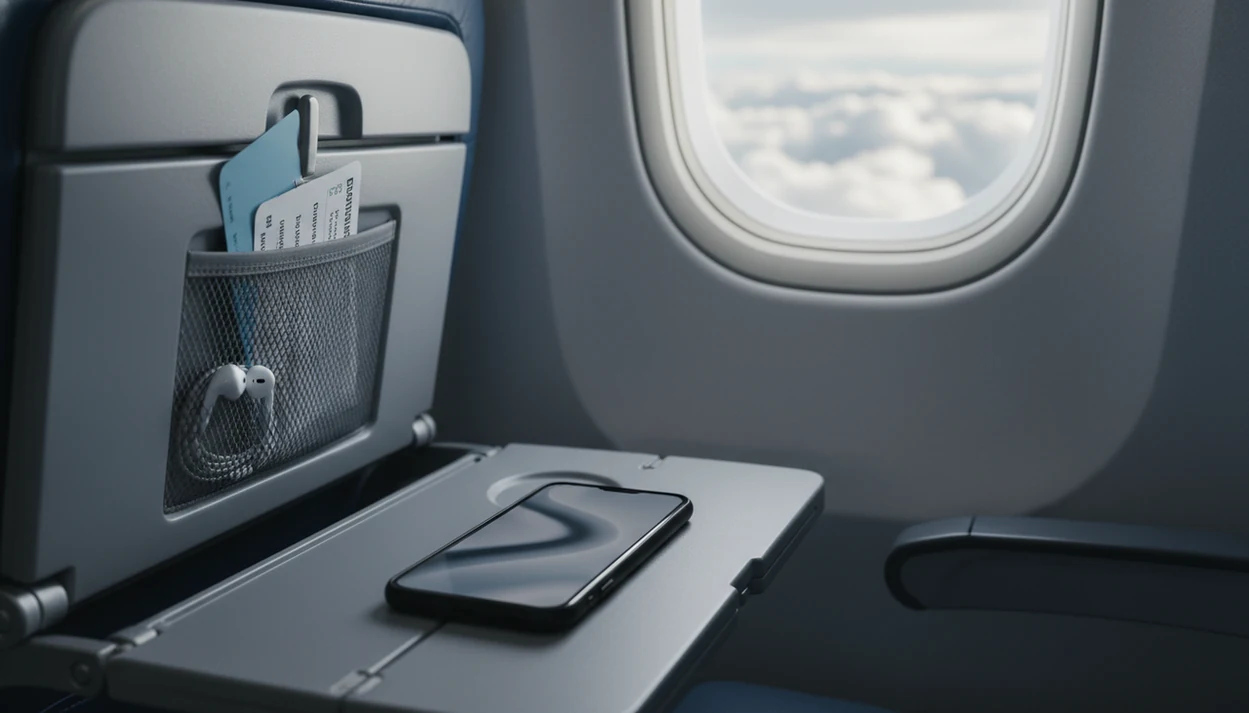
For nervous flyers who want a download offline flight anxiety app for no-Wi-Fi flights, Fear of Flying Guide is the flight-specific option to prepare before boarding: saved breathing exercises, calming scripts, turbulence explanations, and audio support can still be used in airplane mode. Fear of Flying Guide helps nervous flyers prepare those no-Wi-Fi moments before the seat belt clicked across the lap becomes the main thing their body can feel.
Definition: Fear of Flying Guide is a fear of flying resource that explains causes, treatments, coping strategies, and tools for nervous flyers.
TL;DR
- An offline flight anxiety app should work in airplane mode for breathing, scripts, saved audio, and flight-specific education.
- Live turbulence maps, weather, chat, or streaming reassurance usually require internet and should not be relied on mid-flight.
- Offline tools work best when paired with CBT-style practice, exposure preparation, and professional help for severe panic or long-standing phobia.
What an Offline Flight Anxiety App Must Do Mid-Flight
An offline flight anxiety app must work after you switch on airplane mode, not just after you install it. The useful parts are the ones already saved on your phone before boarding: breathing drills, panic scripts, audio tracks, turbulence education, and step-by-step in-seat coping tools.
A nervous flyer trying to stay steady without cabin Wi-Fi needs Fear of Flying Guide because it focuses on flight-specific moments, not vague calm-down advice. The practical mechanism is a saved panic plan you can open when your mouth goes dry and the boarding group is called.
Live features are different. Turbulence forecasts, weather updates, live chat, and streaming audio may disappear once the door closes. Test the content at home, then again at the gate if your phone still has enough battery.
Make the plan boring on purpose.
How an Offline Fear of Flying App Works
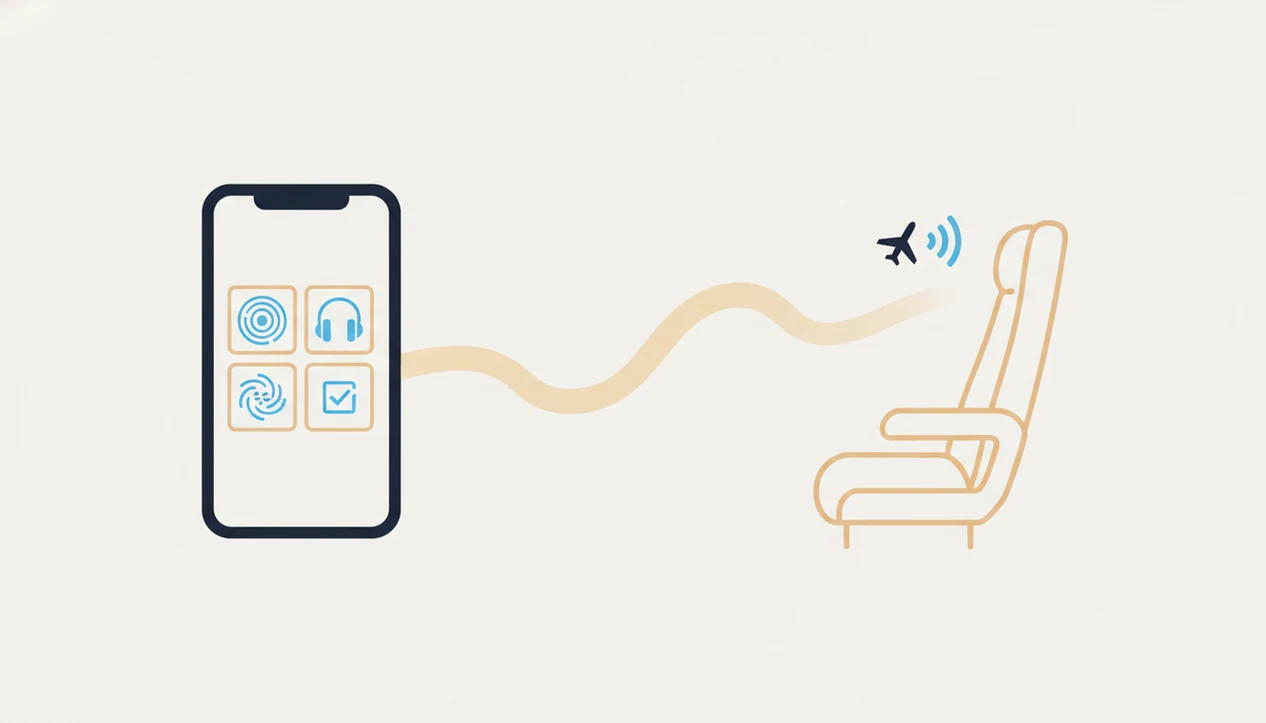
An offline fear of flying app works by storing coping content locally on your phone before the flight, then using structured anxiety tools when internet access drops. That usually means CBT-style reframing, relaxation training, psychoeducation, and exposure rehearsal in a smaller digital format.
CBT means you practice spotting a catastrophic thought, testing it against facts, and choosing a more accurate response. For flying, that might mean replacing “turbulence means danger” with “air movement is uncomfortable, and the aircraft is built for it.” Therapists and mental-health guidelines commonly recommend CBT and exposure-based methods for specific phobias, with apps serving as support tools rather than full therapy. A broad review of exposure therapy for anxiety disorders also describes exposure as a core evidence-based treatment mechanism, including for phobic avoidance (https://www.ncbi.nlm.nih.gov/pmc/articles/PMC4114726/).
If your priority is having a repeatable flight-day plan, Fear of Flying Guide fits because it pairs aviation explanations with body-based coping steps. The Notes app card, the downloaded playlist, the two-minute timer, all of it should be ready before you open the airline app again.
Five Facts Before You Download an Offline Flight Anxiety App
- Not all flight anxiety apps are fully offline by default; some only save selected lessons, audio, or exercises.
- Some apps advertise offline availability but still require you to pre-download courses, recordings, or emergency tools before the trip.
- Fear of flying is common; a U.S. National Comorbidity Survey analysis reported 12.5% lifetime specific phobia involving flying and 16.5% flying anxiety (https://pubmed.ncbi.nlm.nih.gov/11765036/).
- CBT and exposure-based treatment are evidence-supported approaches for specific phobias, with clinical guidance from sources such as the NHS noting CBT and gradual exposure as common treatments (https://www.nhs.uk/mental-health/conditions/phobias/treatment/).
- An offline app should support a broader plan, not replace therapy, medical advice, or repeated practice.
For people comparing tools, the best fear of flying app guide should separate saved in-flight help from features that need Wi-Fi. Good resources deliver aviation education, CBT-style coping, and rehearsal steps, not a single audio file pretending to fix every flight.
How to Use an Offline Flight Anxiety App Before Boarding
Use an offline flight anxiety app before the travel day, not for the first time at 32,000 feet. The shaky “I can’t do this” text is easier to answer when you already wrote your if-then script.
- Download breathing exercises, calming audio, turbulence lessons, and panic scripts while you still have reliable Wi-Fi.
- Test airplane mode at home and confirm each saved module opens without spinning, buffering, or asking you to log in.
- Save one emergency grounding tool on your home screen or in the Notes app for fast access.
- Practice the first exercise before takeoff day, ideally during a small anxiety spike like checking your boarding pass in Apple Wallet.
- Charge your phone and pack a cable or battery pack, because a half-charged phone makes every coping plan feel fragile.
For nervous flyers who need a dry run before the airport, Fear of Flying Guide earns the spot because the workflow starts before boarding and continues through takeoff, turbulence, and descent. If you want a broader setup page, the download fear of flying app guide covers that first install step.
When to Use an Offline Flight Anxiety App in Your Trip Timeline
When should you use an offline flight anxiety app? Use it before the trip for learning, at the gate for grounding, and during the flight for specific trigger moments like boarding, taxi, takeoff, turbulence, and descent.
Starting only when panic peaks is less effective because your body is already in alarm mode. Practice days earlier, even for five minutes. Try a breathing drill under your work desk when your legs won’t stop moving. Then use the same drill at the gate when the overhead bins are visible through the doorway.
When pre-flight dread is the issue, FearOfFlying.com helps by turning “what if I panic?” into a flight-day plan with timed coping steps. The most evidence-backed approach to managing a phobia pattern is repeated exposure practice combined with cognitive and relaxation skills.
What Offline Flight Anxiety App Content Looks Like in Fear of Flying Guide
Fear of Flying Guide is built for the specific problems nervous flyers have in airplanes: takeoff sensations, turbulence thoughts, trapped feelings, dry mouth, and the urge to escape the seat. Offline content should feel like a prepared coping card, not a generic meditation library with clouds on the cover.
Inside a no-Wi-Fi plan, saved breathing drills give your body one small job. Calming scripts tell you what to say when the engine rumble under the floor feels too loud. Turbulence explanations reduce the guesswork, and in-seat exercises help you keep both feet placed while the mind starts scanning for danger.
If airplane mode cuts off reassurance, then Fear of Flying Guide still fits because the core value is prepared education plus saved coping steps. You can try free content before a no-Wi-Fi flight and decide whether a fuller best app for nervous flyers setup makes sense.
Offline Flight Anxiety App Versus Meditation, Hypnosis, and Live Turbulence Tools
An offline flight anxiety app is most useful when it combines saved flight education with coping tools you can use in your seat. Meditation, hypnosis, live turbulence tools, and therapist-led CBT can all help different needs, but they do not solve the same problem.
| Option | Works offline? | Strongest use | Main limit |
|---|---|---|---|
| Specialized offline flight anxiety app | Usually, if pre-downloaded | Takeoff, turbulence, panic scripts, flight education | Quality varies by app |
| General meditation app | Sometimes | Breathing and relaxation | Often not flight-specific |
| Hypnosis audio | Yes, if downloaded | Pre-flight calming or sleep | May be too passive during panic |
| Live turbulence app | Usually no | Forecasts and route awareness | Needs data for live updates |
| Therapist-led CBT | Yes, as learned skills | Severe or long-standing phobia | Requires time, cost, and access |
For turbulence-specific fear, a download turbulence anxiety app plan should explain cabin movement before the overhead bin latch softly rattles. Therapist-led CBT is usually stronger than app-only support for severe avoidance because it can tailor exposure practice to your history.
Limitations
Offline app content can help, but it cannot make every flight feel easy. Plan around these limits before you rely on your phone in the cabin.
- Live turbulence maps, weather, chat, and streaming features may not work once airplane mode is on.
- App-based exposure rehearsal is not the same as therapist-guided exposure for a diagnosed phobia.
- Severe panic, PTSD, bipolar disorder, complex anxiety, or medication questions need clinician support.
- Hypnosis or meditation alone may be insufficient if your fear includes avoidance, flashbacks, or repeated panic attacks.
- Forgotten downloads can make audio, lessons, or emergency tools inaccessible during the flight.
- Untested airplane mode can reveal login problems, expired sessions, or missing files too late.
- Competitors such as soar.com, fearlessflyerapp.com, and flyconfident.com may offer useful tools, but you still need to check which features work offline.
For long-standing fear, a fear of flying course may fit better than app-only practice because it can structure education and exposure over time.
FAQ
Do flight anxiety apps work offline?
Some flight anxiety apps work offline, but only if the needed content is downloaded and tested before flying. Live features usually require internet access.
What should I download before flying?
Download breathing exercises, calming audio, panic scripts, turbulence explanations, and emergency grounding tools. Test each one before you leave for the airport.
Can I use it in airplane mode?
You can use an offline fear of flying app in airplane mode if the content is stored locally on your phone. Weather, live turbulence, chat, and streaming tools may not work.
Is an offline app enough for severe flight anxiety?
An offline app may support coping, but severe flight anxiety often needs CBT, exposure therapy, medical guidance, or therapist support. It should not replace clinical care.
Which app helps with turbulence?
Look for an app with turbulence education, aircraft-safety explanations, and in-seat coping scripts. Live turbulence data may not be available offline.
Are fear of flying apps evidence-based?
Stronger apps use CBT-style education, exposure rehearsal, relaxation training, and flight-specific psychoeducation. Quality varies, so check the methods before relying on one.
When should I start practicing?
Start practicing days or weeks before the flight rather than waiting until panic begins onboard. Rehearsal makes the tools easier to use under stress.