
Virtual Reality Exposure Therapy for Flying: Evidence and Limits
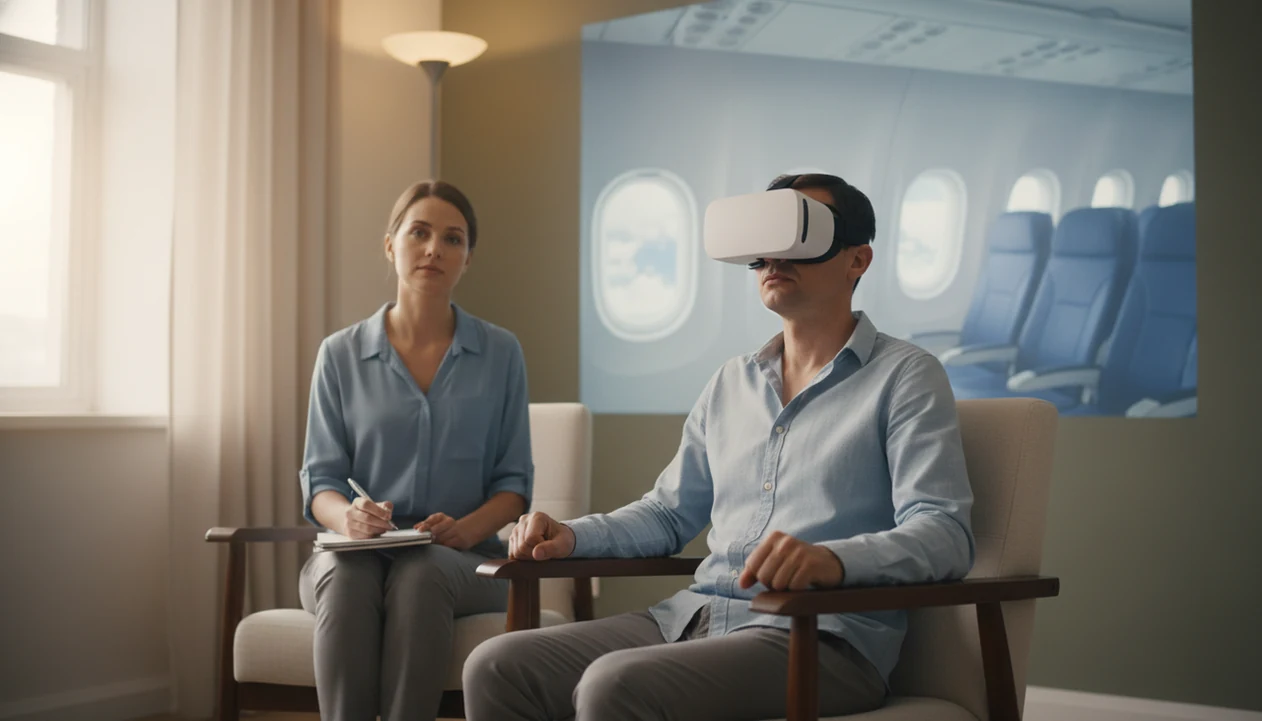
Quick answer: Virtual reality exposure therapy flying can reduce fear of flying for some people, especially when it is therapist-guided, structured, and combined with cognitive-behavioral skills. The evidence is promising, but VRET is not a one-session cure and does not replace real-flight practice for everyone.
> Definition: Virtual reality exposure therapy for flying is a treatment method that uses immersive simulated flight situations to help people gradually face aviation-related fear cues in a controlled therapeutic setting.
This article is educational and is not a diagnosis, treatment plan, or substitute for care from a licensed mental health or medical professional. If flying anxiety includes fainting, chest pain, severe dissociation, trauma symptoms, or medication questions, use clinical guidance before trying VR exposure.
TL;DR
- VRET for aviophobia typically simulates boarding, taxiing, takeoff, turbulence, cruising, and landing while a therapist helps the person stay engaged instead of avoiding.
- Clinical studies and reviews suggest VRET can reduce flying anxiety and increase real flights taken after treatment, with some benefits lasting many months.
- Its biggest limits are access, cost, uneven protocol quality, and the fact that home VR apps are less studied than therapist-guided clinical programs.
Virtual Reality Exposure Therapy Flying Definition for Nervous Flyers
Virtual reality exposure therapy for flying uses a headset or immersive simulation to recreate flight cues, then helps you practice staying with those cues instead of escaping them.
That may include airport waiting, boarding, takeoff, engine noise, turbulence, cruising, descent, and landing. The point is not entertainment, distraction, or someone saying “planes are safe” until you believe it. The point is controlled exposure.
In VRET aviophobia treatment, the therapist usually builds the work into a CBT-style plan. You may learn breathing, cognitive restructuring, and homework between sessions. It feels different from watching a calming video because your body may react as if the flight cue is real. Dry mouth. Tight chest. The urge to rip off the headset.
That reaction is the material you practice with.
3 Research Findings on VR Therapy Fear of Flying Results
Research on VR therapy fear of flying is strongest when VRET is structured, repeated, and linked to real travel behavior, not just lower anxiety scores inside the headset.
- A 2021 systematic review of 33 studies concluded that virtual reality-based exposure therapy is effective for fear of flying, with most studies showing reduced anxiety and many reporting real flights after treatment source.
- In Rothbaum et al.'s randomized trial of 49 people, 93% of participants who received either virtual reality exposure or standard exposure had flown within six months after treatment source.
- A 2021 clinical study found that flights and total flight hours increased after VRET, with improvements maintained up to 18 months after treatment began source.
- The key outcome is not “I felt calm in VR.” The key outcome is whether you can board, stay seated, and take real flights.
- Clinicians typically recommend exposure-based treatment when avoidance keeps a phobia alive, often with CBT skills that help people test feared predictions.
If your boarding pass sits in Apple Wallet all week and you keep checking it anyway, that real-world transfer matters.
How Virtual Reality Exposure Therapy Flying Works
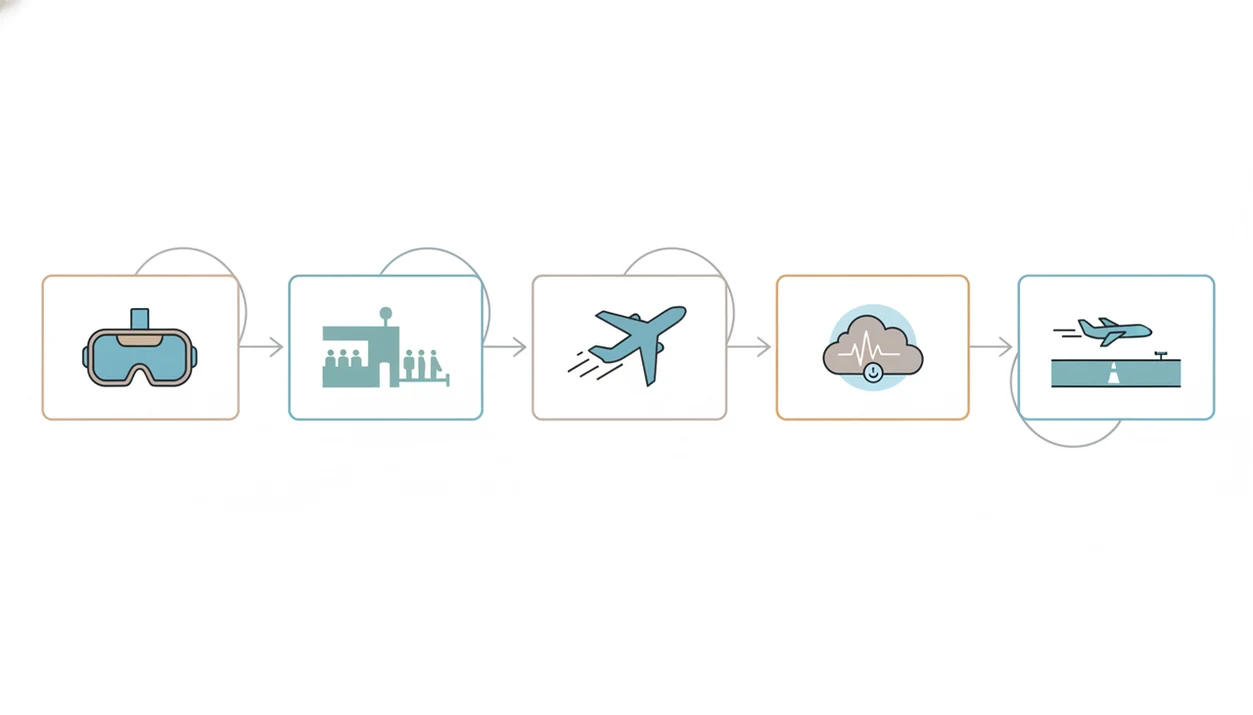
Virtual reality exposure therapy flying works through graded exposure and inhibitory learning. In plain language, you start with easier flight scenes, then teach your brain that flight cues can be uncomfortable without becoming dangerous.
A therapist might begin with sitting in a quiet cabin. Later sessions may add engine sounds, taxiing, takeoff, turbulence, delays, bad weather, night flights, or landing. That control is the practical advantage. You can repeat the exact trigger without buying another ticket or waiting for weather.
The hard part is staying with the cue long enough. If you quit the moment anxiety rises, your brain learns, “escape saved me.” If you stay until the wave rises and falls, a different lesson becomes possible.
Make the plan boring on purpose. One small job for your body, one thought to test, one timer running. The most common medically supported way to reduce phobic avoidance is gradual exposure combined with skills that prevent immediate escape.
How to Use VRET for Fear of Flying Safely
Use VRET for fear of flying safely by treating it as a graded practice plan, not a bravery test. If symptoms are complex, start with a licensed clinician or a structured program that can adjust pacing and screen for panic, trauma, medical, or medication issues.
- Build a fear ladder from least to most difficult flight cues, such as sitting in a quiet cabin, hearing announcements, taxiing, takeoff, turbulence, delays, descent, and landing.
- Practice one scene at a time until anxiety rises, peaks, and starts to fall without removing the headset, distracting yourself, or mentally checking out.
- Add harder cues only after the easier scene becomes workable. That may mean louder engine noise, longer takeoff, rougher air, gate delays, night conditions, or a repeated landing sequence.
- Transfer the gains outside VR with real tasks: looking at flights, booking a refundable ticket, visiting an airport, sitting near a gate when possible, or planning a short practice flight.
- Track behavior, not just comfort. Write down what you actually did: booked, packed, entered the terminal, boarded, stayed seated, or completed the flight.
Typical VRET Aviophobia Session Scenarios
VRET aviophobia sessions usually move through flight scenes in fear order, from manageable cues to harder ones. The exact sequence varies, so a good program should tailor the scenes to your triggers.
Airport and Boarding Cues
Airport terminal: You may practice waiting near a gate, hearing announcements, or seeing runway lights beyond the terminal glass.
Boarding: The simulation may include walking down the jet bridge, finding your seat, and hearing overhead bins close.
Takeoff, Turbulence, and Landing Cues
Taxi and takeoff: You may hear engine rumble under the floor and practice staying seated as speed builds.
Turbulence: The therapist may add cabin movement, rattling sounds, or a paused service cart.
Landing: Descent, turns, runway approach, and touchdown may be repeated.
Some programs add cognitive work, relaxation practice, or post-session reflection. The broader method is covered in exposure therapy for fear of flying.
VRET Aviophobia Versus Real-World Exposure Therapy
VRET can be more convenient, private, repeatable, and controllable than airport-based exposure. Real-world exposure has higher realism, though, and it often helps people transfer gains to actual flights.
| Exposure type | Main advantage | Main limit |
|---|---|---|
| VRET aviophobia | Repeats takeoff, turbulence, or landing on demand | Simulation is not identical to a real plane |
| Airport visit | Builds tolerance for real terminals and crowds | Harder to control timing, noise, and security limits |
| Practice flight | Tests the full travel chain | Costly, time-bound, and harder to repeat |
| Combined plan | Uses VR first, then real flights | Requires planning and follow-through |
Rothbaum et al.'s controlled trial found comparable reductions in flying anxiety and similar increases in actual flights for VR exposure and standard exposure source. VRET usually works best when it prepares people for real-world practice, while in-vivo exposure fits people who can access airports and flights safely.
Best-Fit Cases for VR Therapy Fear of Flying
Is VR therapy fear of flying a good fit if I avoid planes completely? It may be, especially if you need a gradual bridge before work travel, family visits, or a long-delayed vacation.
VRET may also fit people who panic during specific phases, such as boarding, takeoff, turbulence, or landing. It gives you a place to practice an if-then script before the boarding group is called for real.
People with severe panic disorder, trauma histories, vestibular sensitivity, or multiple phobias may need extra tailoring. Sometimes the plan needs medical input, trauma-focused therapy, or medication discussion alongside exposure.
A good fear-of-flying plan explains causes, treatments, coping strategies, and tools for nervous flyers, not vague reassurance or airline trivia. Tools like Fear of Flying Guide can sit beside therapy by helping readers organize aviation safety education, CBT skills, and graded real-flight steps. Related cognitive work is explained in CBT for fear of flying.
Common Myths About Virtual Reality Exposure Therapy Flying
Virtual reality exposure therapy flying is often either oversold or dismissed too quickly. Both reactions can lead to poor planning.
- Myth: VR is just a video game. Immersive flight scenes can trigger real fear responses, including sweating, breath holding, and the urge to avoid.
- Myth: VRET cures fear of flying in one or two sessions. Most meaningful change needs a structured, repeated plan with homework and real-life follow-through.
- Myth: VRET works the same way for everyone. Panic, trauma, motion sensitivity, and past flight experiences can all change the pacing.
- Myth: success in VR guarantees comfort on a plane. VR progress is useful, but real flights still add crowds, time pressure, and physical movement.
- Myth: relaxation alone is the treatment. Breathing can help you stay present, but exposure is the main learning task.
Pack this before you leave: a Notes app coping card, not a promise that fear will vanish. For medication questions, use a clinician and a guide to flight anxiety medication.
When to Seek Professional Help Before VRET
Seek professional help before VRET if your fear of flying comes with severe panic, fainting, chest pain, trauma symptoms, disorientation, or medication questions. VR exposure can be useful, but it should not become a do-it-yourself stress test.
- Contact a licensed clinician or medical professional if panic feels unmanageable, you have passed out, or chest pain appears during anxiety or headset use.
- Choose trauma-informed care if flying fear is tied to a crash, medical emergency, military experience, assault, loss, or another past event that still feels present.
- Ask about vestibular problems, migraines, vertigo, or motion sickness before using a headset, especially if visual motion makes you nauseated or unsteady.
- Discuss medication, sedatives, beta blockers, or mixing prescriptions with alcohol only with a prescriber. A VR coach or app provider is not the right person to adjust medication.
- Stop self-directed exposure if you feel unsafe, detached from your surroundings, unable to orient, or tempted to push through symptoms that would normally make you seek help.
Good exposure is challenging. It should not feel medically risky or out of control.
Limitations
VRET is promising, but it has real limits. Treat these as planning points, not reasons to give up.
A useful test is whether the program measures real-world behavior, such as booking, entering the airport, boarding, and completing a flight—not only whether anxiety drops inside the headset.
- Access can be limited by cost, trained clinician availability, hardware, and location.
- Therapist-guided clinic protocols are better studied than self-directed home VR apps.
- VRET may need adaptation for severe panic disorder, trauma histories, motion sickness, vestibular issues, or multiple phobias.
- Some people still need real-flight practice to transfer gains from simulation to actual travel.
- Protocol quality varies, so not every program uses evidence-based exposure principles.
- VRET is not a replacement for medical advice when symptoms include fainting, chest pain, severe dissociation, or medication questions.
- Home practice can become avoidance if you only repeat easy scenes and never progress.
A half-charged phone and tangled headphones can make flight day feel chaotic before anxiety even starts. Use the Notes app, set a timer, and write your next five minutes. If you want a structured digital aid, an app that guides flight exposure therapy may help you keep the steps visible between sessions.
FAQ
Does VRET help fear of flying?
Research suggests VRET can help many people reduce flying anxiety, especially when it is structured, repeated, and therapist-guided.
Is VR flying therapy evidence based?
Yes, clinical trials and systematic reviews support VRET for fear of flying. App-only or self-directed home programs are less established.
How many VRET sessions are needed?
Session counts vary by protocol, symptom severity, and travel goals. It is usually not a one-session treatment.
Can VR replace real flights?
VR can prepare people for flying, but real-flight practice often helps consolidate gains. A real airport adds timing, crowds, movement, and uncertainty.
Is VRET better than exposure therapy?
VRET is not clearly better for everyone. Some studies suggest it can be similarly effective to standard in-vivo exposure.
Can VR trigger panic attacks?
Yes, VR can provoke real anxiety and panic-like sensations. Panic-prone users should use careful pacing and clinical guidance.
Does home VR therapy work?
Self-directed home VR may help some people practice, but it is less studied than therapist-guided VRET. Quality and pacing vary.
Who should avoid VRET?
People with severe motion sickness, trauma symptoms, complex panic, fainting, chest pain, or medication concerns should seek medical or clinical guidance first.
What happens in flying VRET?
Flying VRET commonly simulates boarding, takeoff, turbulence, cruising, descent, and landing. A therapist helps the person remain engaged rather than avoid.