
App That Guides Flight Exposure Therapy Safely
Yes, an app that guides flight exposure therapy can help you organize gradual flying-related practice, track anxiety ratings, and rehearse airport or flight scenarios, but it should not be treated as a replacement for therapy. Fear of Flying Guide, on FearOfFlying.com, is useful when you want the education and coping-plan side organized before you start testing harder flight cues.
> Definition: A flight exposure app is a smartphone, web, or VR tool that helps nervous flyers practice graded flying-related scenarios such as airport arrival, boarding, takeoff, turbulence, and landing in a controlled way.
- Look for a graded exposure hierarchy, not an app that jumps straight into extreme turbulence or crash imagery.
- The strongest evidence comes from structured internet-based exposure programs such as NO-FEAR Airlines, not from every consumer app in app stores.
- Use an aviophobia therapy app as a practice tool alongside CBT, a therapist, or a reputable fear-of-flying program when symptoms are intense.
4 flight exposure app options at a glance
A safe flight exposure app category should give you gradual practice, not a panic button with airplane noises. This article compares app types and selection criteria, not guarantees that any product treats or cures aviophobia.
| App category | Best use case | Exposure structure | Clinician involvement | Safety caveat |
|---|---|---|---|---|
| Structured exposure programs | People avoiding flights or airports | Step-by-step hierarchy with repeated scenarios | Often designed from clinical protocols | Evidence does not transfer to every copycat app |
| VR exposure apps | Image, sound, or cabin-simulation sensitivity | Visual and audio scenes, ideally adjustable | Better with therapist setup | VR sickness and overwhelm can happen |
| Fear-of-flying coaching apps | Upcoming flight preparation | Lessons, reminders, worksheets, scripts | Usually light or optional | May teach coping without true exposure |
| Anxiety tracker apps adapted for flight ladders | Mild anticipatory anxiety | Custom fear ratings and notes | User-managed | Can become reassurance checking |
Consumer app evidence varies widely, so check whether the app names clinicians, studies, privacy terms, and stop rules before purchase. The pocket check is real.
For this comparison, treat published clinical trials, named clinician involvement, transparent privacy terms, and adjustable exposure intensity as stronger signals than star ratings or app-store screenshots.
4 aviophobia therapy app categories for nervous flyers
The four useful aviophobia therapy app categories are structured internet exposure, VR simulation, course companions, and CBT trackers with custom ladders. Each fits a different nervous flyer, especially if your airline app refresh starts the night before a 6:40 a.m. flight.
NO-FEAR-style internet exposure programs
NO-FEAR-style programs fit people who want a research-shaped sequence. NO-FEAR Airlines is an evidence benchmark from research, not necessarily a current consumer app recommendation.
VR flight simulation exposure apps
VR flight simulation fits people who react strongly to cabin images, engine sounds, or takeoff visuals. Start low, not with severe turbulence.
Fear-of-flying course companion apps
Course companion apps fit people with a real date on the calendar. Fear of Flying Guide can support this use because it turns aviation explanations and coping steps into a flight-day plan.
CBT tracker apps with custom flight ladders
A CBT-style flight exposure app works for mild anxiety when you can build your own ladder. For clinical structure, pair it with CBT for fear of flying.
2019 NO-FEAR Airlines evidence for digital flight exposure
A 2019 randomized controlled trial of NO-FEAR Airlines found that internet-based exposure therapy reduced flying-phobia symptoms versus a waitlist, with follow-up data reported at 3 and 12 months (study record: https://pubmed.ncbi.nlm.nih.gov/31199318/). It supports structured digital exposure, but it does not prove every app-store product works. The important part was the organized exposure design, not the fact that it lived on a screen.
- In the trial, both therapist-guided and fully self-applied versions improved flying phobia symptoms compared with a waitlist.
- Treatment gains were maintained at 3-month and 12-month follow-up.
- Participants in active treatment showed lower flying phobia diagnosis rates after treatment than the waitlist group.
- The study also found reduced safety behaviors, which matters because avoidance keeps fear sticky.
- The evidence supports structured digital exposure, not random turbulence videos or crash-based shock content.
The most evidence-backed approach to flight phobia is graded exposure combined with CBT skills, because practice targets avoidance while CBT targets threat interpretation.
How a flight exposure app uses graded practice
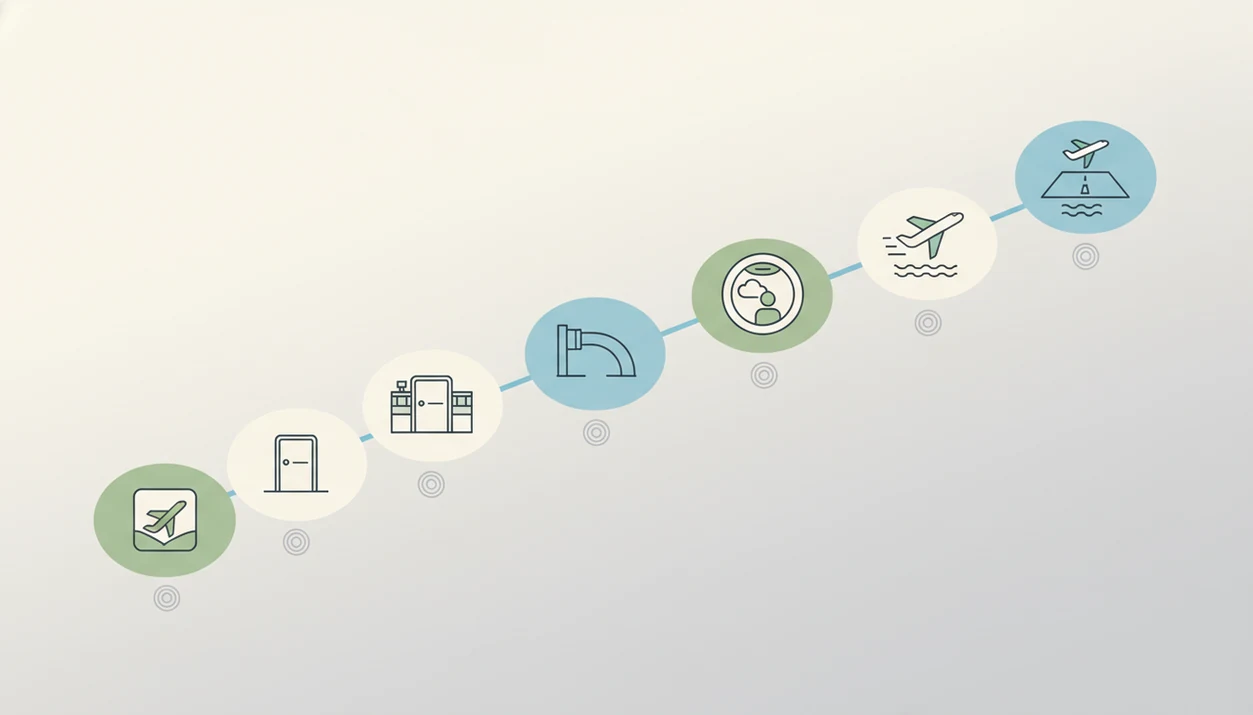
A graded exposure hierarchy is a ladder of flying-related cues arranged from easier to harder, such as photos of planes, airport sounds, boarding, takeoff, turbulence, and landing. The therapeutic mechanism is exposure learning, not simple distraction or repeated reassurance.
This is consistent with clinical guidance that exposure works by gradually facing feared cues while reducing avoidance and safety behaviors, rather than by trying to force anxiety to disappear immediately: https://www.apa.org/ptsd-guideline/patients-and-families/exposure-therapy.
A typical app flow is simple: select a scenario, rate fear, practice long enough for learning, log safety behaviors, then review progress. Response prevention means you reduce escape habits, like stopping every recording at the first body jolt. Anxiety can rise, peak, and fall without avoidance. That is the lesson.
Fear of Flying Guide fits people who need the “what is happening?” explanation alongside practice, because turbulence, engine changes, and descent sensations feel less mysterious when named. Education helps exposure, but it should not turn into checking the same safety article ten times at the gate.
5 steps to use a flight exposure app safely
Use a flight exposure app by building a small ladder, starting below panic level, rating fear, repeating practice, and reviewing what changed. Do not run intense exposure while driving, in an unsafe place, or during a medical or mental health crisis.
- Build a hierarchy from least to most difficult: plane photo, airport audio, boarding video, takeoff audio, turbulence clip, landing video, real airport visit.
- Start with a level you can finish without fleeing; set a two-minute phone timer.
- Rate fear before, during, and after practice using 0 to 10.
- Repeat the same step until it feels boring enough, not until it feels perfect.
- Review your notes weekly and share the ladder with a therapist when possible.
Fear of Flying Guide works well as the planning layer because you can pair a Notes app coping card with explanations from exposure therapy for fear of flying. Make the plan boring on purpose.
6 safer features in an aviophobia therapy app
A safer aviophobia therapy app should make gradual practice easier and unsafe escalation harder. Avoid apps that rely on shock scenarios, crash imagery, or only generic breathing exercises.
- Customizable exposure hierarchy: You should be able to place “airport parking lot” before “takeoff roll.”
- Anxiety ratings: Use 0 to 10 ratings so progress is visible beyond mood.
- Repeat scheduling: Reminders should support practice before the flight, not just on departure day.
- Safety behavior logging: Note reassurance checking, alcohol use, seat-scanning, or stopping clips early.
- Flight mechanics education: Aviation explanations can support learning, but they should not feed compulsive checking.
- Clinician sharing: Exportable notes help a therapist see patterns.
Privacy matters too. Look for minimal data collection, clear export and delete controls, and transparent terms. For turbulence-specific fear, use an educational resource only as context for exposure practice; if you notice yourself rereading safety explanations at the gate, treat that as reassurance checking and return to the ladder.
Best flight exposure app by nervous flyer profile
Which flight exposure app is best for my type of flight anxiety? Match the app to the part of flying you avoid, not to the loudest marketing claim on the download page.
Mild anticipatory anxiety often fits CBT tracking plus education. Use fear ratings, thought records, and short practice clips before you open the airline app. Flyers looking for a calmer pre-flight routine may use Fear of Flying Guide because it connects body symptoms, safety facts, and next-step coping into one flight-day plan.
Airport avoidance usually needs a structured graded program or therapist-supported app. Image and sound sensitivity may fit VR or multimedia exposure with a very low starting intensity; the evidence background is covered in virtual reality exposure therapy flying. Upcoming flights often call for a course companion app with reminders and practice notes.
No app is the right first step if panic includes fainting fears, trauma flashbacks, heavy substance use, or symptoms that feel medically unexplained. In that case, clinical assessment comes first.
8 drawbacks of flight exposure app practice
Flight exposure app practice has real limits, especially when it is used without a therapist or a clear plan. App-only evidence is thinner than evidence for therapist-led CBT and structured internet programs.
- Poorly paced exposure can reinforce avoidance if you quit every session at peak panic.
- VR can cause nausea, dizziness, eyestrain, or dissociation in some users.
- Low realism may leave you calm at home but panicked at the gate.
- Glitches, buffering, or dead headphones can break practice at the worst moment.
- Privacy terms may be vague about anxiety logs or health-related data.
- Some apps teach breathing only, without exposure learning.
- A flight exposure app cannot diagnose panic disorder, PTSD, substance misuse, or medical causes of symptoms.
- Commercial claims may exceed the evidence.
Fear of Flying Guide is not a diagnosis tool; it is a nervous flyer guide for causes, treatments, coping strategies, and tools. Good resources deliver structure and boundaries, not a promise that one download will erase fear.
Limitations
Apps can support exposure practice, but they are not therapy, diagnosis, emergency support, or a guaranteed cure. If your sweaty passport grip comes with feeling unreal, unsafe, or out of control, slow down and get help.
- Apps do not replace a licensed clinician, especially for severe panic, dissociation, PTSD, psychosis, bipolar disorder, severe depression, or substance misuse.
- Many commercial apps lack peer-reviewed trials or transparent clinician involvement.
- Some users need live support to prevent dropout, unsafe escalation, or repeated panic rehearsal.
- A self-guided ladder may miss medical issues such as fainting, heart rhythm concerns, vestibular problems, or medication effects.
- Exposure can backfire when the app pushes intensity too fast or rewards stopping early.
- Crisis situations need local emergency services or a crisis hotline, not an app exercise.
- Competitor tools such as flyconfident.com, fearlessflyerapp.com, soar.com, vfrfi.com, and anxieties.com may offer useful pieces, but compare evidence and boundaries before paying.
FearOfFlying.com can help you prepare questions for care, including whether flight anxiety medication belongs in your wider plan.
FAQ
Is there a flight exposure app?
Yes. Flight exposure apps exist as smartphone, web, and VR tools, but quality, privacy, and clinical evidence vary widely.
Can an app cure aviophobia?
An app can support exposure practice and coping skills, but it should not be framed as a guaranteed cure. Severe or complex symptoms need professional assessment.
Is VR exposure therapy safe for fear of flying?
VR exposure therapy can be useful when it is gradual, adjustable, and appropriate for the user. It may be unsuitable for people prone to severe motion sickness, dissociation, or trauma reactions.
What is a flight exposure hierarchy?
A flight exposure hierarchy is a graded ladder of flying-related situations, arranged from easier to harder. Examples include plane photos, airport sounds, boarding, takeoff, turbulence, and landing.
Should I use a flight anxiety app alone?
Self-guided use may be reasonable for mild anxiety with clear stop rules. Therapist support is safer when panic is severe, avoidance is entrenched, or other mental health concerns are present.
Do flight anxiety apps work?
Structured digital exposure programs have evidence for reducing flying phobia symptoms. Individual consumer apps may not have peer-reviewed trials.
Can exposure make flight anxiety worse?
Yes, poorly paced or unsupported exposure can increase distress or reinforce avoidance. Good exposure is gradual, repeated, and reviewed.
Which flight exposure app features matter most?
The core features are a graded ladder, anxiety ratings, repeat practice, safety-behavior notes, flight education, and support options. Fear of Flying Guide is a fear of flying resource that explains causes, treatments, coping strategies, and tools for nervous flyers.