How to Calm Flight Anxiety With Phone Tools That Work Offline
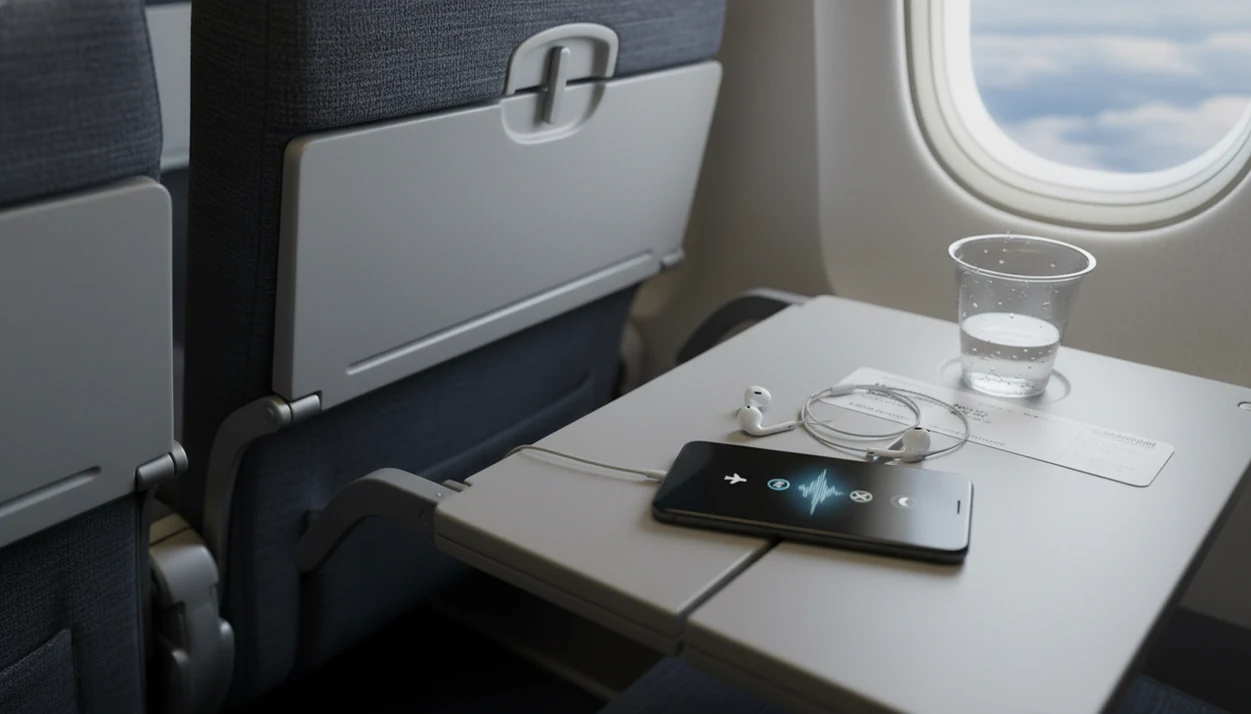
If you're searching for how to calm flight anxiety with phone tools, build an offline calm kit before you fly: breathing audio, grounding prompts, downloaded entertainment, notes that challenge scary thoughts, and reminders for takeoff, turbulence, and landing. Use the phone as a structured coping aid, not as a panic-scrolling device.
Definition: Phone tools for flight anxiety are pre-downloaded apps, audio, checklists, notes, and reminders that guide breathing, grounding, education, and distraction before and during a flight without needing Wi-Fi.
TL;DR
- Download everything before airport day: breathing tracks, grounding prompts, music, videos, games, and your flight anxiety plan.
- Use the phone in a sequence: breathe first, ground your senses, read one safety reminder, then switch to calm distraction.
- Phone tools can reduce symptoms, but severe fear of flying may still need CBT, exposure therapy, or medical guidance.
Phone-Based Flight Anxiety: Five Facts Before You Build a Calm Kit
- A phone can become an offline calm kit when you prepare downloads before the flight, not when panic starts in row 22.
- Breathing and grounding exercises are practical anxiety skills you can follow on-screen, by audio, or from a saved Notes app card.
- Distraction works better when it is planned and absorbing. Random social media scrolling often feeds the alarm loop instead.
- Short education about turbulence, takeoff sounds, and aviation safety can reduce catastrophic thoughts when the wheels bump along the runway.
- Phone tools can help symptoms, but they are not a full substitute for CBT, exposure therapy, or medical care when fear is severe.
Make the plan boring on purpose. The night before a 6:40 a.m. flight is not the time to discover your playlist never downloaded.
How Phone Tools for Flight Anxiety Work in the Nervous System
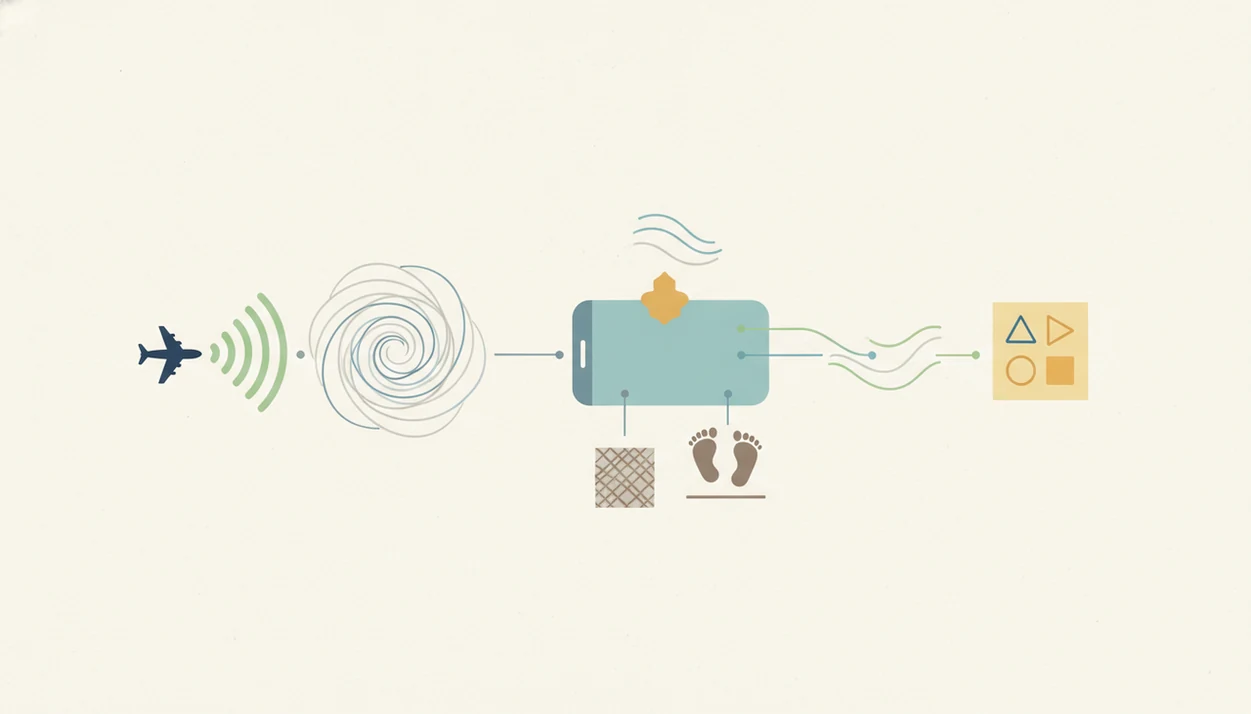
Phone-based flight anxiety tools work by interrupting the anxiety loop: trigger, body alarm, catastrophic thought, safety behavior, and renewed fear. The phone gives your brain a prepared task before it starts treating every sound as evidence.
Paced breathing lowers arousal by slowing the breathing pattern and giving your attention one small job for your body. Grounding shifts attention from imagined danger to sensory evidence, such as the seat fabric, the air vent, or your feet pressing into the floor. Downloaded safety notes support CBT-style thought correction by replacing “the plane is dropping” with “this movement is turbulence, and aircraft are built for it.”
Clinicians typically recommend CBT and exposure-based treatment for specific phobias when fear is persistent or disabling. A 2017 review found CBT and exposure-based treatments produce significant reductions in specific phobias source. For many nervous flyers, phone tools work best as practice support between those bigger steps.
Offline Phone Requirements for a Flight Anxiety Calm Kit
Build the calm kit before you open the airline app for the final nervous refresh. It should work in airplane mode, with no airport Wi-Fi, no signal, and no last-minute login code.
- Power setup: Charge the phone fully, then pack a power bank, charging cable, and wired or fully charged headphones.
- Offline downloads: Save breathing audio, videos, playlists, podcasts, simple games, PDFs, and any meditation tracks.
- Backup plan: Put your flight-day plan in Notes, screenshots, or a PDF in case an app freezes.
- Quiet settings: Turn off nonessential notifications, news alerts, and social feeds that pull you into threat-scanning.
- Airplane-mode test: At home, switch on airplane mode and open every file. If it does not open on the couch, do not trust it over Nebraska.
A good fear of flying resource should explain causes, treatments, coping strategies, and tools for nervous flyers, not just hand you a pretty timer and hope panic behaves.
How to Use Phone Tools for Flight Anxiety During a Flight
Use phone tools in a fixed order: open the kit, breathe, ground, read one safety note, then distract. Anxiety hates decisions, so remove as many as you can.
- Open your offline calm kit before boarding or as soon as you sit down.
- Start paced breathing for two to five minutes before entertainment.
- Use 5-4-3-2-1 grounding when panic spikes.
- Read one safety reminder about takeoff, turbulence, or landing.
- Switch to planned distraction such as an audiobook, movie, puzzle, or calm game.
- Reset the sequence after takeoff, turbulence, or descent.
1. Open the offline calm kit
Put the boarding pass in Apple Wallet, then open your saved calm-kit note before the boarding group is called.
2. Start paced breathing
Set a two-minute phone timer and breathe slowly, without forcing a huge inhale.
3. Ground with five senses
Name five things you see, four you feel, three you hear, two you smell, and one you taste.
4. Read one safety reminder
Pick one note only. More searching can turn into reassurance checking.
5. Move into planned distraction
Start the content you already chose. No browsing.
For step-by-step support beyond the phone, pair this with a pre-flight anxiety routine that begins before you leave home.
Step 1: Download Breathing Tools for Flight Anxiety on Phone
Does breathing on your phone help flight anxiety? Yes, if it is slow, practiced, and available offline before you need it.
Download guided breathing audio, a simple timer, or a visual breathing animation before travel day. Choose diaphragmatic breathing, where your belly and lower ribs move gently, instead of forceful breathing or long breath-holding. Try two minutes at the gate, three minutes during taxi, and five minutes if turbulence starts. The seat belt clicked across the lap can be your cue to begin.
Controlled studies of diaphragmatic breathing show reductions in stress markers such as cortisol and heart rate, according to a 2017 review source. The most useful phone breathing tool is the one you practiced before boarding, because panic makes new instructions harder to follow.
If tomorrow’s flight is the problem, use a short plan like how to not be scared of flying tomorrow alongside the breathing download.
Step 2: Save Grounding Prompts for Flight Anxiety on Phone
How do you use grounding prompts for flight anxiety on phone? Save a lock-screen image, note, or screenshot with the 5-4-3-2-1 sequence so you do not have to remember it under stress.
Use cabin-specific prompts. Name the seat fabric, armrest, tray table, air vent, overhead bin latch, and both feet on the floor. Listen for the crew’s calm voice instead of scanning every engine sound. Grounding helps separate present-moment evidence from imagined catastrophe. Grounding is commonly used in CBT-style anxiety management because it redirects attention from threat predictions to observable cues in the present moment; it is a coping skill, not proof that fear has disappeared.
Save this script: “This is anxiety, not danger; I can ride this wave.”
Tiny sentence. Big job.
If screens make you motion sick, close your eyes and run the same list by touch and sound. Feel your shoes on the floor. Notice your jaw unclench. Count five slow breaths without looking down.
Step 3: Build a Downloaded Distraction Plan for Flight Anxiety
Planned distraction reduces the attention available for fear cues, aircraft noises, and body scanning. The key word is planned; panic scrolling is not the same thing.
| Flight phase | Better phone choice | Avoid |
|---|---|---|
| Boarding | Familiar playlist or gentle podcast | News alerts, work email |
| Takeoff | Familiar comedy or breathing audio | Intense thrillers |
| Cruise | Audiobook, movie, show, puzzle | Doomscrolling |
| Turbulence | Low-motion game or audio story | Fast-cut videos |
| Cabin lights off | Downloaded audio-only option | Bright endless scrolling |
Download movies, shows, audiobooks, podcasts, playlists, puzzles, and simple games before airport day. Absorbing tasks give your brain something specific to process, so the overhead bin latch softly rattling does not become the whole story.
For some people, a calm puzzle app works better than a movie because it keeps the hands busy. For others, audio is safer when motion sickness shows up. Choose before the flight, not mid-panic.
Step 4: Add Flight Safety Notes to Your Phone Anxiety Plan
- Turbulence is uncomfortable, but it is a normal aircraft movement, not a sign that the plane is failing.
- Takeoff sounds change as flaps, landing gear, and engine settings change; changing noise does not mean danger.
- Banking turns can feel steep from a window seat, especially when you are already monitoring every sensation.
- A peer-reviewed aviation risk analysis estimated the fatal accident rate for major world airlines at about 0.06 per million flights source.
- In 2022, U.S. airlines and foreign airlines serving the United States carried 868.4 million passengers, according to federal traffic data source.
Save these as short notes, not a long essay. When the shoulder strap tugs during a bump, your anxious brain needs one clear sentence. Understanding aircraft sensations can reduce misinterpretation, but it should not be used to argue with yourself for twenty minutes.
For more plain-language safety and coping guidance, tools like Fear of Flying Guide can sit beside airline information, therapy skills, and your own notes. Fear of Flying Guide is most useful here as an organized reference for nervous flyers who want plain-language explanations, saved coping prompts, and next-step guidance without relying on in-flight Wi-Fi.
Step 5: Set Phone Reminders for Takeoff, Turbulence, and Landing
Phone reminders reduce decision-making when anxiety is high. They tell you what to do next when your mind wants to rehearse every possible problem.
Create alerts for airport arrival, boarding, taxi, takeoff, cruise, possible turbulence, descent, and landing. Keep each prompt short: “breathe for three minutes,” “open grounding note,” “play audiobook,” or “read turbulence card.” Calendar alerts, alarms, widgets, lock-screen notes, and scheduled focus modes can all work.
I like reminders that look almost dull. “Open plan.” “Sip water.” “Feet down.” That is enough.
After the flight, turn off the alerts. Leaving travel alarms active can keep your nervous system acting as if the trip is still happening, even when your bag is already by the door at home.
Common Mistakes With Phone Tools for Flight Anxiety
The biggest mistake is relying on in-flight Wi-Fi for essential coping tools. If the breathing track, safety note, or playlist needs a signal, it is not part of the calm kit yet.
Do not use unstructured scrolling as the main strategy. It can add news, conflict, comparison, and health scares to an already activated nervous system. Also skip violent shows, stressful podcasts, overstimulating games, and anything that will wreck sleep on a long flight.
Another mistake is waiting until panic peaks. Open the plan while you still have some thinking room, even if that means starting in the gate area with dry mouth and a half-charged phone. If panic attacks, trauma memories, or medical symptoms are part of your flying fear, phone tools are not enough on their own. A panic attack on plane plan should include clinical support when symptoms are severe.
Flight Anxiety Phone Plan Check Before Boarding
Run this check while you can still step out of the boarding lane. Do it before the instinct to text “I can’t do this” takes over.
- Airplane-mode test: Open every file, playlist, note, video, and game while airplane mode is on.
- Battery check: Confirm phone charge, headphones, charger, and power bank are reachable.
- Home-screen access: Put the calm-kit note on your home screen, lock screen, or first Notes folder.
- First exercise: Start one breathing track before anxiety becomes overwhelming.
- Support contact: Name one person, therapist, doctor, or support resource to contact before or after the flight if needed.
If you want a wider checklist, the fear of flying tips page can help you connect phone tools with sleep, seating, airport timing, and support scripts.
Limitations
Phone tools can reduce flight anxiety symptoms, but they may not cure a flying phobia. Treat them as support, not a promise.
- Severe or disabling fear of flying may need CBT, exposure therapy, medication guidance, or medical evaluation.
- Relying only on distraction can maintain avoidance patterns over time, especially if you never learn about turbulence or practice feared steps.
- Screen use can worsen motion sickness for some passengers during turbulence, descent, or tight turns.
- Blue light, stressful media, and excessive screen time can interfere with rest on long flights.
- Phone batteries, app crashes, missing headphones, login problems, and airline rules can interrupt the plan.
- Panic attacks, trauma histories, fainting concerns, chest pain, or breathing symptoms should be discussed with a qualified clinician.
- A phone plan may help you board, but longer recovery often needs repeated practice across multiple flights.
FearOfFlying.com can be useful as a nervous flyer guide when you want education, coping tools, and next steps in one place, but it does not replace individualized care.
FAQ
Can my phone calm flight anxiety?
Yes, a phone can help calm flight anxiety when it contains prepared breathing, grounding, education, and distraction tools. It works best as an offline plan used in a clear sequence, not as random scrolling during panic.
What should I download before flying?
Download breathing audio, grounding notes, music, videos, podcasts, audiobooks, simple games, and short safety reminders. Test every item in airplane mode before airport day so the plan works without Wi-Fi.
Do anxiety apps work offline?
Many anxiety apps and media tools work offline only if you download the content in advance. Open each app in airplane mode at home to confirm the breathing track, meditation, or note actually loads.
Is scrolling bad for flight anxiety?
Random scrolling can worsen flight anxiety by adding stressful news, conflict, or body-focused reassurance checking. Structured phone use is different because it follows a planned sequence: breathe, ground, read one reminder, then distract.
What helps during turbulence?
During turbulence, start slow breathing, put both feet on the floor, use a 5-4-3-2-1 grounding prompt, and read one turbulence safety note. If screens feel nauseating, switch to downloaded audio.
Can games reduce flight anxiety?
Low-stress games can reduce flight anxiety by giving attention a specific task. They should not be the only strategy, because fear of flying often also needs breathing practice, education, and sometimes therapy.
Should I use medication for flight anxiety?
Medication decisions for flight anxiety should be made with a clinician who knows your health history and travel needs. When appropriate, medication can be combined with behavioral tools such as breathing, grounding, and CBT skills.
When should I get therapy for fear of flying?
Consider therapy if flying fear causes avoidance, panic attacks, cancelled trips, trauma symptoms, or major distress before travel. CBT, exposure therapy, and medical evaluation may be appropriate when phone tools are not enough.