
How To Not Be Scared Of Flying Tomorrow: A Calm 24-Hour Plan
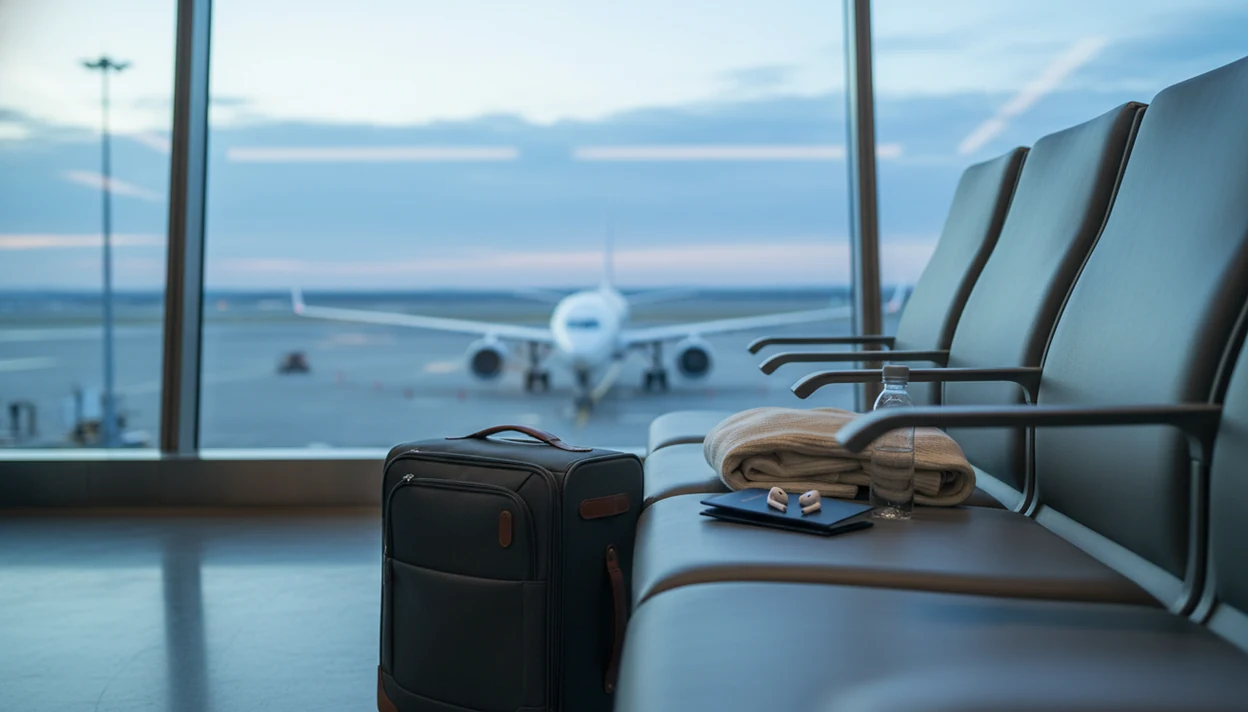
The best way to handle how to not be scared of flying tomorrow is to stop trying to erase fear and follow a short plan: prepare your body tonight, reduce uncertainty before the airport, and use simple panic-control tools during boarding, takeoff, cruise, and landing. Your goal is not to feel fearless; it is to feel steady enough to board, stay on the plane, and complete the flight safely.
Last-minute flight anxiety is a time-limited fear response before an imminent flight, best managed with preparation, nervous-system regulation, realistic safety facts, and in-flight coping steps.
- Tonight, reduce avoidable stress: pack early, choose calming distractions, avoid doom-scrolling flight stories, and plan your airport timeline.
- Tomorrow, treat fear as a body alarm rather than a danger signal: breathe slowly, ground your senses, and use scripted self-talk during each flight phase.
- Medication may help some people, but alcohol and unsupervised sedatives can create risks; ask a clinician if you are considering medication.
<h2 id="flying-tomorrow-terrified-five-facts">Flying Tomorrow Terrified: The 5 Facts That Matter Most</h2>
If you are flying tomorrow terrified, your job is not to solve your whole fear of flying overnight. Your job is to lower the panic enough to follow the next step.
- Fear can stay present and still be manageable. You can board with a dry mouth, sweaty passport grip, and a racing mind. Those symptoms are miserable, but they are not proof the flight is unsafe.
- Short tools can reduce panic intensity quickly. Slow breathing, 5-4-3-2-1 grounding, and one prepared self-talk line give your brain something concrete to do.
- **Commercial flying is very safe, even when your body disagrees. In 2022, the fatal accident rate for large commercial air transport airplanes worldwide was 0.37 per million flights, or less than one fatal accident per 2.7 million flights, according to the Aviation Safety Network source.**
- One flight is not a cure. It can still be a successful exposure step if you complete it without escaping.
- Medical choices should not be improvised at the gate. If medication is involved, talk to a doctor or pharmacist before travel.
Your fear can be loud and still be wrong.
<h2 id="how-last-minute-flight-anxiety-works">How Last Minute Flight Anxiety Works In Your Brain And Body</h2>
Last-minute flight anxiety works by turning an upcoming flight into a threat cue, which triggers adrenaline, body sensations, catastrophic thoughts, and an urge to escape. The closer the flight gets, the more convincing those thoughts can feel.
Your threat detection system is trying to protect you. It scans the airline app, the weather, the aircraft type, and every tiny delay. Then adrenaline adds fuel: faster heart, tight chest, shallow breathing, stomach drop, shaky legs. A calendar alert three days before departure can start the loop before you have even packed.
That alarm is a fear signal, not an aviation safety signal. Your body is reporting discomfort, not aircraft condition.
Panic symptoms often rise, peak, and fall when you stop feeding them with avoidance. Clinicians typically recommend cognitive behavioral therapy and exposure-based treatment for phobias, but for tomorrow, use a smaller version: name the alarm, stay put, breathe out slowly, and give your body one small job.
<h2 id="how-to-use-24-hour-flight-anxiety-plan">How To Use A 24-Hour Plan For Last Minute Flight Anxiety</h2>
A 24-hour plan for last minute flight anxiety works because it removes decisions when your brain is least able to make them. Save this in your Notes app and follow the next line, not the whole day at once.
- Pack tonight. Put your ID, passport if needed, medication, charger, headphones, gum, snacks, and comfort item in one bag before bed.
- Set tomorrow’s timeline. Write wake-up time, leave time, check-in target, security buffer, bathroom stop, and boarding time.
- Use the airport routine. Eat lightly, buy water after security, walk for five minutes, use the bathroom, and start your playlist.
- Run the boarding script. Say, “I can feel scared and still board. My next job is to reach my seat.”
- Manage takeoff, cruise, and landing. Breathe with longer exhales, ground your senses, keep your seatbelt fastened, and return to one task.
For a flight tomorrow, tolerating anxiety is more useful than checking whether anxiety has disappeared.
<h2 id="before-you-start-flight-anxiety">Before You Start: Check What Kind Of Flight Anxiety You Have</h2>
Before you start the 24-hour plan, sort out what kind of fear is driving the alarm and what safety limits apply tomorrow. This keeps the plan practical instead of forcing every anxious flyer into the same script.
- Name the main trigger. Decide whether your fear is mostly panic symptoms, turbulence and safety worry, claustrophobia, loss of control, or a past frightening or traumatic experience. Your tools should match the trigger.
- Check your constraints. Review medication instructions, alcohol use, pregnancy, medical conditions, and whether you must drive after landing. If any of those are in play, do not improvise with sedatives or someone else’s pill.
- Write two contacts. Put one emergency contact in your phone note, plus one airport support person you can text before security or boarding.
- Choose your tools now. Pick the coping tools you will actually use before boarding starts: breathing, grounding, music, a show, a written script, walking, or telling the gate agent you are nervous.
- Ask for medical advice when symptoms seem unusual. Chest pain, fainting, severe breathing problems, or symptoms that do not match your usual anxiety deserve medical guidance, not guesswork.
<h2 id="step-1-tonights-fear-of-flying-plan">Step 1: Set Up Tonight’s Fear Of Flying Plan</h2>
Tonight’s plan should make tomorrow boring on purpose. Before you open the airline app again, pack the things that reduce avoidable stress: documents, medications, phone charger, backup battery, snacks, headphones, gum, downloaded shows, and one comfort item that does not need explaining.
Write a short airport timeline. Include wake-up time, shower, food, leaving home, parking or rideshare, check-in, security, bathroom, water, and boarding buffer. A half-charged phone at 5:20 a.m. can become a panic trigger. Fix it now.
Skip alcohol, crash videos, turbulence clips, and repeated weather checking. None of those prepare you. They train your brain to keep searching.
Use a simple wind-down: shower, light food, water, two minutes of slow breathing, then bed. Sleep may be patchy. That’s okay. Resting in the dark still helps your body more than late-night searching for turbulence safety.
If you want a fuller checklist, use a pre-flight anxiety routine before you start refreshing departure details.
<h2 id="step-2-airport-routine-flight-anxiety">Step 2: Choose Tomorrow’s Airport Routine Before Panic Chooses It</h2>
What should I do at the airport if I have flight anxiety tomorrow? Arrive with enough buffer to avoid rushing, but not so early that you spend three hours staring at the departure board and feeding dread.
Seat choice can help, if you still have options. An aisle seat gives easier bathroom access and movement. A window seat gives some people visual control. Seats near the wing often feel less motion, though availability is never guaranteed.
Tell one person the truth in plain language: “I’m anxious about flying, and I may need you to talk me through boarding.” If you are alone, you can tell a gate agent, “I’m a nervous flyer and may need a minute when boarding starts.”
At the airport, keep the routine small: eat lightly, hydrate, walk, use the bathroom, avoid extra caffeine, and start a calming playlist. Airport carpet under pacing feet is still movement. Use it.
A good fear of flying resource should explain causes, treatments, coping strategies, and tools for nervous flyers, not sell certainty that no anxious person can actually guarantee.
<h2 id="step-3-takeoff-panic-steps">Step 3: Use Takeoff Panic Steps When Flying Tomorrow Terrified</h2>
Takeoff panic is common because the sensations are loud, fast, and unfamiliar. Engine noise, acceleration, climbing, banking, pressure changes, and gear movement can all feel alarming when your body is already on watch.
- Plant your feet. Press both soles into the floor and notice the pressure under your heels.
- Drop your shoulders. Let your jaw unclench and place your tongue lightly behind your teeth.
- Lengthen your exhale. Try inhaling for four and exhaling for six, five times.
- Ground your senses. Name five things you see, four you feel, three you hear, two you smell, and one you taste.
- Use one script. Say, “This is takeoff. These sensations are expected. My job is to sit, breathe, and let the plane climb.”
During the first 10 minutes, keep your gaze on one fixed point or your phone note. The engine rumble under the floor may feel intense. It is also part of the normal sequence.
If panic spikes hard, the steps in a panic attack on plane plan can keep you from arguing with every symptom.
<h2 id="step-4-turbulence-cruise-anxiety-safety-facts">Step 4: Handle Turbulence And Cruise Anxiety With Realistic Safety Facts</h2>
Turbulence is uncomfortable, but it is usually not a sign that the aircraft is unsafe. Your body may read bumps as danger; pilots and aircraft are built to operate with changing air movement.
| Fear thought during cruise | More realistic safety frame | What to do with your body |
|---|---|---|
| “The plane is falling.” | Turbulence is air movement, not loss of control. | Keep your seatbelt fastened and breathe out slowly. |
| “The bumps mean danger.” | In 2022, large commercial air transport had 0.37 fatal accidents per million flights, according to Aviation Safety Network data. | Loosen your grip and lower your shoulders. |
| “Driving would be safer.” | The National Safety Council estimates U.S. lifetime odds of dying in air or space transport at about 1 in 205,552, compared with 1 in 93 for motor vehicle crashes source. | Watch crew behavior, then return to your task. |
| “I can’t stand this.” | Panic rises and falls when you stop adding escape behaviors. | Count breaths or restart your playlist. |
Use this script: “Seatbelt on. Hands open. Slow exhale. Crew are working normally. Back to my task.”
The most common medically supported way to reduce phobic fear long term is exposure combined with cognitive restructuring, not avoidance.
<h2 id="step-5-medication-alcohol-flight-anxiety">Step 5: Make A Medication And Alcohol Decision Safely</h2>
Some people use prescribed short-acting medication for severe flight anxiety, but that decision belongs with a qualified clinician. It should not start with a drink at the airport bar or a pill from someone else’s bag.
Alcohol is not a reliable panic plan. It can worsen dehydration, impair judgment, interact with medications, increase sedation, and lead to rebound anxiety later. On a plane, that matters. You need enough clarity to follow instructions, move safely, and notice how your body is responding.
If you are considering medication for tomorrow, contact your doctor, prescribing clinician, or pharmacist before you fly. Ask about timing, interactions, side effects, alcohol, altitude-related concerns, and whether you should avoid driving after landing.
Medication, when appropriate, should support coping skills rather than replace them. Keep the same plan: breathing, grounding, seatbelt on, simple self-talk, and one task for your attention.
No airport improvising.
<h2 id="common-mistakes-last-minute-flight-anxiety">Common Mistakes That Make Last Minute Flight Anxiety Worse</h2>
These common last-minute flight anxiety mistakes feel useful at first, but they usually teach your brain to demand more certainty.
- The turbulence map loop. Checking turbulence maps every 10 minutes gives short relief, then another spike. Replace it with one planned weather check, then stop.
- The crash-story spiral. Reading accident stories before bed trains your imagination. Replace it with downloaded music, a familiar show, or a written coping card.
- The reassurance chase. Asking “Are you sure it’s safe?” can calm you briefly, but the brain learns to ask again. Replace it with, “I have enough information to board.”
- The empty-stomach caffeine stack. Skipping food and adding extra coffee can mimic panic symptoms. Replace it with toast, a banana, or crackers and water.
- The no-plan airport arrival. Showing up with tangled headphones, no snack, and no script makes panic the organizer. Replace it with a written flight-day plan.
Feeling anxious means your alarm system is activated. It does not mean the flight is dangerous.
Tools like Fear of Flying Guide, SOAR, and Fly Confident can be useful when they give clear steps instead of vague reassurance. For quick practical ideas, start with fear of flying tips that fit your actual flight day.
<h2 id="after-flight-progress-fear-of-flying">After Tomorrow’s Flight: Turn One Scary Flight Into Progress</h2>
After the flight, do a five-minute review before the memory gets rewritten as “I barely survived.” Open your Notes app and write three lines: what fear predicted, what actually happened, and what you did that helped.
Maybe fear predicted, “I’ll run off during boarding.” What happened: you boarded with a dry mouth and stayed seated. Maybe fear predicted, “Turbulence will make me lose control.” What happened: ice cubes clicked in a cup, your hands tightened, then the moment passed.
Evidence matters here. A randomized trial of cognitive behavioral therapy for fear of flying found that 80 to 90% of treated patients were able to fly after treatment, with large reductions in anxiety scores source. A 2015 meta-analysis also found large effects for exposure-based treatments for specific phobias source.
One flight can build confidence, but lasting change usually comes from repeated, structured practice.
Next steps can include CBT, exposure therapy, virtual reality exposure, a structured course, or clinician support. Fear of Flying Guide also organizes education and coping tools at FearOfFlying.com for people who want a calmer recovery path after the immediate trip.
Limitations
This 24-hour plan can help you get through tomorrow, but it has limits. Treat those limits seriously, especially if your anxiety is severe.
- No plan can guarantee you will feel completely calm tomorrow.
- A last-minute plan is not a replacement for full CBT, exposure therapy, trauma treatment, or medical care.
- Medication may be inappropriate for some people and should not be started without professional guidance.
- Alcohol, heavy sedation, and mixing substances can create safety risks during travel.
- Online self-help quality varies. It may not be enough for panic disorder, severe trauma, substance use concerns, or complex mental health conditions.
- Some readers may need to postpone travel if they are at risk of serious decompensation or cannot remain safe.
- If you have chest pain, fainting, severe breathing problems, or unusual symptoms, seek medical advice rather than assuming it is anxiety.
- Children, pregnant travelers, older adults, and people with medical conditions may need more tailored guidance.
For severe or repeated fear, fear of flying help should include structured treatment options, not just a one-day coping list.
FAQ
Why am I so scared before flying tomorrow?
You are likely experiencing anticipatory anxiety, where your brain reacts to the upcoming flight as if the threat is already happening. The closeness of the flight makes catastrophic thoughts feel more urgent and believable.
How can I calm down before boarding?
Use a short routine: breathe with longer exhales, name five things you see, walk for two minutes, drink water, and repeat one script. Say, “I can board while anxious; I only need to do the next step.”
What helps during takeoff when I feel panicky?
Plant your feet, relax your jaw, lengthen your exhale, and keep your eyes on one fixed point. Remind yourself that engine noise, acceleration, banking, and pressure changes are expected parts of takeoff.
Is turbulence dangerous for the plane?
Turbulence is usually uncomfortable rather than dangerous for the aircraft. Keep your seatbelt fastened, loosen your grip, watch the crew’s behavior, and return attention to a task.
Should I take medication for flight anxiety tomorrow?
Medication for flight anxiety should be discussed with a doctor, prescribing clinician, or pharmacist. Do not start unsupervised sedatives or take someone else’s medication at the airport.
Does alcohol help with fear of flying?
Alcohol is a poor anxiety strategy because it can cause dehydration, impaired judgment, medication interactions, sedation, and rebound anxiety. It can also make it harder to use coping skills during the flight.
Where should I sit on the plane if I am anxious?
Choose an aisle seat if movement and bathroom access help you, a window seat if visual control helps, or an over-wing seat if you want less perceived motion. The right seat depends on your main trigger.
Can a panic attack on a plane hurt me?
A panic attack can feel intense, but it typically peaks and passes without harming you. Seek medical care for unusual symptoms, severe chest pain, fainting, or symptoms that do not match your usual panic pattern.
Will one flight cure my fear of flying?
One flight may build confidence, but it usually does not cure fear of flying by itself. Lasting improvement often requires structured exposure, CBT, or repeated planned practice.