
Fear Of Flying Tips For Before Boarding, Takeoff, Turbulence, And Long Flights
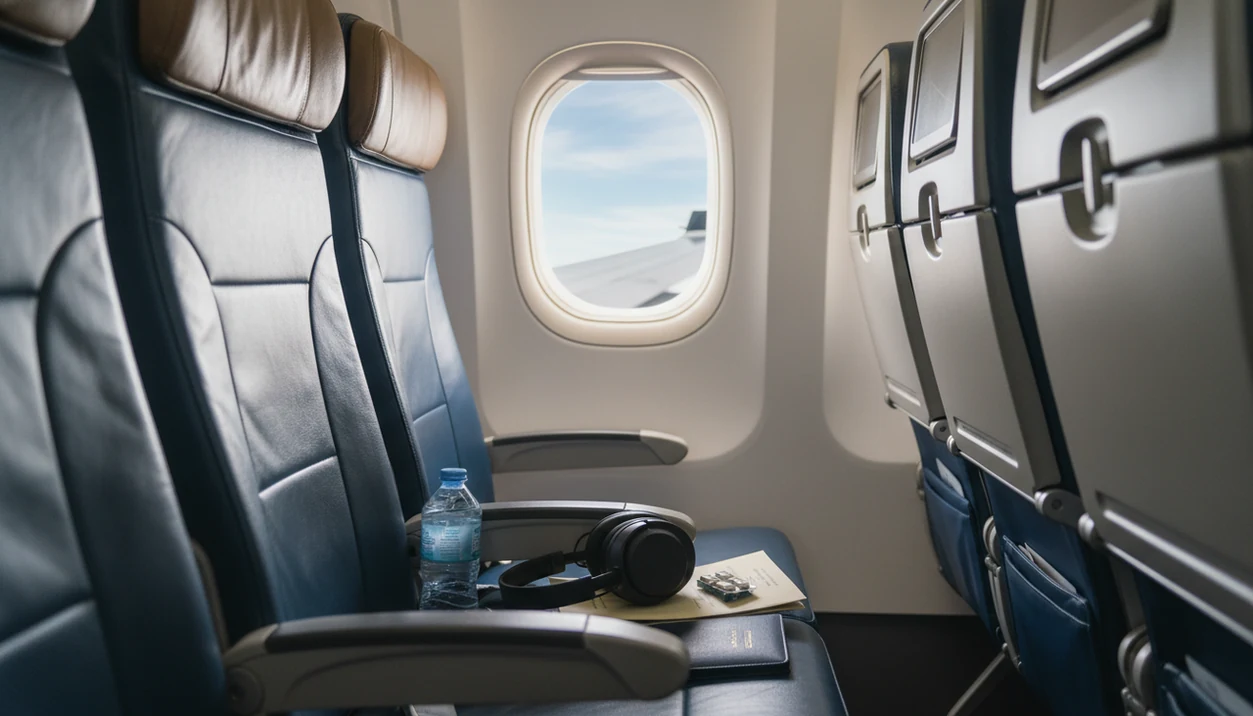
The best fear of flying tips combine preparation before the airport, calming skills during takeoff and turbulence, realistic aviation facts, and gradual exposure over time. The goal is not to feel perfectly calm; it is to lower anxiety enough to board, stay seated, and finish the flight safely.
> Definition: Fear of flying tips are practical coping strategies that help nervous flyers manage anticipatory anxiety, panic sensations, turbulence fears, claustrophobia, and catastrophic thoughts before and during air travel.
- Use a simple flight plan: prepare your body before boarding, choose calming tools for takeoff, and have a turbulence script ready.
- Breathing, grounding, distraction, and aviation facts work best when practiced before the flight, not only after panic starts.
- If flying anxiety is disrupting work, family, or travel, CBT, exposure therapy, fear-of-flying courses, VR exposure, or medical advice may help more than quick tips alone.
Fear Of Flying Tips At A Glance For Nervous Flyers
The fastest way to use fear of flying tips is to match one tool to each stressful moment: booking, airport waiting, boarding, takeoff, turbulence, panic, and long stretches in the air. Don’t wait until your body is already at a 9 out of 10.
Before booking, choose a realistic flight time, avoid tight connections, and pick a seat that lowers your main trigger. Aisle seats often help claustrophobia. Window seats help some people feel oriented. Over-wing seats may feel steadier.
Before boarding, eat lightly, hydrate, limit caffeine, and rehearse one breathing method. If your passport pouch is already on the kitchen counter, add gum, headphones, and a written script beside it.
For takeoff, expect engine noise, acceleration, banking, and pressure changes. For turbulence, tell yourself discomfort is not the same as danger, then loosen your jaw and shoulders.
For long flights, divide time into blocks: meal, movie, music, walk, rest, check-in. Make the plan boring on purpose.
Before You Start: Check Your Triggers, Symptoms, And Support Needs
Before you build a flight plan, get clear on what you are actually planning for. A nervous flyer who fears takeoff needs a different first tool than someone whose main problem is claustrophobia or panic sensations.
- Name your main trigger: Choose the moment that usually spikes first: takeoff, turbulence, tight cabin space, panic symptoms, or the feeling of not being in control.
- Rate your starting point: Give your baseline anxiety a 0–10 number, then define success realistically, such as boarding with a 6, staying seated, or finishing the flight without repeated reassurance checking.
- Plan medical support when needed: If symptoms are new, severe, or unusual for you, arrange appropriate medical advice before travel instead of guessing that every sensation is anxiety.
- Choose your level of support: Decide whether self-guided practice is enough, or whether you need a companion, clinician, structured course, or fear-of-flying program.
- Download your tools early: Save playlists, shows, breathing timers, notes, boarding passes, and coping scripts before you leave home so airport Wi-Fi does not become one more threat cue.
Five Flight Anxiety Facts Every Nervous Flyer Should Know
Flight anxiety is common, treatable, and not a sign that the aircraft is unsafe. These five facts help your brain stop treating every sensation as evidence of danger.
- In a U.S. population survey, 17.4% of adults said they were at least “a little afraid” of flying, so nervous flyers are not rare passengers. source
- In a large U.S. anxiety survey, 2.6% of adults met lifetime criteria for aviophobia, meaning a specific fear of flying. source
- Fear of flying can overlap with specific phobias, panic disorder, trauma memories, claustrophobia, generalized anxiety, or fear of losing control.
- Exposure-based treatments have strong evidence for phobias; a meta-analysis found large effects for exposure therapy in specific phobias source.
- Quick tools can calm symptoms today, but repeated practice builds more durable confidence than a one-time airport trick.
The most common medically supported way to reduce a specific phobia is gradual exposure combined with skills for tolerating feared body sensations.
How Fear Of Flying Anxiety Works In The Brain And Body
Fear of flying anxiety works by activating the brain’s threat system before and during flight, even when the flight itself is routine. The body reacts with fight-or-flight chemistry, then the mind tries to explain the surge.
Adrenaline can create a racing heart, shallow breathing, muscle tension, dry mouth, scanning, and a strong urge to escape. Anticipatory anxiety often starts days earlier. That nervous refresh of the airline app the night before a 6:40 a.m. flight is not random; your brain is rehearsing threat.
Imagination can feel like evidence. Normal flight sensations then get misread: takeoff thrust becomes “something is wrong,” banking becomes “we’re tipping,” turbulence becomes “we’re falling,” and a seatbelt sign becomes “danger.”
The sensations are real. The conclusion may be wrong.
Avoidance, reassurance seeking, and repeated checking can keep the loop strong. You feel relief for a minute, but your brain learns that flying must be escaped or monitored.
How To Use Fear Of Flying Tips As A Step-By-Step Flight Plan
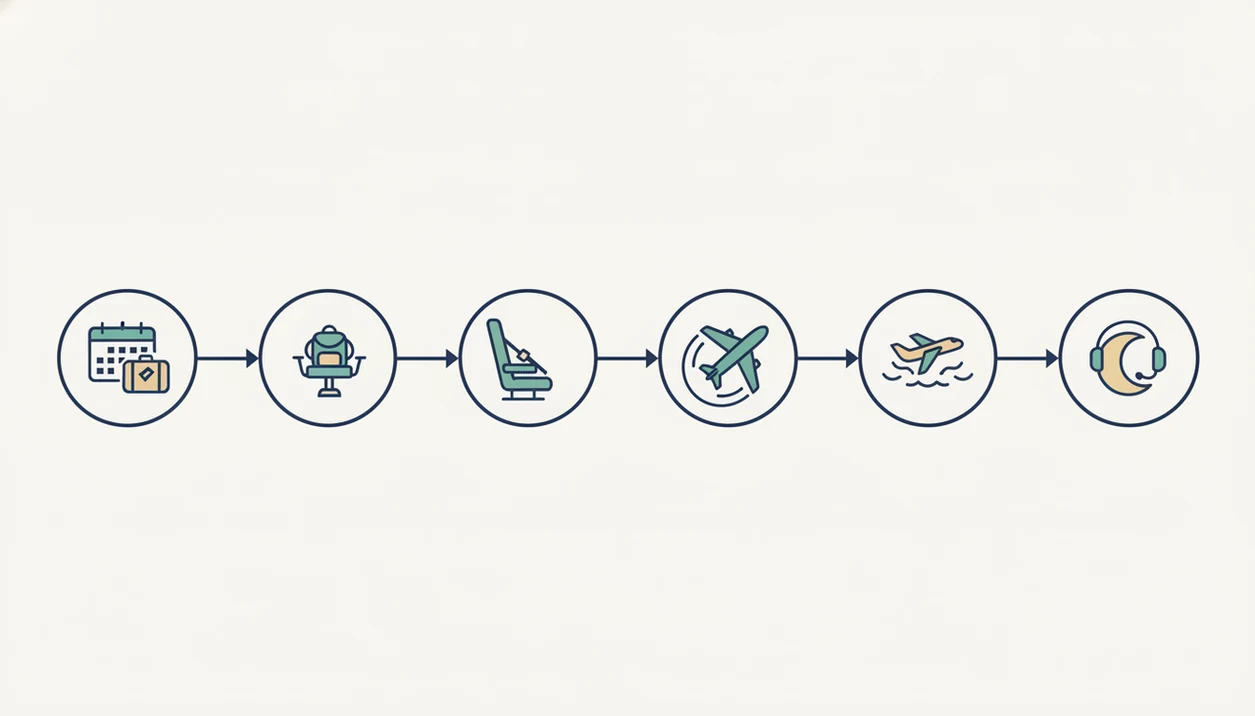
Use fear of flying tips as a small flight-day plan, not a giant list of calming ideas. Pick fewer tools than you think you need, then practice them before the airport.
1. Set a manageable flight goal
- Choose a realistic goal: Complete the flight with manageable anxiety, instead of demanding zero fear.
- Write the goal in your Notes app: “My job is to board, sit down, breathe, and finish the flight.”
2. Pick three coping tools
- Choose one body tool, one attention tool, and one aviation fact: For example, slow exhale breathing, a downloaded playlist, and “turbulence is airflow, not falling.”
3. Practice before travel day
- Rehearse daily for several days: Set a two-minute phone timer and practice before you open the airline app.
4. Run the plan during stress points
- Use the plan at predictable moments: Packing, airport arrival, boarding, takeoff, turbulence, descent, and landing.
5. Review the flight afterward
- Record what worked after landing: Post-flight notes typed in baggage claim become evidence for the next trip.
Before Boarding Flight Anxiety Tips For The Airport
Before boarding, reduce pressure on your body and remove avoidable triggers. Airport anxiety is easier to handle when you are not also hungry, late, over-caffeinated, and reading incident threads.
Book flights that reduce strain: nonstop when possible, enough connection time, daytime departures if mornings feel less scary, and seats chosen around your triggers. If you need a fuller sequence, a pre-flight anxiety routine can turn the night-before scramble into a checklist.
Pack this before you leave: headphones, water after security, light snacks, gum, downloaded entertainment, puzzles, a comfort item, and one written coping script. A half-charged phone and tangled headphones at the bottom of a bag can make anxiety feel bigger than it is.
Use airport time deliberately. Check in early, walk for ten minutes, breathe slowly in the bathroom mirror, and stop repeated reassurance searches. If support helps, tell a companion or flight attendant, “I’m anxious about flying, and a calm check-in helps.” They can support you, but they can’t erase every sensation.
Takeoff Fear Of Flying Tips For Engine Noise And Acceleration
Does takeoff feel scary because of the engine noise, speed, and angle? Takeoff often feels intense because the aircraft uses high power, climbs nose-up, retracts gear, adjusts flaps, turns, and changes sound levels in quick sequence.
Use your body first. Inhale for 4, exhale for 6, and repeat through the first few minutes. Keep both feet grounded, shoulders dropped, jaw unclenched, and hands loose on your thighs. One small job for your body is enough.
Try this takeoff script: “This is loud and powerful, not unsafe.” Say it when the seat belt clicked across the lap and your brain starts treating acceleration as an alarm.
Give your attention a task. Count backward by threes, name five visible objects, listen to one song, or watch the cabin crew’s ordinary movements. Don’t monitor every sound as if you must diagnose the aircraft from row 23. That job is already taken.
Turbulence Tips For Nervous Flyers Who Fear Losing Control
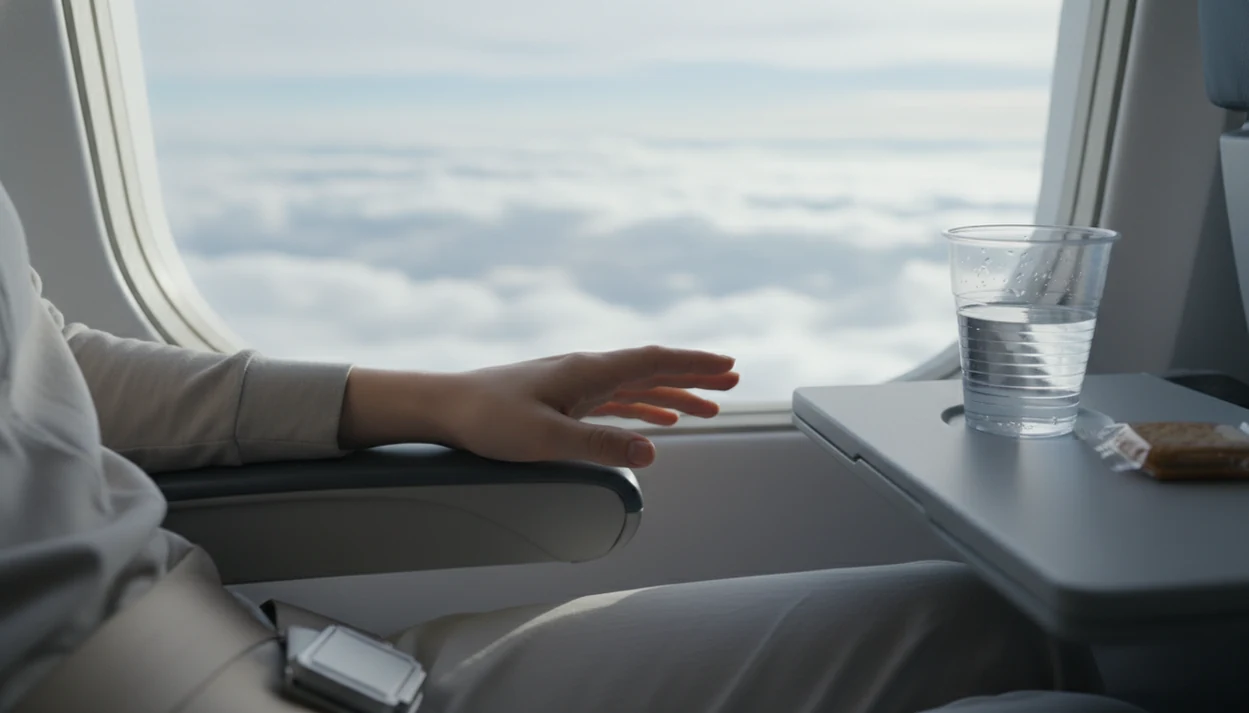
Is turbulence dangerous, or does it just feel dangerous? Turbulence is usually an airflow issue, and the bumping sensation does not mean the plane is falling or out of control.
Think of mild or moderate turbulence more like rough road than structural danger. It can be unpleasant. Drinks wobble, the lavatory line may pause mid-cabin, and your stomach may drop for a second. Still, discomfort is not the same as danger.
Keep your seatbelt fastened when seated and follow crew instructions. If the captain explains rough air ahead, use that as information, not a warning siren.
Loosen instead of bracing. Hard bracing tells your threat system that impact is coming, which can amplify fear. Try the script: “The plane is built for this; my job is to stay seated and breathe.”
Light cognitive load helps here. Use a simple game, audiobook, familiar show, counting pattern, or conversation. For turbulence-specific explanations, the broader fear of flying causes guide covers why the brain overreads movement.
Panic Attack Flight Anxiety Tips For The Cabin
Panic on a plane can bring racing heart, dizziness, chest tightness, tingling, hot flashes, nausea, unreality, and an urgent need to escape. It feels dangerous, but panic usually peaks and passes when it is not fueled by catastrophic interpretation.
Use a 60- to 90-second reset. Plant both feet. Lengthen your exhale. Name three objects you can see. Sip water. Unclench your jaw, stomach, and hands. Repeat: “This is panic. It is intense, and it will move through.”
Tell someone plainly if needed: “I am having anxiety; I need a minute.” No long explanation required. If you have a companion, ask them to read your Notes app coping card instead of debating every fear.
Avoid repeated body checking, frantic internet searching, or escape-focused thoughts. Those behaviors make the cabin feel like a trap. If symptoms are new, severe, or unusual for you, get appropriate medical assessment rather than assuming everything is anxiety. A dedicated panic attack on plane plan can help you prepare the exact script before travel day.
Long Flight Tips For Nervous Flyers On Hours In The Air
Long flights are easier when you stop treating the full duration as one giant test. Break the flight into short blocks, then give each block a job.
Create a loose schedule: meal, movie, music, reading, puzzle, stretching, restroom break, rest, and check-in. If sleep happens, good. If not, the flight can still count as a success. Don’t make sleep the only proof that you coped well.
Use hydration, light snacks, and movement when the seatbelt sign is off. Physical discomfort can mimic anxiety, especially dry mouth, restlessness, nausea, and tight muscles. A water bottle bought after security can do more than another hour of flight-map checking.
Progress markers help only in small doses. Check the map after a movie, not every five minutes.
Claustrophobia needs its own plan: aisle seating, loose clothing, overhead airflow, uncrossed legs, and attention shifts outside your body. A good fear of flying resource should explain causes, treatments, coping strategies, and tools for nervous flyers, not promise instant calm from one trick.
6 Common Fear Of Flying Myths That Keep Anxiety High
Several common myths make flight anxiety louder than it needs to be. Correcting them gives you a steadier plan before your body starts arguing.
- Myth: Intense fear means real danger. Fear is a body alarm, not a flight safety report.
- Myth: Turbulence means the plane is unsafe. Turbulence is usually uncomfortable airflow, not loss of control.
- Myth: Alcohol or sedatives are always the safest solution. They can impair judgment, interact with medication, and weaken coping learning.
- Myth: Breathing and grounding are too simple to work. Simple tools are often used because they are available in a cramped seat.
- Myth: You must eliminate anxiety before you fly. The practical goal is functioning with anxiety, not proving it will never appear.
- Myth: Reassurance checking builds confidence. It often gives short relief, then trains the brain to ask again.
Tools like Fear of Flying Guide, SOAR, and Fearless Flyer can be useful when they help you practice, not just reassure.
CBT, Exposure Therapy, And VR Help For Fear Of Flying
Self-help may not be enough if you avoid essential travel, panic before every flight, lose work opportunities, strain relationships, relive trauma, or rely heavily on substances. At that point, treatment should be considered, not as failure, but as a better-matched tool.
Clinicians typically recommend CBT and exposure-based work for specific phobias because these methods target thoughts, body sensations, avoidance, and safety behaviors. CBT may include behavioral experiments, such as testing whether you can feel anxiety without escaping. Exposure therapy uses graded practice: airport visits, flight videos, simulators, virtual reality, short flights, and later harder routes.
| Option | What it targets | What practice may look like |
|---|---|---|
| CBT | Catastrophic thoughts and safety behaviors | Scripts, thought testing, body-sensation practice |
| Exposure therapy | Avoidance and fear learning | Gradual contact with flight cues and real flights |
| VR exposure | Flight triggers without boarding | Simulated cabins, takeoff sounds, turbulence practice |
| Medication | Acute symptoms for some people | Doctor-supervised use, not a standalone cure |
A randomized trial found virtual reality exposure participants increased flights and miles flown during follow-up compared with controls. source FearOfFlying.com can help you compare education, exposure, and coping tools, but medical decisions belong with a clinician.
Limitations
Fear of flying tips can lower symptoms, but they have limits. Be honest about those limits before you build your flight-day plan.
- Quick tips may not resolve a long-standing flight phobia without repeated practice, CBT, exposure therapy, or a specialized course.
- No breathing method, app, seat choice, or aviation fact guarantees a calm flight every time.
- Some strategies work for one nervous flyer and fail for another. Trial and error is normal.
- Alcohol or sedatives can create risks, including interactions, impaired judgment, tolerance, and weaker coping learning.
- Turbulence, delays, crying babies, tight cabins, and unexpected changes can still trigger anxiety even with preparation.
- Access to fear-of-flying courses, VR exposure, or trained therapists may be limited by cost, location, or insurance.
- New, severe, or unusual physical symptoms should be assessed appropriately. Don’t assume every chest symptom or faint feeling is anxiety.
Reset the plan.
If your flight is tomorrow and you need a shorter emergency version, how to not be scared of flying tomorrow is a more focused checklist.
FAQ
How can I calm flight anxiety before a flight?
Use slow exhale breathing, grounding, light food, hydration, and a written coping script before you reach the gate. Prepare the tools several days ahead so you are not learning them during panic.
What helps with fear during takeoff?
Expect acceleration, engine noise, banking, and changing pressure, then use inhale 4, exhale 6 breathing with feet flat and shoulders dropped. A short script like “This is loud and powerful, not unsafe” can reduce catastrophic interpretation.
How do I handle turbulence when I am scared?
Keep your seatbelt fastened when seated, follow crew instructions, loosen your muscles, and use a script such as “The plane is built for this; my job is to stay seated and breathe.” Use light distraction like counting, a familiar show, or an audiobook.
Can panic attacks happen on planes?
Yes, panic attacks can happen on planes and may cause racing heart, dizziness, chest tightness, tingling, nausea, or unreality. New, severe, or unusual symptoms should be assessed medically rather than assumed to be anxiety.
Where should nervous flyers sit on a plane?
Aisle seats may help claustrophobia, window seats may help orientation, front seats may feel quieter, and over-wing seats may feel steadier. The right seat depends on your main trigger.
Should I drink alcohol before flying if I am anxious?
Alcohol can backfire by worsening dehydration, sleep quality, judgment, and anxiety rebound. It can also interact dangerously with sedatives or other medications.
Do sedatives help with fear of flying?
Sedatives may help some people for short-term flight anxiety, but only with medical supervision. They do not teach coping skills or treat the underlying phobia by themselves.
Is fear of flying common?
Yes, fear of flying is common; a U.S. population survey found that 17.4% of adults were at least a little afraid of flying. A smaller group meets criteria for aviophobia as a specific phobia.
Can therapy help fear of flying?
Yes, CBT and exposure therapy can help fear of flying by changing avoidance patterns, catastrophic thoughts, and fear of body sensations. VR exposure, courses, and graded real-world practice may also help.
How early should I prepare for a flight if I am anxious?
Start several days ahead for basic coping tools and several weeks ahead if your fear is severe. Practice before the flight so the plan feels familiar when boarding begins.