
See Normal Turbulence Signs During a Bumpy Flight
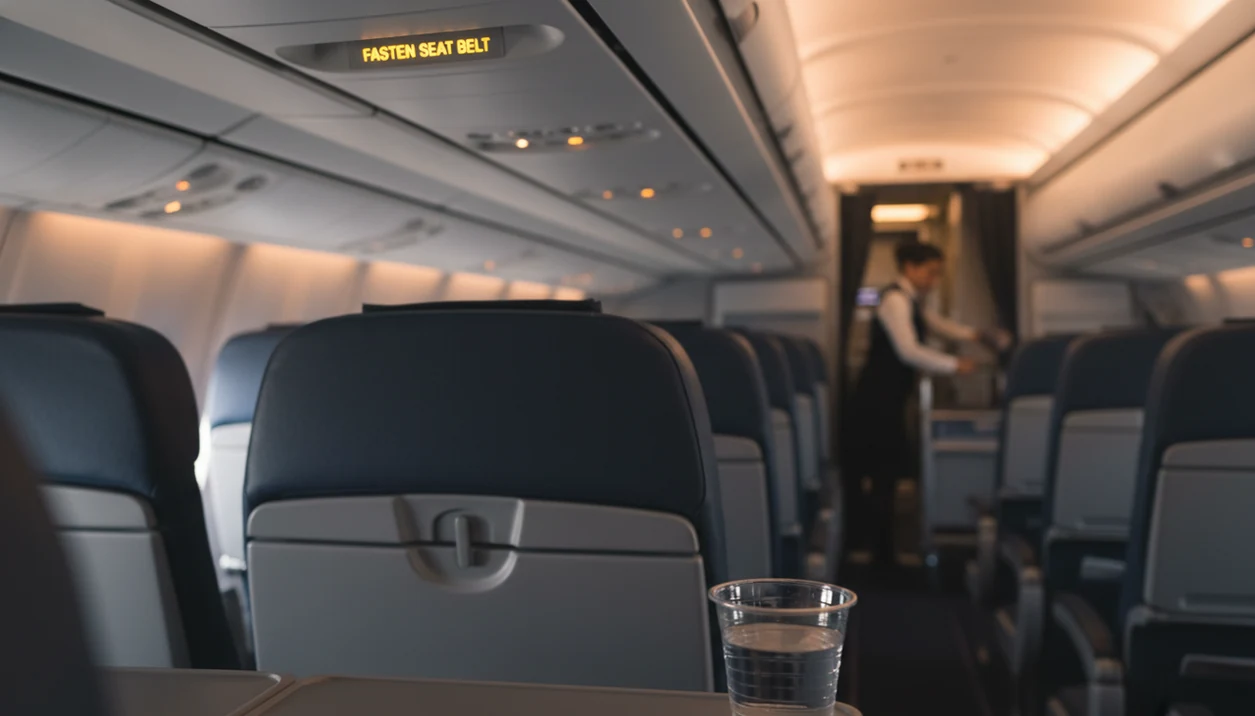
You can see normal turbulence signs when the seat belt sign turns on, the crew stays calm, cabin service pauses, wings flex normally, or the pilots make small speed or altitude adjustments. These cues usually mean the flight crew is managing ordinary rough air, not responding to an emergency.
Normal turbulence signs are routine aircraft and crew cues that show bumps are being managed as expected during flight.
- Normal turbulence usually looks like a seat belt chime, calm crew behavior, brief announcements, jiggling drinks, and temporary pauses in cabin service.
- The main practical risk is injury from being unbelted or standing, not the airplane breaking or falling.
- Wing flex, engine sound changes, and small altitude adjustments can be normal parts of turbulence management.
Normal Turbulence Signs at a Glance
The quickest normal turbulence checklist is simple: seat belt sign, calm crew, paused service, shaking drinks, and passengers asked to stay seated. These signs point to routine risk management, not proof that the airplane is in danger.
The seat belt chime is usually the first visible cue. Flight attendants may park carts, sit in their jump seats, or stop pouring drinks. You might see a drink ripple on the tray table or feel the seatback tremble. None of that means the aircraft is failing.
Brief silence from the cockpit can also be normal. Pilots may be talking to air traffic control, checking ride reports, or waiting to see if the bumps pass. If your safety card is held in damp fingers, give your body one job: belt on, feet flat, shoulders down.
How Normal Turbulence Signs Work in the Cabin
Normal turbulence signs are cabin-level responses to irregular air movement, such as wind shifts, temperature differences, jet streams, storms, or clear-air turbulence. The bumps feel personal in seat 23A, but they come from air currents moving around the aircraft.
Pilots use weather reports, onboard radar when weather is visible, air traffic updates, and real-time ride reports from other aircraft. The seat belt sign and service pauses are passenger-injury prevention tools. They keep standing people, carts, and hot drinks from becoming the problem.
A small climb, descent, or speed change often means the crew is looking for a smoother ride. It does not mean the airplane is unsafe. For anxious flyers, fear of turbulence often gets louder when the body feels motion before the mind has an explanation.
Make the plan boring on purpose. That means treating each sign as a practical cue, not a mystery to solve: belt on, body grounded, attention back to one planned task.
Five Normal Turbulence Signs Nervous Flyers Can Trust
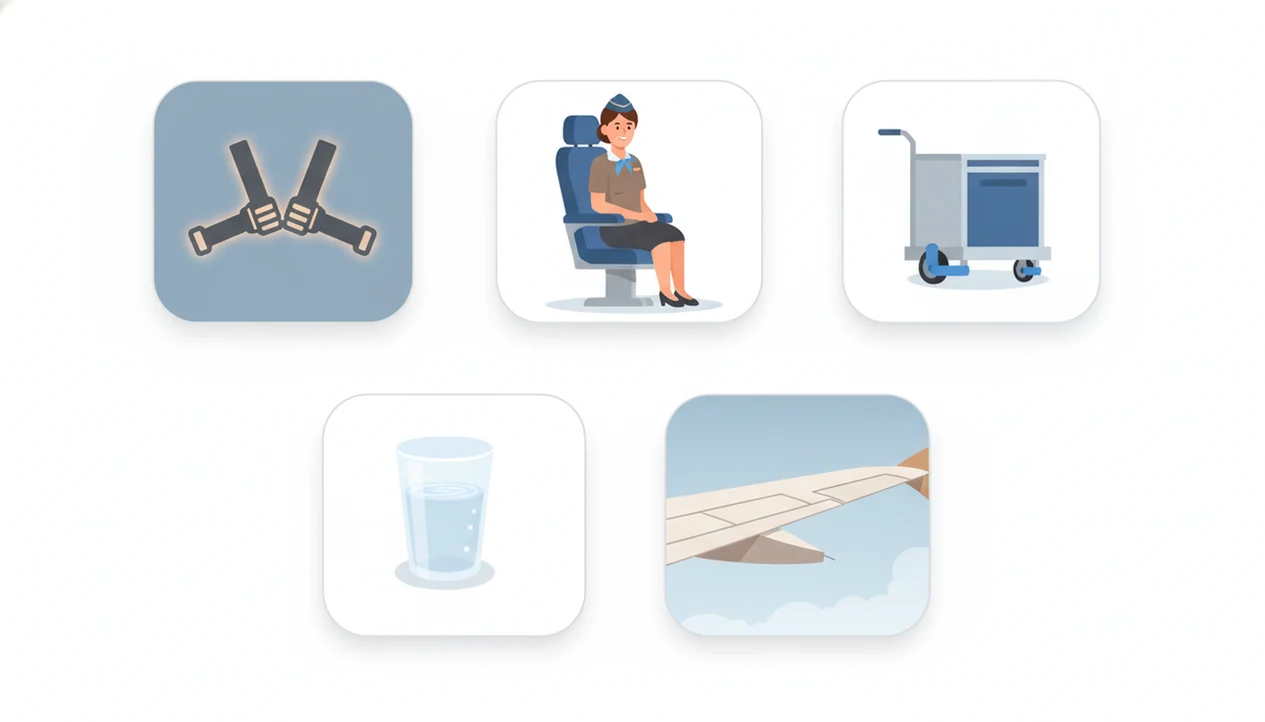
- The seat belt light turns on with a ding. This is the crew telling passengers to reduce injury risk before or during bumps.
- The captain uses calm phrases. “A few bumps,” “rough air,” and “please stay seated” are ordinary turbulence language.
- Flight attendants secure the cabin. Stopping service, locking carts, or taking jump seats means the crew is managing movement in the aisle.
- Wings flex and drinks jiggle. Visible wing movement and shaking cups can happen without any abnormal crew behavior.
- The aircraft may slow or change altitude. Pilots often adjust speed or request smoother air for comfort, not because control is lost.
For nervous flyers, naming visible signs is often more useful than asking “what if” because it brings attention back to evidence in the cabin.
How to Use Normal Turbulence Signs During a Bumpy Flight
- Fasten your seat belt low and snug across your hips, even if the sign was off a minute ago.
- Check the crew behavior once, then stop scanning every sound as danger.
- Name three normal signs: “seat belt light, carts parked, calm announcement.”
- Drop your shoulders and press both feet into the floor for one small job for your body.
- Return attention to a task, such as a downloaded playlist, a Notes app coping card, or counting rows ahead.
- Repeat your if-then script: “If the plane bumps, then I look for normal signs and stay belted.”
Don’t turn the cabin into a detective board. The pocket check is real, but you do not need to interpret every engine tone.
Seat Belt Lights, Chimes, and Cabin Service Pauses
Does the seat belt sign mean turbulence is dangerous? Usually, it means the crew wants to reduce injury risk, not that a crash is likely.
The FAA reports an average of 33 serious turbulence injuries per year in U.S. air carrier operations from 2009 to 2022, and about 65% of serious turbulence injuries involve flight attendants, largely because they are standing and working in the cabin source. That is why carts get collected, drinks stop, and crew members sit down.
Your highest-value action is staying belted while seated. Keep it low and snug after the sign turns off too, especially if you plan to sleep. If you want the broader safety answer, the related question is turbulence dangerous comes down to people moving in the cabin, not the airplane falling.
Wing Flex, Shaking, and Aircraft Strength in Normal Turbulence
Is it normal for wings to move during turbulence? Yes, airliner wings are designed to flex rather than stay rigid, and that flexibility helps them handle changing aerodynamic loads.
Shaking feels dramatic because your body senses motion directly. Your stomach may read a bump as a drop, even when the aircraft is just moving through uneven air. The certification standard for transport-category airplanes requires the structure to withstand 150% of maximum expected in-flight loads without failure source.
The U.S. National Transportation Safety Board found no commercial jet accidents from 2009 to 2018 where turbulence alone caused the airplane to crash source. That does not make turbulence pleasant. It does make wing flex a normal design behavior, not a warning sign. The bigger fear question, can turbulence crash a plane, deserves evidence rather than imagination.
Altitude Changes and Pilot Updates During Normal Turbulence
Small altitude or speed changes during turbulence are usually comfort measures. Pilots may ask air traffic control for a different altitude, route, or spacing based on reports from aircraft ahead.
A climb or descent can feel meaningful from your seat, especially when the engines change sound. It may simply be the crew trying a smoother layer of air. Sometimes the captain gives a quick update. Sometimes there is no announcement because the bumps are brief, expected, or not worth interrupting cabin tasks.
Unexpected clear air turbulence can still happen on a well-planned flight because it is not always visible on radar. That is frustrating, but it is also why the seat belt sign exists. Before you open the airline app again, write one line in Notes: “No announcement can still mean routine.”
Turbulence Reassurance from Real Injury and Severity Data
- Severe or greater clear-air turbulence is uncommon. One analysis of more than 66,000 global airline flights found it affected about 0.1% of flight time source.
- Most passenger turbulence is light to moderate. It may feel intense, but it is usually within normal flight operations.
- Serious injuries are rare compared with flight volume. The higher-risk moments involve standing, walking, or unbelted passengers.
- Turbulence can injure people without threatening the airplane. Those are different safety categories.
- Aviation data supports staying seated as the practical action. The belt is not emotional reassurance; it is a simple injury-prevention tool.
Clinicians typically recommend pairing factual reassurance with coping skills source, because anxious brains often need repetition, not one statistic. Tools like Fear of Flying Guide, flyconfident.com, and soar.com can help organize that practice. A good nervous flyer guide should explain causes, treatments, coping strategies, and tools, not promise that one calming trick will erase fear.
Limitations
Normal turbulence signs can help you interpret a bumpy flight, but they cannot make every sensation feel easy.
- Normal turbulence can still feel intense if your body is already in panic mode.
- No public article can list every airline procedure, phrase, or cockpit decision.
- Clear-air turbulence can arrive with little or no warning.
- Turbulence can cause spills, discomfort, and injuries when people are standing or unbelted.
- Statistics are approximate because turbulence reporting, measurement, and modeling are imperfect.
- Factual reassurance may not be enough for severe fear of flying without therapy, coaching, or structured exposure work.
- A calm crew is useful information, but passengers cannot see every operational detail from the cabin.
For many anxious flyers, CBT for fear of flying is often more useful than reassurance alone because it trains the thought pattern and the body response together.
FAQ
Is turbulence dangerous?
Turbulence is usually uncomfortable rather than dangerous to the aircraft. The main practical risk is injury to people who are standing, moving, or not wearing a seat belt.
Why does the seat belt sign ding?
The seat belt sign dings to tell passengers and crew that bumps are expected or possible. It is mainly an injury-prevention cue.
Is it normal for airplane wings to bend in turbulence?
Yes, wing flex is a normal design feature. Wings are built to move with changing air loads rather than stay completely rigid.
Why do pilots change altitude during turbulence?
Pilots may climb, descend, or adjust speed to find smoother air. These changes are often for comfort and cabin management, not because the airplane is unsafe.
Why did cabin service stop during turbulence?
Cabin service stops because carts, drinks, and standing crew are more vulnerable during bumps. Securing the cabin reduces injury risk.
Can turbulence crash a plane?
The NTSB found no commercial jet accidents from 2009 to 2018 where turbulence alone caused the airplane to crash. Turbulence can still cause injuries inside the cabin.
What helps turbulence anxiety during a flight?
Stay belted, name normal signs, breathe slowly, watch calm crew behavior, and use a planned coping routine. Fear of Flying Guide and FearOfFlying.com can be useful if you want a structured flight-day plan before your next trip.