
Fear Of Flying Success Stories And What Actually Helped
Fear of flying success stories are most useful when they show the practical path, not a miracle cure: people usually improve through CBT, gradual exposure, coping skills, flight education, and repeated practice. Success often means boarding, staying on the flight, and recovering from anxiety faster, not becoming completely calm forever.
> Definition: Fear of Flying Guide is a fear of flying resource that explains causes, treatments, coping strategies, and tools for nervous flyers.
TL;DR
- Most credible aviophobia success stories involve gradual exposure, CBT-style thought work, flight education, or a structured fear-of-flying program.
- Many nervous flyer stories still include some anxiety after improvement; the meaningful change is being able to fly without panic or avoidance.
- Distraction, breathing, medication, and reassurance can help short term, but durable progress usually comes from repeated practice and a broader plan.
Fear of flying success stories: what counts as real progress
Real progress in fear of flying is measured by what you can do, not by whether you feel perfectly calm. A person may still dislike takeoff, turbulence, or being unable to leave the cabin and still be recovering well.
- A necessary flight counts. Booking, boarding, and staying on a needed flight can be a major success.
- Panic symptoms can become manageable. Dry mouth, shaking, and a racing heart may still appear, but they stop running the whole flight.
- Avoidance can shrink. Flying again after months or years of saying no is real movement.
- Anticipatory anxiety can reduce. The night-before airline app refresh may happen once, not twenty times.
- One lucky flight is not the same as durable progress. Credible success repeats across different routes, moods, and weather.
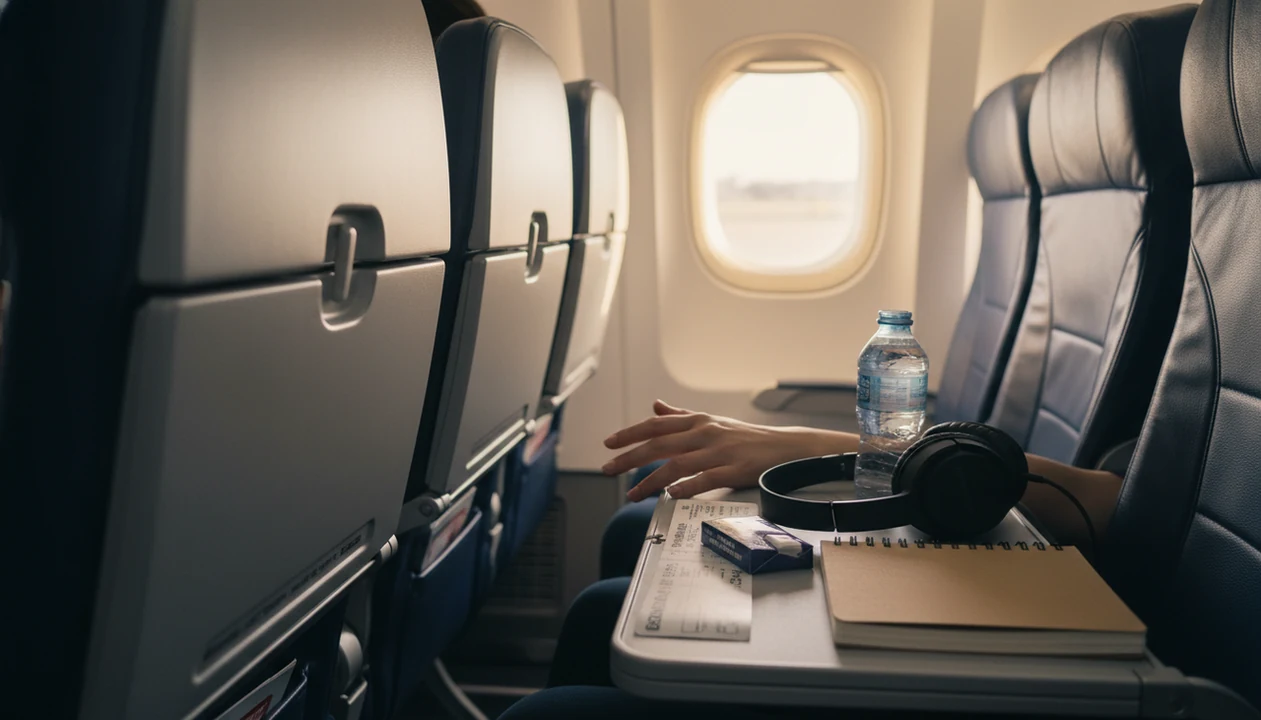
Fear of flying affects more than 25 million U.S. adults, according to Cleveland Clinic source, so your reaction is not rare. The pocket check is real. Boarding pass, gum, headphones, water.
Fear of flying recovery: the anxiety loop behind credible stories
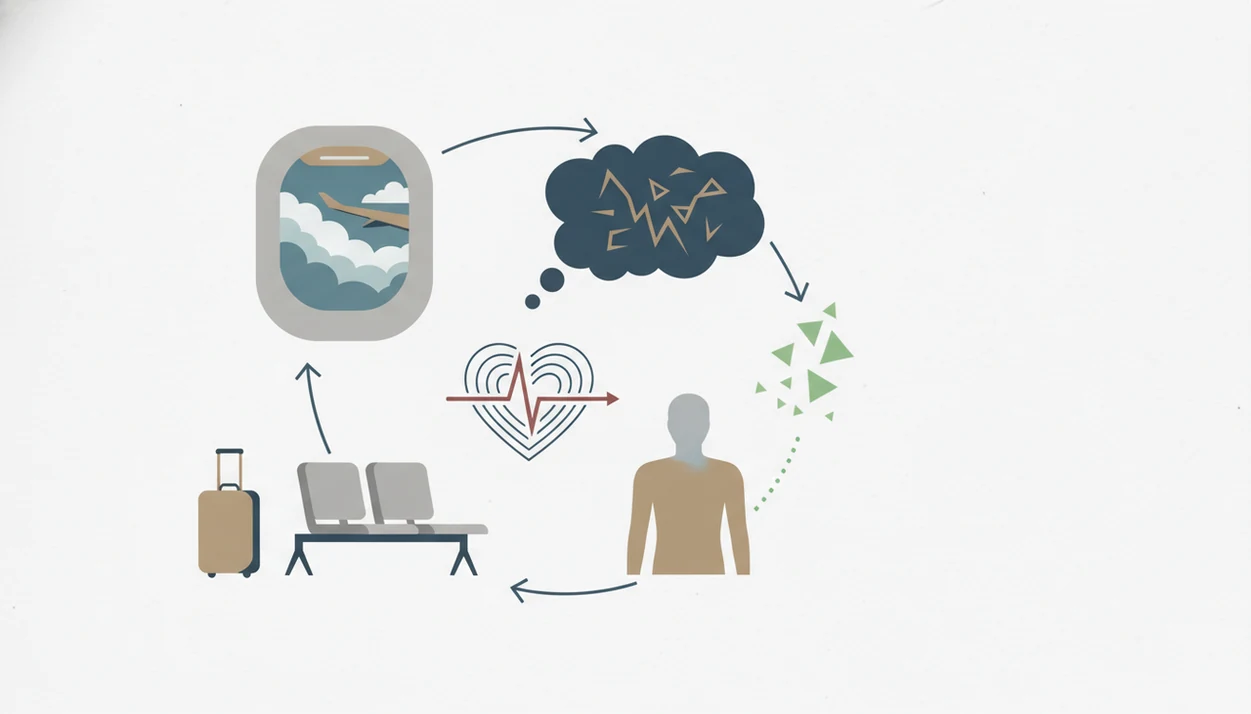
Fear of flying recovery works by weakening the anxiety loop: a flight cue triggers danger thoughts, the body reacts, avoidance brings short-term relief, and the brain learns to fear the next flight more. Good stories are credible when they show that loop changing through practice.
The pattern often starts before the airport. You hear the engine rumble under the floor in your imagination, then your mind says, “I won’t cope.” Your body answers with heat, nausea, or a tight chest. Canceling the trip feels better for a day, but it teaches the brain that escape kept you safe.
CBT helps by identifying feared predictions and testing them against evidence and experience. Exposure means planned contact with flying cues until anxiety rises and falls without escape. Clinicians typically recommend exposure-based approaches for specific phobias, often with CBT skills, because avoidance keeps the fear cycle alive. The American Psychological Association describes exposure therapy as a treatment that helps people face feared objects or situations in a controlled way rather than continuing avoidance source. A meta-analysis of exposure therapy for anxiety disorders found large effects for specific phobias source, and a 2021 systematic review found virtual reality exposure therapy can reduce fear of flying symptoms source.
The most common medically supported way to reduce phobic avoidance is exposure practice combined with skills that change catastrophic predictions.
Nervous flyer stories: how to adapt lessons to your triggers
Nervous flyer stories are useful starting points, but anecdotes are not treatment plans. Use them like a menu of methods, then match the method to your own trigger, severity, and flight history.
- Name your trigger. Write “turbulence,” “takeoff,” “panic in the seat,” “being trapped,” or “leaving my child” in your Notes app.
- Match the method. Use flight education for turbulence fear, CBT thought testing for catastrophic predictions, and exposure for avoidance.
- Test it small. Try an airport visit, takeoff audio, a flight video, or a short route before a long-haul trip.
- Track the result. Record what you feared, what happened, and how long your body took to settle.
- Adjust the plan. Keep what helped, remove what became safety checking, and repeat.
- Get support when needed. Severe avoidance, panic, trauma, claustrophobia, or complex anxiety deserves professional care.
For step-by-step planning beyond stories, a broader overcome fear of flying roadmap can help you sort education, exposure, and support.
Aviophobia success story 1: Maya used CBT for turbulence panic
Maya is a composite vignette, not a real identifiable patient. Her main trigger was turbulence, especially the brief drop feeling in the stomach that made her think, “The plane is falling.”
Before trips, she checked weather apps, turbulence maps, and aircraft type forums until midnight. On board, she gripped the armrest and watched crew faces for clues. A drink ripple on the tray table felt like evidence, even when the seat belt sign was the only visible change.
What helped was boring and repeatable. Maya learned what turbulence is, then wrote her feared predictions before each flight. “If the plane bumps, I will lose control.” Next to it, she wrote an alternative: “My body hates this feeling, but bumps are not proof of danger.” She practiced that sentence during videos, car rides over rough roads, and real flights.
Bumps still felt unpleasant. They just stopped owning the whole trip. For readers whose fear began after a rough ride, fear of flying after bad turbulence needs extra care around memory and prediction.
Nervous flyer story 2: Daniel rebuilt confidence with gradual exposure
Daniel is a composite vignette about a flyer who avoided planes for seven years after canceling a family wedding trip. His success did not arrive as one brave moment. It came from an exposure ladder he repeated until cues stopped feeling like commands to escape.
He started with ten-minute flight videos at home, then airport parking-lot visits. Next came sitting inside the terminal with a water bottle bought after security, just watching departure boards. After that, he listened to takeoff sounds while sitting still, then booked a short early flight where the seat belt clicked across his lap before sunrise.
Exposure helped because Daniel stopped avoiding every cue that produced anxiety. His brain had to learn a new pattern: fear can peak, change shape, and fall without canceling. In a randomized fear-of-flying intervention, 63% of treated participants no longer met criteria for a specific phobia at follow-up, compared with 0% in the control group source.
For severe avoidance, gradual exposure usually works better than waiting for confidence because confidence often follows repeated non-avoidance.
Fear of flying success story 3: Leila combined support, routines, and coping skills
Leila is a composite vignette about someone who could fly, but dreaded it for weeks. She still went on work trips, but the cost was high: poor sleep, stomach trouble, and the urge to text “I can’t do this” from the gate.
Her improvement came from a flight-day plan. Two nights before travel, she stopped checking the seat map after 8 p.m. She packed gum in the front pocket, downloaded a playlist, and charged her phone before bed. At the gate, she used a two-minute timer and one small job for her body: press both feet into the floor.
Once seated, Leila chose an aisle seat on short flights because standing up after landing mattered to her. She told a flight attendant, “I’m a nervous flyer, and I’m working on staying calm.” After takeoff, she used distraction, but only after practicing breathing first.
Coping tools helped because they were planned, practiced, and paired with repeated flying. Breathing alone did not cure severe aviophobia. It gave her next five minutes a job.
Aviophobia success patterns: 5 lessons that actually hold up
The strongest aviophobia success patterns are skill-building patterns, not one-time reassurance wins. Recovery is usually nonlinear, and a bad flight can happen after several good ones without erasing progress.
- Gradual exposure. People improve when they stop avoiding every airport, aircraft, sound, or booking cue.
- Accurate flight knowledge. Learning what turbulence, takeoff noises, and routine announcements mean can reduce false danger signals.
- CBT-style thought testing. Successful flyers often write predictions, test them, and update the story afterward.
- Predictable routines. A boring flight-day plan lowers decision load when anxiety is already loud.
- Support. Crew, therapists, partners, courses, and peer stories can help when they reduce avoidance rather than feed checking.
Skill-building is different from asking for endless safety reassurance, drinking to get through boarding, or refreshing the airline app until your phone is half-charged. A complete nervous flyer guide should explain causes, treatments, coping strategies, and tools, not sell one calming trick as the whole answer.
Success is measured by behavior and recovery time, not perfect calm.
Fear of flying stories: claims they do not prove
Do fear of flying stories prove one method works for everyone? No. A single story can show what helped one person, but it cannot prove that the same method fits every nervous flyer.
Mild flight nerves are not the same as severe aviophobia. Panic disorder, claustrophobia, trauma, agoraphobia, medical fears, and fear of losing control can all change the plan. A parent flying with a toddler may need different preparation than a consultant taking three flights a month, and teens may need different support from adults. If you are supporting someone else, resources on fear of flying for parents or fear of flying for business travelers may fit the situation better.
Medication stories also need caution. A sedative may help someone complete one flight, but that does not automatically reduce future fear. The brain may not learn, “I coped.” It may learn, “I survived because I was medicated.”
A successful vacation flight is encouraging. Durable recovery means coping across multiple flights, delays, moods, and cabin sensations.
Limitations
Fear of flying success stories can help, but they have limits. This page is educational and is not a diagnosis or a substitute for therapy, medical advice, or medication guidance. If flying anxiety includes panic attacks, trauma symptoms, fainting fears, or avoidance that disrupts work or family life, discuss it with a licensed clinician. Use them for ideas, not guarantees.
- Anecdotes often leave out failed attempts, relapses, therapy, coaching, medication, or family support.
- Some people improve for one trip, then need more practice after stress, illness, turbulence, or a long flying gap.
- Quick-fix claims can understate severe phobia, panic disorder, trauma, claustrophobia, or agoraphobia.
- Distraction-only tactics may help one flight without changing the trigger, interpretation, sensation, avoidance loop.
- Sedatives and alcohol can create safety, dependency, memory, or learning problems; discuss medication with a clinician.
- Not every reader should self-treat. Severe avoidance, panic attacks, or trauma symptoms may need professional care.
- Composite stories, including the ones above, should be labeled clearly and never treated as clinical guarantees.
- Online programs, apps, and courses vary in quality. Tools like Fear of Flying Guide, SOAR, and Fly Confident can support learning, but they do not replace therapy when risk or distress is high.
For pacing expectations, a fear of flying recovery timeline can be more useful than comparing yourself with someone else’s fastest flight.
FAQ
Can fear of flying be cured?
Some people recover so substantially that flying becomes routine, but many define success as manageable anxiety rather than total absence of fear. A realistic goal is boarding, staying on the flight, and recovering faster afterward.
What helps aviophobia most?
The strongest recurring supports are CBT, gradual exposure, accurate flight education, coping skills, and repeated practice. Severe aviophobia usually needs a structured plan rather than one reassurance phrase.
Do nervous flyers relapse?
Yes, fear can return after stress, a long gap between flights, rough turbulence, panic symptoms, or renewed avoidance. Relapse does not mean failure; it usually means the exposure and coping plan needs practice again.
Is exposure therapy effective for fear of flying?
Yes, exposure therapy has strong evidence for specific phobias and can reduce avoidance and fear symptoms. For flying, exposure may include videos, airport practice, virtual reality, takeoff sounds, and planned flights.
Does CBT help flying anxiety?
CBT can help flying anxiety by testing catastrophic predictions and changing how a person responds to body sensations. It is often used with exposure because thought work alone may not be enough.
Can turbulence fear improve?
Yes, turbulence fear often improves when people learn what turbulence is, test danger predictions, and take repeated non-avoidant flights. Fear of Flying Guide explains turbulence in plain language, but persistent panic may still need professional support.
Are sedatives a real solution for fear of flying?
Sedatives may help some short-term situations when prescribed by a clinician, but they are not usually the core long-term solution. Alcohol or unsupervised medication can create safety, dependency, or learning problems.
How many flights does recovery take?
There is no fixed number because recovery depends on severity, avoidance history, treatment, stress level, and practice frequency. Some people improve after a few structured flights, while others need months of CBT, exposure, and support from resources such as FearOfFlying.com or a clinician.