
Fear Of Flying Recovery Timeline: What Progress Really Looks Like
A fear of flying recovery timeline is usually measured in stages, not guaranteed weeks: most people progress from understanding anxiety, to practicing coping skills, to gradual exposure, to real flights with manageable nerves. Meaningful flight anxiety progress can happen within weeks or months of structured CBT and exposure, but lasting confidence may take longer and can include setbacks.
Definition: A fear of flying recovery timeline describes the typical stages and progress markers people move through as aviophobia becomes more manageable before, during, and after flights.
TL;DR
- Recovery has no universal deadline; track skills and behavior changes instead of waiting to feel zero anxiety.
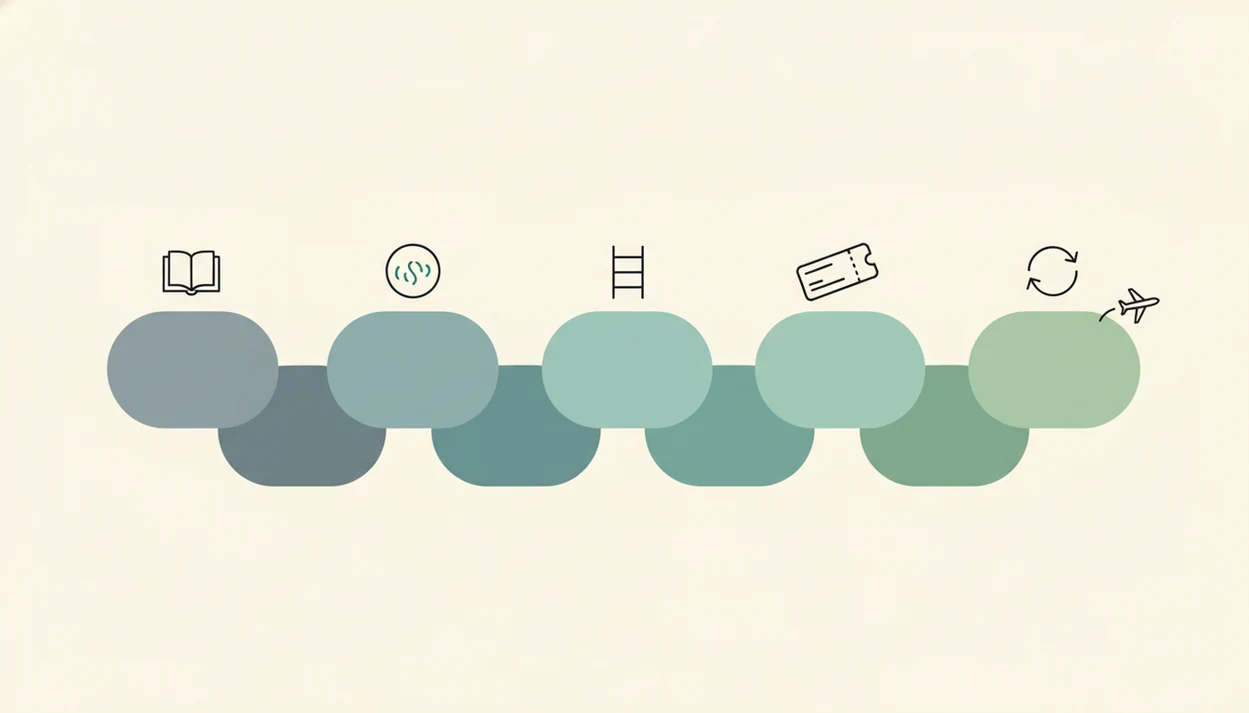
- Common aviophobia recovery stages include education, coping practice, gradual exposure, real-flight practice, and maintenance.
- Progress can look like fewer reassurance checks, less anticipatory anxiety, tolerating turbulence, and flying again after setbacks.
Fear of flying recovery timeline at a glance
- No fixed calendar applies to everyone. One person may improve before a summer trip; another may need a slower plan across several flights.
- Structured help often works over weeks to months. Confidence can take longer because the brain needs repeated proof, not one brave morning.
- Fear of flying is common. Cleveland Clinic estimates that about 25 million U.S. adults have aerophobia or aviophobia (https://my.clevelandclinic.org/health/diseases/22431-aerophobia-fear-of-flying).
- Recovery means functional flying. You may still feel dry-mouthed at the gate and still board.
- Progress is behavior-based. Fewer airline-app checks, less doom-searching, and shorter recovery time after landing all count.
The goal is not to become a statue of calm. The goal is to make your next five minutes doable.
Before you start a fear of flying recovery timeline
Before you track progress or choose exposure steps, get a clear starting point and a safe first target. A good recovery timeline begins with what is true today, not the flight scenario you think you “should” be able to handle.
- Record your baseline. Write down your current avoidance pattern: flights you cancel, routes you refuse, app checking, reassurance texts, sleep loss, and your 0-to-10 anxiety at booking, packing, boarding, takeoff, turbulence, and landing.
- Notice symptoms that need support. If panic attacks, trauma memories, PTSD symptoms, severe health anxiety, fainting fears, or inability to board are part of the pattern, involve a licensed clinician before pushing exposure.
- Choose one cue. Pick a manageable upcoming practice cue, such as reading an itinerary, hearing cabin audio, or watching a takeoff video. Do not start with the hardest flight in your imagination.
- Prepare your safety plan. Make a short coping card, choose one support contact, and schedule a post-flight or post-practice review.
- Ask about medication early. Discuss any sedatives, beta blockers, or other medication questions with a licensed clinician before using them for flight practice.
How the aviophobia recovery stages work
Aviophobia recovery works by reducing avoidance, testing catastrophic predictions, and teaching the nervous system that flight-related cues are tolerable.
Avoidance keeps fear alive because it gives the brain short-term relief. You cancel, delay, or over-check, and your body learns, “Good, we survived because we escaped.” CBT interrupts that loop by challenging predictions like “I’ll panic and lose control” or “Turbulence means danger.” Exposure then adds real practice. Booking, packing, airports, takeoff sounds, turbulence videos, and landing all become training cues.
Clinical guidance for specific phobias generally treats exposure-based CBT as a first-line approach because it pairs feared-cue practice with prediction testing (https://www.ncbi.nlm.nih.gov/books/NBK499923/). Repeated practice matters more than one dramatic flight, even if that flight felt heroic.
A good fear of flying resource should explain causes, treatments, coping strategies, and tools for nervous flyers, not promise instant calm or airline-style reassurance.
How to track flight anxiety progress without a fixed deadline
Use a simple scorecard across the whole flight cycle, not just the hours in the air. Your fear may start when you book, when your boarding pass appears in Apple Wallet, or when you hear the engines spool.
- Rate pre-flight anxiety. Score dread, sleep disruption, airline-app checking, and urges to cancel from 0 to 10.
- Track airport behavior. Note security-line anxiety, reassurance seeking, body scanning, and whether you stayed with your flight-day plan.
- Record in-flight coping. Mark takeoff, turbulence, cruising, and landing. Write what skill you used, not whether you felt calm.
- Measure recovery time. After landing, note how long rumination lasted before your body settled.
- Review one lesson. Ask, “What did I do that I can repeat?” before judging the flight.
For nervous flyers, tracking behavior is often more useful than tracking fear intensity because anxiety can stay high while avoidance drops.
Stage 1 of aviophobia recovery: education and fear mapping
Stage 1 is about understanding your personal fear pattern before trying to force yourself onto a plane. Many symptoms begin days or weeks before flying, especially during booking, packing, airport arrival, boarding, takeoff, turbulence, and landing.
The night before a 6:40 a.m. flight, fear mapping might catch the nervous refresh of the airline app every few minutes. That is data. So is the sweaty passport grip, the dry mouth at the gate, or the urge to text, “I can’t do this.”
Early progress looks like naming triggers instead of treating the whole trip as one giant threat. It also means reducing doom-searching, recognizing panic symptoms, and building a clearer plan to overcome fear of flying.
Name the loop first. Then change it.
Stage 2 of flight anxiety progress: coping skills before exposure
Stage 2 builds skills before the harder exposure steps begin. The aim is not to erase every anxious sensation; it is to stop treating sensations as proof that you are unsafe.
Pack this before you leave: a Notes app coping card, a two-minute phone timer, a downloaded playlist, and one if-then script. Try, “If my chest tightens during boarding, then I will put both feet down, exhale slowly, and read my card once.” Add CBT-style thought testing: “What am I predicting, and what happened last time?”
Grounding, breathing, and planned response cards give your body one small job. Progress may look like fewer body scans, less texting for reassurance, and faster calming after a spike.
Medication may help some people practice, but it is not a standalone long-term recovery plan. Tools like Fear of Flying Guide can support planning alongside therapy, courses, or medical advice.
Stage 3 of aviophobia recovery: gradual exposure practice
Stage 3 uses planned exposure before the real flight. You might view flight images, listen to cabin sounds, watch takeoff videos, visit an airport, or use a flight simulator if one is available.
Exposure works best when it is repeated, reviewed, and boring on purpose. Set a timer for ten-minute intervals. Do not jump from “I avoid flight photos” to “I booked a long-haul trip” unless a clinician is guiding that leap. Start where your body notices fear but does not feel flooded.
Evidence is stronger for exposure-based CBT in specific phobias than for a precise aviophobia calendar: clinical reviews identify exposure therapy as a core treatment for specific phobias (https://www.ncbi.nlm.nih.gov/books/NBK499923/), and Öst’s one-session exposure study reported significant improvement maintained at one year (https://pubmed.ncbi.nlm.nih.gov/2575989/).
That supports structured exposure. It does not promise a three-hour cure.
Stage 4 of flight anxiety progress: real flights and recovery review
Stage 4 is real-flight practice, and the first successful flight may still include anxiety. Success might mean staying seated, using skills during takeoff, tolerating turbulence, reducing escape planning, and completing the flight.
One useful review starts after the baggage carousel lights reflect on your shoes. Ask: “What did I predict? What happened? What helped?” Post-flight progress includes less rumination, a more realistic memory of the flight, and willingness to book another trip.
A published case report described a patient who moved from being unable to fly to completing 13 flights over two years without panic attacks. That is sustained, multi-year progress, not a quick trick.
If turbulence was the turning point, a focused plan for fear of flying after bad turbulence may be the next step.
Common mistakes that slow a fear of flying recovery timeline
The biggest mistake is waiting until anxiety disappears before flying. That standard keeps the fear in charge because your body never gets updated evidence.
Another common trap is over-researching plane safety, weather maps, turbulence forecasts, aircraft models, and seat maps. These checks feel responsible at first. Then they become reassurance loops. You get a short drop in anxiety, then need another check.
One-off flights can also disappoint people. If you fly once with no skill practice, no review, and no follow-up exposure, your brain may file it as luck rather than learning. For fear of flying for business travelers, this can become a cycle of white-knuckling every work trip.
A bad flight or panic spike is not proof you are back to square one. It is a signal to review the plan.
Maintenance markers after aviophobia recovery
Maintenance means you can recover faster after anxiety spikes. It does not mean flying never bothers you again.
Long gaps between flights, major stress, frightening aviation news, or a rough cabin moment can re-sensitize fear. Booster exposures help. Review your coping card, listen to cabin audio, visit an airport, take a short practice flight, or rehearse your boarding script before an important trip.
Realistic recovery is manageable, repeatable flying over time. You may still check your bag twice for gum in the front pocket and headphones tangled at the bottom. Fine. The key marker is that those checks do not run the whole day.
If symptoms return sharply, a fear of flying relapse plan can keep a flare-up from becoming avoidance.
Limitations
A fear of flying recovery timeline is useful, but it has limits.
- There is limited high-quality research mapping exact week-by-week fear of flying recovery.
- Some timing estimates are extrapolated from broader specific-phobia treatment research.
- Panic disorder, PTSD, health anxiety, trauma history, or severe avoidance can slow progress.
- Not everyone responds fully to CBT, exposure, medication, courses, apps, or self-help plans.
- Medication may reduce symptoms for some people, but it does not teach the brain that flying cues are tolerable.
- Self-help may be insufficient when someone cannot book, enter an airport, board, or stay seated without severe panic.
- Long flight gaps, life stress, and media coverage can trigger flare-ups after improvement.
- Children, teens, parents, and frequent work travelers may need different pacing and support.
If panic attacks, PTSD symptoms, trauma memories, or inability to board are part of the pattern, use this timeline as education rather than a self-directed treatment plan. A therapist trained in CBT, exposure therapy, panic, or trauma can help pace the work safely.
If you are supporting someone else, resources on fear of flying for parents can help you avoid accidental pressure.
FAQ
How long does aviophobia recovery take?
Aviophobia recovery can take weeks, months, or longer, depending on severity, avoidance patterns, treatment, and exposure practice. Many people improve faster with structured CBT and repeated exposure than with occasional unsupported flights.
Can fear of flying be cured completely?
Some people become calm flyers, but many recover by flying with manageable anxiety. Functional flying is a valid recovery goal.
What are the main aviophobia recovery stages?
The common aviophobia recovery stages are education, coping skills, gradual exposure, real flights, and maintenance. These stages often overlap rather than moving in a perfect line.
Is it still progress if I feel nervous during a flight?
Yes, flying while nervous and using coping skills can be a major recovery milestone. Progress is measured by behavior, recovery time, and reduced avoidance, not perfect calm.
Does CBT help with flight anxiety?
CBT and exposure have evidence for specific phobias and are commonly used for fear of flying. Fear of Flying Guide can help readers understand these methods, but clinician-guided care may be needed for severe avoidance.
Can medication speed up fear of flying recovery?
Medication may reduce symptoms enough for some people to practice flying skills. It does not replace CBT, exposure, and repeated practice for longer-term recovery.
Why did my fear of flying come back after I improved?
Fear of flying can return after long gaps between flights, major stress, bad turbulence, or frightening aviation media. FearOfFlying.com covers relapse planning for nervous flyers who need a reset.
When should I get professional help for fear of flying?
Seek professional help when avoidance, panic attacks, trauma symptoms, or life disruption make self-help insufficient. A therapist experienced in CBT, exposure, panic, or trauma can help pace the work safely.