
Fear Of Flying After Bad Turbulence Or A Scary Flight
Fear of flying after bad turbulence is a common trauma-like response, not a sign that you are weak or irrational. The safest path is to process what happened, learn what turbulence does and does not mean, and rebuild confidence through gradual exposure rather than forcing yourself or avoiding flying forever.
This guide is educational and cannot diagnose PTSD, panic disorder, or any medical condition. If fear is causing panic attacks, major avoidance, medication questions, or safety concerns, use it alongside advice from a licensed clinician.
Definition: Fear of flying after bad turbulence is a post-flight anxiety response where a frightening turbulence event makes future flying feel dangerous, uncontrollable, or emotionally overwhelming.
TL;DR
- A scary turbulence flight can trigger fight, flight, freeze, intrusive memories, panic, and avoidance even if the aircraft was not in serious danger.
- Commercial aircraft are designed for turbulence loads far beyond normal service, and U.S. safety data shows turbulence is mainly an injury risk for unsecured occupants, not a common crash cause.
- To fly again after a scary flight, combine trauma-informed calming skills, accurate aviation knowledge, gradual exposure, and professional help if symptoms feel unmanageable.
What Fear Of Flying After Bad Turbulence Means
Fear of flying after bad turbulence means your nervous system has linked flying with danger, even if the aircraft itself remained structurally safe. The memory can feel stored in your body, not just your thoughts.
You may replay the drop, the cart paused in the aisle, or the overhead bin latch softly rattling. Common symptoms include panic before booking, sleep disruption, weather checking, dread at the gate, intrusive images, and avoiding trips you would normally take.
It can happen suddenly.
Some people flew for years with only mild nerves, then one rough descent changed everything. That does not mean you are broken. It means your brain treated a frightening, uncontrollable moment as a threat cue. A useful recovery plan starts by separating two things: what your body learned during fear, and what was actually happening to the airplane.
5 At-A-Glance Facts For People Scared After Turbulence
If you are scared after turbulence, start with the facts that matter most. They give your brain a steadier frame before you open the airline app again.
- Fear after a scary flight is common and treatable; it often improves with education, grounding, and gradual exposure.
- In a large U.S. survey, 40.5% of respondents reported some fear of flying, and 12.6% reported extreme fear source.
- Commercial air travel fatality risk has fallen sharply; MIT aviation-safety research estimated about one death per 7.9 million passenger boardings worldwide from 2008 to 2017, with lower risk in the safest aviation systems source.
- The NTSB found turbulence was the leading cause of nonfatal airline passenger and crew injuries from 2009 to 2018, but no U.S. airline hull-loss accidents in that period were attributed to turbulence source.
- The goal is manageable confidence, not a promise that every flight will feel smooth.
For most nervous flyers, gradual exposure is often better than waiting for total calm because the brain learns safety through repeated, survivable practice.
How Turbulence Fear Works In Your Nervous System
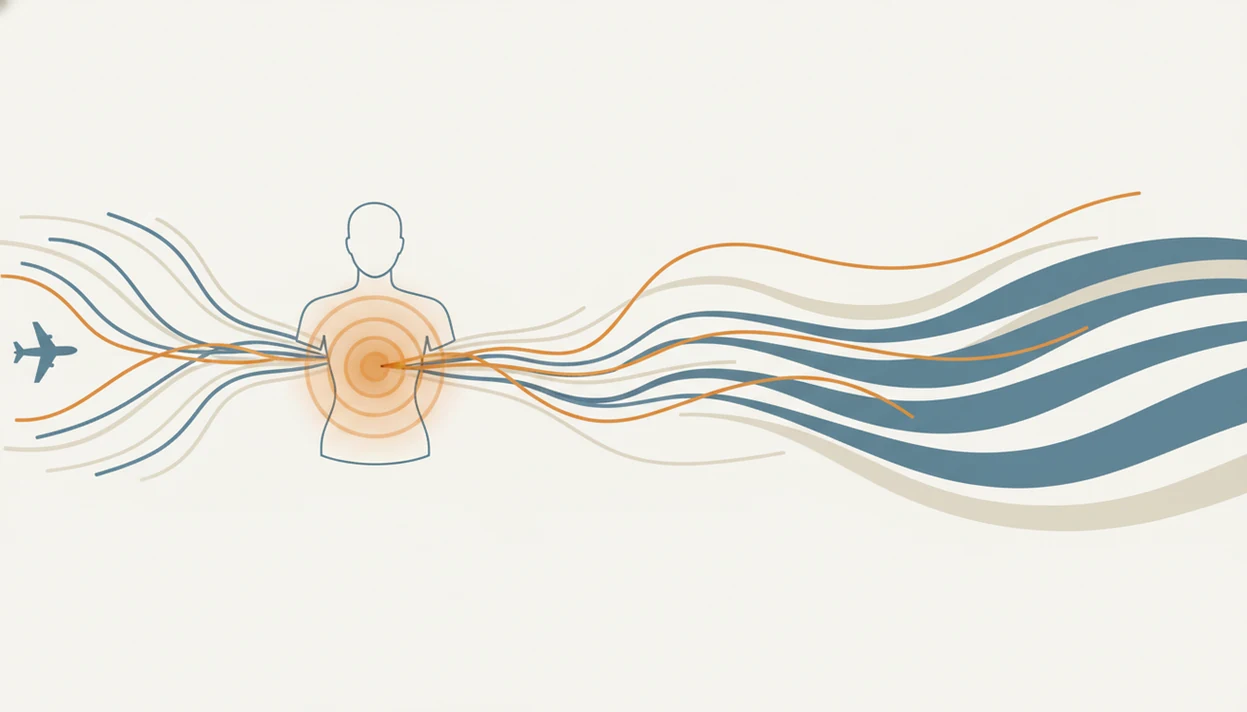
Turbulence fear works through threat prediction: your brain uses one frightening flight to forecast danger on the next one. The startle response fires fast, then fight, flight, or freeze follows.
During turbulence, your body may remember the original scary flight before your reasoning catches up. A small bump can bring back the engine rumble under the floor, a dry mouth, and the thought, “Not again.” That is memory reconsolidation territory. In plain language, each replay can update the memory, or reinforce it.
Avoidance lowers anxiety today. But if avoiding planes becomes the only relief, the brain may learn that flying was unsafe and escape saved you. Turbulence also feels worse because it mixes uncertainty, loss of control, and trapped-body sensations. Those feelings are real. They are not the same as the aircraft being unable to cope.
How Airplanes Handle Turbulence During A Scary Flight
Turbulence is uncomfortable air movement, not evidence that the plane is failing. Aircraft are built to flex, absorb changing loads, and keep flying through rough air that feels dramatic in the cabin.
Wings move because flexible structures manage force better than rigid ones. Pilots may slow to a turbulence penetration speed, turn the seatbelt sign on, ask cabin crew to sit, request altitude changes, or route around weather. Radar helps with storms and moisture, but clear-air turbulence may not show neatly on a screen.
Aviation safety data also gives useful context. An FAA review of U.S. commercial jet hull-loss accidents from 1990 to 2015 found turbulence was rarely a causal factor; if you keep this exact 2-of-96 figure, attach the specific FAA report URL directly after the sentence.
Your main practical job is simple: keep your seatbelt fastened when seated. Boring, but important.
Before You Fly Again After A Scary Flight
“How do I know if I am ready to fly again after a scary flight?” Start by checking symptom severity, not by checking the weather every hour.
Write down what is happening now: panic attacks, nightmares, intrusive memories, avoidance, dread, or trouble functioning at work and home. If symptoms feel intense, or you are canceling major plans, speak with a therapist, physician, or psychiatrist before you fly. Clinicians typically recommend evidence-based anxiety treatment, and medical review when panic, medication questions, or trauma symptoms are involved.
If flying is reasonable, choose a manageable first step. A shorter daytime route, familiar airport, aisle seat, and supportive companion can reduce load. Pack this before you leave: water bottle after security, gum in the front pocket, downloaded playlist, and a Notes app coping card.
Plan, then stop refreshing. A full fear of flying recovery timeline can help you pace the return without turning preparation into compulsive reassurance.
When To Get Professional Help After A Scary Flight
Get professional help after a scary flight when fear is no longer just nerves before travel and is disrupting sleep, work, relationships, health, or necessary plans. Normal nervousness may rise before booking or during bumps; clinical assessment is wise when symptoms feel intense, repetitive, or hard to control.
- Contact a therapist if you are avoiding flights, replaying the event, having nightmares, or feeling stuck in panic despite self-help.
- Call a physician if symptoms include fainting, chest pain, severe dizziness, pregnancy concerns, medication interactions, or a complex medical history.
- Ask a psychiatrist or licensed prescriber about medication questions; do not mix alcohol, sedatives, or borrowed pills as a flight plan.
- Use emergency services if you might harm yourself, cannot stay safe, feel detached from reality, or have severe physical symptoms that could be medical.
- Seek tailored care if you have a trauma history, are pregnant, are helping a teen, or have multiple health conditions that make flying fear harder to sort out.
The point is not to pathologize every shaky gate moment. It is to get the right backup when your nervous system is asking for more than a checklist.
5 Steps To Fly Again After A Scary Flight
Use this plan to fly again after a scary flight without making the next trip a pass-fail test. Make the plan boring on purpose.
- Write a factual flight story separating sensations from conclusions: “The plane dropped” is a sensation; “we almost crashed” is a conclusion.
- Learn one accurate turbulence explanation and rehearse it daily: “Bumps are moving air, and the aircraft is designed for this.”
- Practice grounding and paced breathing before travel day, using a two-minute phone timer when you are already calm.
- Build graded exposure with airport videos, flight sounds, a terminal visit, sitting with a boarding pass in Apple Wallet, then a short flight.
- Debrief the next flight based on what you handled, not whether anxiety reached zero.
The most common medically supported way to reduce phobic avoidance is gradual exposure combined with cognitive skills and body regulation. The American Psychological Association describes exposure therapy as a treatment that helps people gradually face feared situations in a controlled way rather than avoiding them source. For a broader route, use an overcome fear of flying plan that moves from education to practice.
Coping Tools For Being Scared After Turbulence In The Air
Coping during turbulence should give your brain one small job, not demand instant calm. Keep your seatbelt fastened, lower caffeine, and use music or audio guidance before panic peaks.
Grounding during turbulence
Plant both feet flat on the cabin carpet. Press your back into the seat. Name five fixed objects: tray table, window shade, seat pocket, cabin light, shoe. Then orient to the cabin: passengers reading, crew seated, announcements normal. If needed, tell a flight attendant, “I’m a nervous flyer after a rough flight. A brief check-in helps.”
Self-talk during turbulence
Use short lines. “This is uncomfortable, not proof of danger.” “My body is remembering the last flight.” “The seatbelt is my safety action.” Avoid constant turbulence tracking, repeated reassurance texts, and alcohol as your main plan.
Tools like Fear of Flying Guide can support a written panic plan, but good nervous-flyer resources explain causes, treatments, coping strategies, and tools for nervous flyers, not instant certainty or airline-style reassurance.
Therapy Options For Fear Of Flying After Bad Turbulence
Therapy can help when fear persists, causes avoidance, or feels traumatic. The right option depends on whether your main problem is catastrophic thinking, avoided cues, or intrusive memories.
| Option | What it targets | How it may help |
|---|---|---|
| CBT | Catastrophic thoughts and safety behaviors | Tests predictions like “turbulence means crashing” and builds coping scripts. |
| Exposure therapy | Avoided flight cues | Gradually practices sounds, images, airports, boarding, and flying. |
| EMDR or trauma-focused therapy | Intrusive memories and body alarms | Processes the scary flight when replay symptoms dominate. |
| Medication discussion | Acute distress | May help some people fly, but it does not teach the brain safety by itself. |
A classic U.S. epidemiologic study found lifetime specific phobias, including flying, in 10.3% of women and 4.9% of men. If panic or avoidance is disrupting your life, work with a licensed clinician. Parents and caregivers may also need a different script; fear of flying for parents covers support without dismissing fear.
Common Mistakes When Trying To Fly Again After Turbulence
The biggest recovery mistakes usually come from trying to feel certain before flying. Certainty is not the skill. Returning safely, step by step, is the skill.
Forcing a long flight too soon: A ten-hour route after one panic-heavy month can turn anxiety into “proof” you failed. Start smaller if you can.
Avoiding all flights indefinitely: Avoidance feels kind at first, but life can shrink around it.
Checking everything repeatedly: Weather maps, turbulence apps, aircraft type, and flight reviews can become a reassurance loop. The pocket check is real.
Waiting to become fearless: You can board with symptoms and still be recovering.
Using alcohol or unguided sedatives as the whole plan: These may blunt feelings, but they can create safety risks and block exposure learning. If you had a setback after doing well, a fear of flying relapse plan can stop one rough flight from becoming the new rule.
Limitations
Self-help can be useful, but it has limits. Read this section before treating a scary turbulence memory as something you must solve alone.
- Self-help tools may not be enough for severe panic, trauma symptoms, fainting fears, or total flight avoidance.
- Turbulence cannot be guaranteed away; recovery means changing your response, not controlling the sky.
- Some fear-of-flying research is older, small, or based on general phobia treatment rather than post-turbulence trauma.
- Aircraft safety facts may not fully calm a nervous system that encoded danger during a frightening flight.
- Medication can reduce acute anxiety for some people, but it should be discussed with a clinician and may interfere with exposure learning.
- Successful recovery may still include anxiety. Success can mean boarding while uncomfortable and using your plan anyway.
- Teens, business travelers, and people with trauma histories may need different pacing; practical fear of flying help should match the person, not just the flight.
FearOfFlying.com can be one resource in that wider plan, especially when you need aviation explanations and anxiety tools in the same place.
FAQ
Can turbulence cause a commercial airplane to crash?
Turbulence is extremely unlikely to crash a modern commercial aircraft. The larger practical risk is injury to unbelted passengers or crew during sudden movement.
Why am I scared to fly after bad turbulence?
Your nervous system may have stored the scary flight as a threat memory. Later bumps, airports, or booking alerts can trigger the same alarm response.
Is turbulence trauma real?
A scary turbulence flight can create trauma-like symptoms for some people. These may include intrusive memories, panic, sleep disruption, and avoidance.
How do I fly again after a scary turbulence flight?
Start with a factual written account, learn one accurate turbulence explanation, practice grounding, and build gradual exposure. Choose a manageable first flight when possible.
Should I avoid flying until I feel calm again?
Short-term avoidance can reduce anxiety quickly, but long-term avoidance often keeps fear in place. Many people recover by practicing flight cues gradually before they feel fully calm.
Do pilots worry about turbulence?
Pilots usually treat turbulence as a comfort and safety-management issue. They manage speed, altitude, routing, seatbelt signs, and cabin crew safety.
What helps during turbulence if I start to panic?
Keep your seatbelt fastened, plant your feet, name objects in the cabin, slow your exhale, and use accurate self-talk. “This is uncomfortable, not proof of danger” is a useful script.
Can therapy help fear of turbulence?
Yes, CBT, exposure therapy, and trauma-focused therapy can help persistent fear of turbulence. A licensed clinician can tailor treatment if panic or avoidance is severe.
Will I ever fly calmly again after bad turbulence?
Many people improve after a frightening flight. Calm may mean manageable anxiety and steady coping, not a guarantee of zero fear.