
Breathing Exercises for Flight Anxiety During Takeoff
Breathing exercises for flight anxiety work best when you slow your breathing early, keep it gentle, and use simple counts you can repeat during boarding, takeoff, and turbulence. Start with belly breathing or a 4-in, 6-out rhythm before anxiety peaks, rather than waiting until panic is already intense.
This article is educational and is not a substitute for medical or mental health care. If you have chest pain, fainting, severe asthma, a heart condition, or panic symptoms that feel medically unusual, get professional advice before relying on breath-control exercises.
> Breathing exercises for flight anxiety are discreet, repeatable breathing patterns that reduce physical arousal in the cabin by slowing the breath, relaxing the body, and giving nervous flyers a concrete task during stressful flight moments.
- Use slow, gentle belly breathing rather than large, forceful deep breaths.
- Practice on the ground first, then start during boarding, taxi, takeoff, and the first signs of turbulence.
- Box breathing on a plane, 4-in/6-out breathing, and modified 4-7-8 breathing are useful, but long holds should be shortened if they feel uncomfortable.
At-a-glance calm breathing plan for nervous flyers
Start calm breathing before takeoff, not when panic has already hit full volume. Five minutes is a realistic target, especially while the cabin door closes, bags are still being shoved overhead, and your body is scanning for danger.
| Technique | Use it when | Simple pattern | Watch for |
|---|---|---|---|
| 4-in/6-out breathing | Boarding, taxi, takeoff | Inhale 4, exhale 6 | Keep the exhale relaxed |
| Box breathing plane technique | Waiting, smooth cruise, mild bumps | 4-4-4-4 | Shorten holds if tense |
| Belly breathing | Gate, seatbelt sign, taxi | Belly rises, slow exhale | Don’t force a huge inhale |
| Modified 4-7-8 | Pre-flight or cruise | 4-in, shorter hold, 6-8 out | Skip long holds if breathless |
Big, fast “deep breaths” can make you light-headed. Gentle beats dramatic.
How breathing exercises for flight anxiety work in the body
Slow breathing helps flight anxiety by shifting the body away from sympathetic fight-or-flight arousal and toward a relaxation response. In plain language, it tells your nervous system, “we are not sprinting from danger right now.”
During takeoff, anxiety can create a racing heart, chest tightness, tingling, dry mouth, and the urge to escape. Paced breathing gives your body one small job. Research on slow breathing suggests that breathing around 6 times per minute can increase heart rate variability and reduce anxiety, according to a 2015 clinical review source.
It won’t delete every thought about turbulence or engine noise. The goal is smaller: reduce the physical surge so your thoughts have less fuel. For many nervous flyers, 4-in/6-out breathing is easier than “think positive” advice because the body gets a clear instruction.
Before takeoff: belly breathing setup for calm breathing flying
Set up calm breathing flying practice while you still have choices: at the gate, during boarding, after the seatbelt sign, or while the aircraft taxis. Don’t wait until the engines spool and your hand is already gripping the armrest.
- Sit with both feet on the floor and let your shoulders drop.
- Place one hand on your belly or lower ribs if that feels discreet.
- Inhale gently through your nose, without lifting your chest on purpose.
- Exhale longer and softer, as if fogging a mirror with your mouth closed.
- Continue for 5 minutes, or use a two-minute phone timer if that feels more doable.
A water bottle bought after security helps here. Dry mouth makes every breath feel louder than it is.
How to use breathing exercises for flight anxiety during takeoff
Use this takeoff routine before engine acceleration, ideally when the flight attendant is checking overhead bins. Once the runway roll begins, your job is not to feel calm instantly. Your job is to stay with the next breath.
- Start before takeoff by opening a Notes app coping card or silently counting in your head.
- Inhale for 4 through your nose or lightly parted lips.
- Exhale for 6 and let your jaw unclench on the last two counts.
- Notice one contact point: your back on the seat, feet on the floor, or fingers on the armrest.
- Repeat for 10 rounds while the plane climbs, then reassess.
- Switch to normal breathing if you feel dizzy, breathless, tingly, or too focused on your chest.
If you need more body-based tools, pair this with grounding techniques on plane practice. A good fear-of-flying resource should give causes, treatments, coping strategies, and tools for nervous flyers, not just one calming trick with no backup plan.
Box breathing plane technique for taxi, takeoff, and turbulence
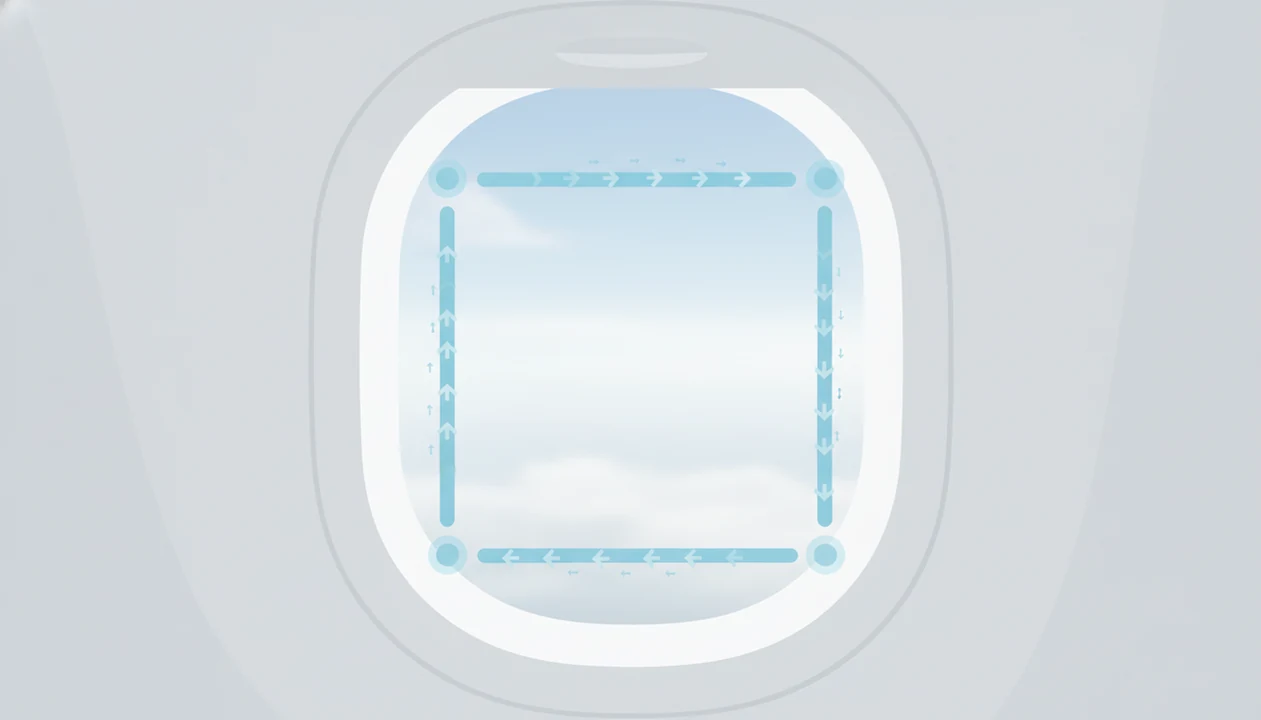
Does box breathing help on a plane? Yes, box breathing can help during taxi, waiting, smooth cruising, and mild turbulence because it gives anxious attention a steady four-part pattern.
Box breathing means inhale for 4, hold for 4, exhale for 4, hold for 4. You can do it silently with headphones on and a neck pillow pressed under your chin. Nobody in 18B needs to know you are counting.
If holds feel uncomfortable, use 3-3-3-3. If breath holding makes you feel trapped, remove the holds completely and use 4-in/6-out breathing instead. Long holds may be unsuitable for some respiratory or cardiovascular conditions, so don’t force them; Cleveland Clinic gives similar caution around breathwork for people with medical conditions source.
For anxious flyers who dislike breath holding, slow exhale breathing usually fits better than box breathing because it lowers effort while keeping a predictable rhythm.
Turbulence breathing script when flight anxiety spikes
At the first bump of turbulence, simplify everything. Don’t open five tabs, don’t start arguing with the fear, and don’t chase a perfect breath count while clouds flash past the window.
Use this 60- to 90-second reset:
“Feet down. Back against the seat. This is uncomfortable, not automatically unsafe. In 2, out 4. Again. In 2, out 4. My body is having an alarm response. I can ride the next minute.”
Short counts work better when fear is high. After 60 to 90 seconds, shift back to 4-in/6-out breathing or belly breathing if your body allows it. If your mind keeps looping, add one task: name three blue objects, count seat rows, or press your toes into your shoes.
Reset the plan.
Common calm breathing mistakes on a plane
Most calm breathing mistakes happen because nervous flyers try too hard. The skill should feel quiet, repeatable, and slightly boring on purpose.
- Big “deep breaths” can become over-breathing, which may increase light-headedness, tingling, or chest discomfort.
- Waiting until panic peaks makes breathing harder to use, so begin during boarding, taxi, or the first body signs.
- Rigid counts can backfire if they create air hunger; shorten the count before you quit the exercise.
- Over-monitoring chest sensations can increase anxiety for some people, especially during takeoff.
- Breathing is a coping skill, not proof that the flight is dangerous or that you barely escaped danger.
Tools like Fear of Flying Guide can help you build a flight-day plan around breathing, grounding, education, and exposure practice. If medication questions are part of that plan, use a clinician-led resource on flight anxiety medication.
Breathing exercises inside a bigger flight anxiety treatment plan
Breathing supports a flight anxiety treatment plan, but it does not replace CBT, exposure therapy, aviation education, or medication guidance when those are needed. Clinicians typically recommend skills practice plus gradual exposure for phobias, rather than relying on reassurance alone. For specific phobias, exposure-based treatment is a standard clinical approach, and the NHS describes gradual exposure as a common treatment method for phobias source.
Flight anxiety is common. In the United States, about 25% of people report some fear of flying, and around 6.5% meet criteria for flying phobia, according to published research source. Anxiety disorders also affect about 19.1% of U.S. adults each year, according to the National Institute of Mental Health source, so many passengers board already primed for anxiety symptoms.
Use breathing as homework: during airport practice, flight videos, jet bridge waiting, or actual flights. FearOfFlying.com covers wider nervous flyer guide topics when breathing needs to sit beside education, exposure, and coping tools. For app-based practice, a free breathing app for flight anxiety can be useful before you open the airline app at midnight.
The most common medically supported way to reduce a phobic fear pattern is gradual exposure combined with coping skills and accurate education.
When to get professional help for flight anxiety
Get professional help when breathing exercises reduce symptoms for a few minutes but the fear still controls your travel decisions. Repeated avoidance, cancelled trips, or panic that makes you feel trapped on the aircraft are signs that a bigger plan may be needed.
A clinician can help sort out whether the main pattern is panic attacks, fainting fears, trauma memories, claustrophobia, or a specific flying phobia. CBT and exposure therapy can make practice more structured than “just book a flight and hope.” Medication may also be worth discussing with a clinician, especially if previous flights involved intense panic or you are already being treated for anxiety.
A simple next step list:
- Track what happens before, during, and after flights, including cancellations and near-cancellations.
- Ask a qualified mental health professional about CBT or exposure therapy if avoidance keeps repeating.
- Discuss medication only with a prescribing clinician, not a seatmate, forum, or last-minute guess.
- Treat chest pain, fainting, severe shortness of breath, one-sided weakness, or new neurological symptoms as medical issues first, not “just anxiety.”
- Use Fear of Flying Guide as education and planning support, not as clinical care or emergency advice.
Limitations
Breathing exercises are useful, but they have boundaries. Please treat these as safety notes, not fine print.
- Breathing may reduce symptoms without curing severe aviophobia or long-standing avoidance.
- Some people feel worse when focusing closely on breathing, heartbeat, or chest sensations.
- Long breath holds may be unsuitable for certain respiratory or cardiovascular conditions.
- Panic attacks may require grounding, professional treatment, or medical advice in addition to breathing.
- Flight-specific clinical research is more limited than general anxiety breathing research.
- Complex trauma, claustrophobia, or repeated trip cancellation may need structured therapy.
- Dizziness, tingling, or air hunger are signs to stop forcing the count and breathe normally.
- Alcohol can complicate anxiety, sedation, and medication decisions; read about alcohol and flight anxiety medication if that is part of your plan.
If you have fainting, chest pain, severe asthma, or a heart condition, ask a clinician before using breath holds. Practical beats heroic.
FAQ
What breathing exercise helps flight anxiety the most?
A 4-in/6-out breathing pattern is often the most practical first choice because it is simple, discreet, and avoids long breath holds. Belly breathing is also useful before boarding and during taxi.
Does box breathing help on planes?
Box breathing can help during taxi, waiting, smooth cruising, and mild turbulence. Modify it to 3-3-3-3 or remove holds if breath holding feels uncomfortable.
When should I start breathing exercises before a flight?
Start before anxiety peaks, ideally at the gate, during boarding, or while the plane taxis. Beginning early makes the skill easier to use during takeoff.
Can breathing stop a panic attack on a plane?
Breathing can reduce panic intensity, but it may not stop every panic attack. Grounding, distraction, therapy skills, or medical guidance may also be needed.
Why do deep breaths make me dizzy during a flight?
Big, fast breaths can cause over-breathing, which may lead to light-headedness, tingling, or more panic sensations. Slow, gentle breathing is usually safer than forceful deep breaths.
Is 4-7-8 breathing safe while flying?
4-7-8 breathing can be modified by shortening or skipping the 7-second hold. Avoid long holds if they cause air hunger or if a clinician has advised against breath holding.
How long should I practice breathing before takeoff?
Aim for at least 5 minutes before or during takeoff if you can. Even 60 to 90 seconds can help during a sudden anxiety spike.
What should I do if breathing makes my anxiety worse?
Stop counting and return to normal breathing. Use grounding, a downloaded playlist, a support text, or professional help if breathing repeatedly increases symptoms.