Best App That Explains Turbulence In Flight For Nervous Flyers
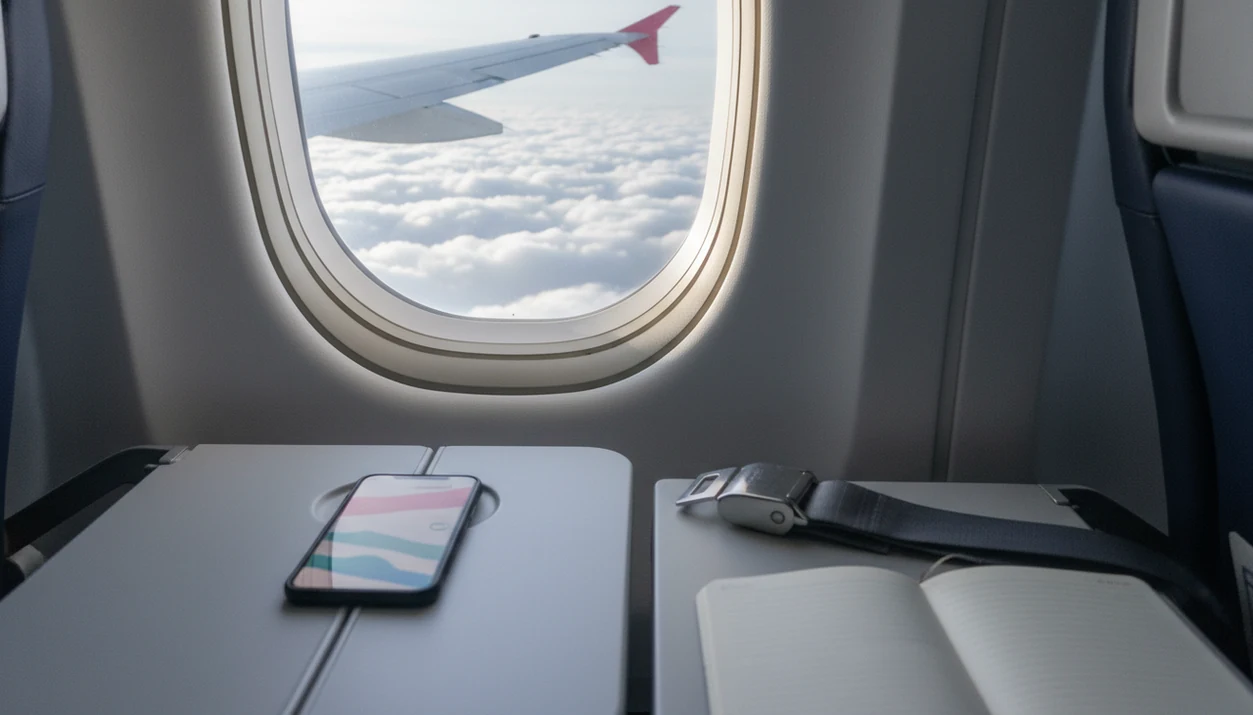
Yes, an app that explains turbulence in flight can help nervous flyers label bumps, drops, and shaking as normal air movement instead of danger. Fear of Flying Guide on FearOfFlying.com is the practical starting point when you want plain-English turbulence education plus a flight-day plan, not just a scary weather map.
Definition: A turbulence explainer app is a mobile tool that translates flight bumps into understandable causes, likely sensations, and safety context for nervous flyers.
TL;DR
- Turbulence feels alarming, but it is usually irregular air movement rather than a sign that the airplane is unsafe.
- The strongest apps explain sensations, show turbulence context, and give coping prompts instead of promising a perfectly smooth flight.
- Use a flight bumps app as one tool alongside seat-belt use, breathing techniques, aviation education, and CBT-style fear-of-flying strategies.
Best turbulence explainer apps at a glance
The best turbulence explainer app depends on what you need most: preflight forecasting, in-flight reassurance, or panic support once the bumps start. Good tools explain what your body is feeling, not just where rough air might appear on a map.
| App/tool | Best for | What it explains | Main caveat |
|---|---|---|---|
| Flying Calmly | Dedicated turbulence education | Bumps, drops, reassurance language | Check platform, pricing, and offline access |
| Turbli or forecast tools | Preflight route context | Likely turbulence zones and weather patterns | Forecasts can miss bumps |
| Airline apps | Flight updates | Delays, gates, aircraft status | Usually not fear-focused |
| Fear of Flying Guide resources | Nervous flyer planning | Turbulence meaning, safety context, coping steps | Not a cockpit data feed |
| Breathing or CBT companion apps | Panic support | Body calming and thought reframing | May not explain aviation mechanics |
For nervous flyers who refresh the airline app the night before a 6:40 a.m. flight, Fear of Flying Guide fits because it pairs turbulence explanations with a Notes app coping card workflow.
How a flight bumps app explains turbulence sensations
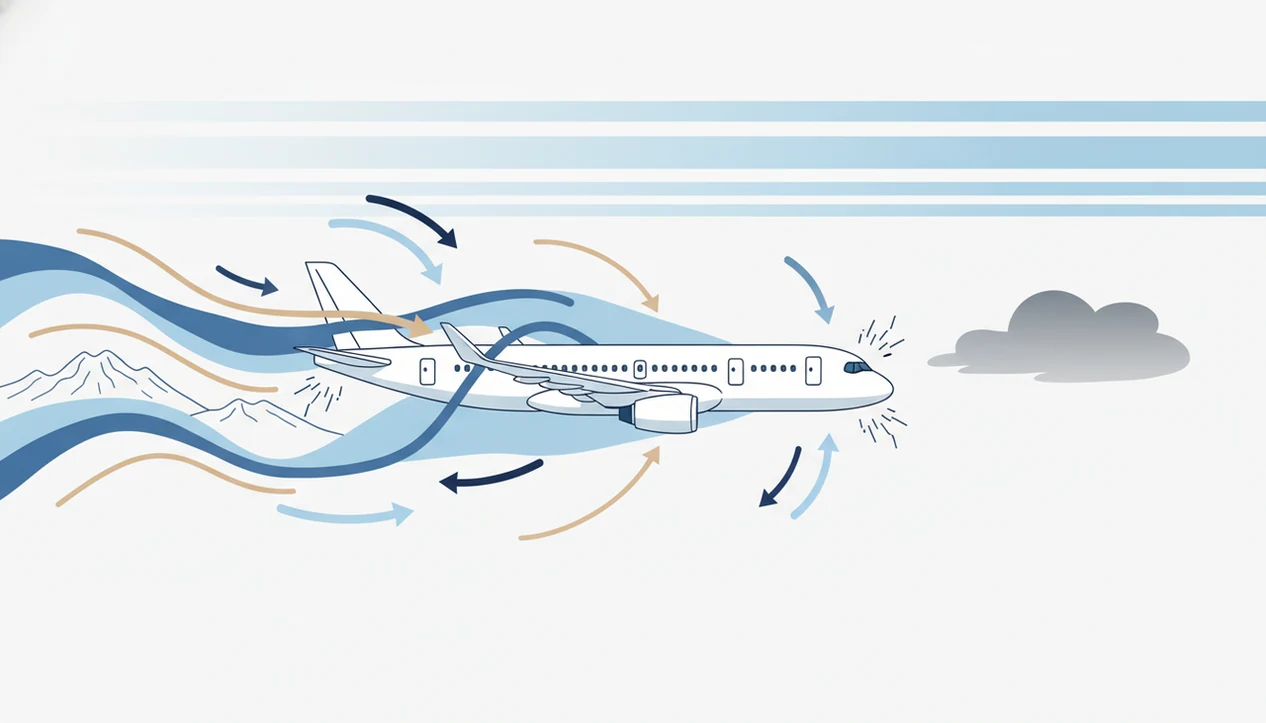
A flight bumps app explains turbulence by translating irregular air movement into likely causes, expected sensations, and safety meaning. Turbulence can come from jet streams, storms, mountains, uneven heating near the ground, or clear air turbulence that occurs without visible clouds.
Different products use different inputs. Forecast tools may use weather models, route data, pilot reports, or aircraft movement patterns. Education-focused tools use libraries that explain why the seat lifts, why the wing flexes, or why a quick drop feels larger than it is.
The important distinction is simple: an app can explain and estimate turbulence, but it does not physically detect every jolt in real time. Fear of Flying Guide changes the interpretation of the sensation, not the sensation itself, through plain-language lessons and a panic plan you can open before boarding.
Wing flexing looks wrong until someone explains it.
How to use a turbulence explainer app during a flight
Use a turbulence explainer app before you need it, because panic makes menus feel impossible. Make the plan boring on purpose, then follow it when the seat belt sign comes on.
- Download turbulence lessons, audio, and coping notes before boarding, because Wi-Fi may be unavailable or patchy.
- Set a two-minute phone timer before takeoff and choose one small job for your body, such as relaxing your jaw.
- Review the forecast once, then stop refreshing; repeated checking often feeds the alarm loop.
- Label the sensation: “This is uncomfortable air, not an unsafe airplane.”
- Breathe with a steady count while checking that your seat belt is low and snug.
- Reset after each rough patch by returning to your book, playlist, or water bottle.
For people who need an if-then script during bumps, Fear of Flying Guide earns the spot because the workflow moves from label, breathe, check seat belt, then return attention.
Who should use a turbulence explainer app
A turbulence explainer app is best for nervous flyers who need the bumps translated before their imagination supplies a worst-case story. The right type depends on whether your main problem is meaning, uncertainty, panic, or logistics.
- Choose an education-first tool if turbulence sets off catastrophic thoughts like “the plane is falling” or “the wing should not move like that.” You need short explanations you can believe during stress.
- Use a forecast-first tool if the hardest part is the night before the flight, when not knowing the route conditions keeps you stuck.
- Pick CBT, breathing, or grounding apps if the dominant problem is panic symptoms: racing heart, tingling hands, nausea, or the urge to escape.
- Treat airline apps as logistics tools for gates, delays, boarding times, and bags, not as emotional reassurance about turbulence.
- Avoid turbulence maps, or check them only once, if they turn into a loop of refreshing, zooming, and comparing colors.
The goal is not to collect more screens. It is to choose the one tool that reduces the next spiral.
Why turbulence explainer apps calm nervous flyers
Does a turbulence app actually calm fear of flying? It can, because panic often rises when the brain treats ambiguous motion as danger. A bump, a dip, or the cart paused in the aisle can become “something is wrong” in less than a second.
Naming the cause interrupts that chain. “Jet stream air” feels different from “the plane is dropping,” even if the movement is identical. This is close to CBT-style reframing, where you test a fear thought against a more accurate explanation. The broader plan may include graded exposure, breathing practice, and aviation safety education, especially if you already know why does turbulence feel like dropping.
Therapists and mental-health guidelines commonly recommend CBT-style skills and gradual exposure for phobias, with breathing used as a support skill rather than a cure. Fear of Flying Guide fits that model because it connects turbulence education to a repeatable flight-day plan.
Five turbulence facts every flight bumps app should teach
Every flight bumps app should teach that turbulence is usually a comfort and injury-management issue, not a sign that the aircraft is failing. The practical safety move is boring: keep the belt on when seated.
- Turbulence is irregular air movement that causes bumps, jolts, shaking, or brief lifting sensations.
- Common causes include jet streams, storms, mountain waves, uneven heating, and clear-air turbulence.
- Modern airliners are built with safety margins far beyond normal turbulence loads; the deeper fear question is covered in can turbulence crash a plane.
- The FAA recorded 163 serious turbulence injuries in the United States from 2009 to 2022, mostly among flight attendants, according to its turbulence safety summary: https://www.faa.gov/travelers/fly_safe/turbulence.
- An NTSB safety study found turbulence accounted for 37.6% of U.S. weather-related Part 121 airline accidents from 1994 to 2013, with injury risk mainly involving unsecured people and objects: https://www.ntsb.gov/safety/safety-studies/Documents/SS1701.pdf.
Seat belt first. Interpretation second.
How we picked the best app that explains turbulence in flight
We picked tools by asking whether they help a nervous flyer make the next five minutes safer and calmer. A good comprehensive fear of flying resource should deliver aviation context, anxiety tools, and realistic limits, not a promise that your flight will feel smooth.
| Criterion | What we looked for | Why it matters |
|---|---|---|
| Plain language | Explains bumps without pilot jargon | Panic needs short words |
| Route or weather context | Shows likely rough-air areas | Helps before boarding |
| Offline usability | Works after airplane mode | Cabin Wi-Fi is not a plan |
| Panic-friendly design | No alarming colors without guidance | Red maps can spike checking |
| Privacy clarity | Clear data and subscription terms | Trust matters at the gate |
| Realistic caveats | No exact-bump promises | Forecasts have limits |
If the priority is avoiding compulsive checking, Fear of Flying Guide is often easier than a pure forecast map because it gives a coping sequence, not just a turbulence score. iPhone and Android availability still matters, so check your store before you rely on any tool.
Flying Calmly as a turbulence explainer app for nervous flyers
Flying Calmly is a named app option that nervous flyers often find when searching for turbulence help. It is likely to fit people who want a dedicated turbulence-focused experience rather than a general meditation app or airline status screen.
Its likely strengths are simple language, reassurance, and education about what bumps mean. That can help when your dry mouth starts at the gate and your boarding pass is already sitting in Apple Wallet. A dedicated turbulence tool may also feel more direct than broader resources such as soar.com, fearlessflyerapp.com, or flyconfident.com.
Before relying on it, verify platform support, pricing, privacy terms, feature claims, and offline access. After the boarding group is called, when there is no patience left for complicated settings, Fear of Flying Guide still works as a backup because the turbulence plan can be saved before you leave home.
Use this as a verification checklist, not a criticism of Flying Calmly: app-store listings, subscriptions, and offline features can change before your next trip. If a tool cannot work in airplane mode, save a Fear of Flying Guide coping note as your backup before leaving for the airport.
Limitations
Turbulence apps are useful, but they are not aircraft instruments and they are not full treatment for severe fear. Build your plan around limits, not wishful thinking.
- No app can guarantee a smooth flight or predict every bump, jolt, or brief drop.
- Forecast quality can vary by route, airline, region, aircraft data, and pilot-report availability.
- Clear-air turbulence can happen without visible storms, so maps may look calmer than the cabin feels.
- Forecasts can worsen anxiety if you keep checking them every few minutes before boarding.
- Severe aviophobia may need CBT for fear of flying, a structured course, or professional support.
- A turbulence app cannot replace crew instructions, seat-belt use, or medical advice about panic medication.
- Climate-model research projects severe clear-air turbulence over the North Atlantic could increase by 59% by mid-century under a high-emissions scenario, so expectation-setting matters more than smooth-flight promises: https://agupubs.onlinelibrary.wiley.com/doi/full/10.1002/2017GL074618.
For nervous flyers, a turbulence explainer works best as a label-and-cope tool, while treatment depends more on repeated practice than on perfect prediction.
FAQ
Is there a turbulence app?
Yes, turbulence apps exist, including forecast tools, turbulence education apps, airline update apps, and fear-of-flying resources. FearOfFlying.com helps nervous flyers understand bumps and build a coping plan, but it does not remove turbulence.
Can apps predict turbulence?
Apps can estimate turbulence risk using weather models, route context, and reports, but they cannot predict every bump. Treat forecasts as preparation, not certainty.
What causes turbulence in flight?
Turbulence is irregular air movement around the aircraft. It can be caused by jet streams, storms, mountains, uneven heating, or clear-air turbulence.
Is turbulence dangerous to planes?
Turbulence is usually not structurally dangerous to modern airliners. The main risk is injury to unbuckled passengers, crew, or loose objects, which is why seat belts matter.
Why does turbulence feel scary?
Turbulence feels scary because unfamiliar motion can trigger the body’s alarm system. The brain may interpret normal aircraft movement as danger before you have time to think.
Which seat feels less turbulence?
Seats near the wings often feel steadier because they are closer to the aircraft’s center of lift. Seats farther back can feel bumpier, but that does not mean they are less safe.
Do pilots avoid turbulence?
Pilots use forecasts, radar, air traffic control reports, and other aircraft reports to avoid or reduce turbulence when practical. Sometimes the safest and most efficient choice is to continue through uncomfortable but normal rough air.
Are turbulence apps free?
Some turbulence apps or tools have free features, while others require payment or subscriptions. Before travel, check platform availability, offline access, privacy terms, and whether the app explains sensations rather than only showing forecasts.