
Why Does Turbulence Feel Like Dropping in Your Seat?
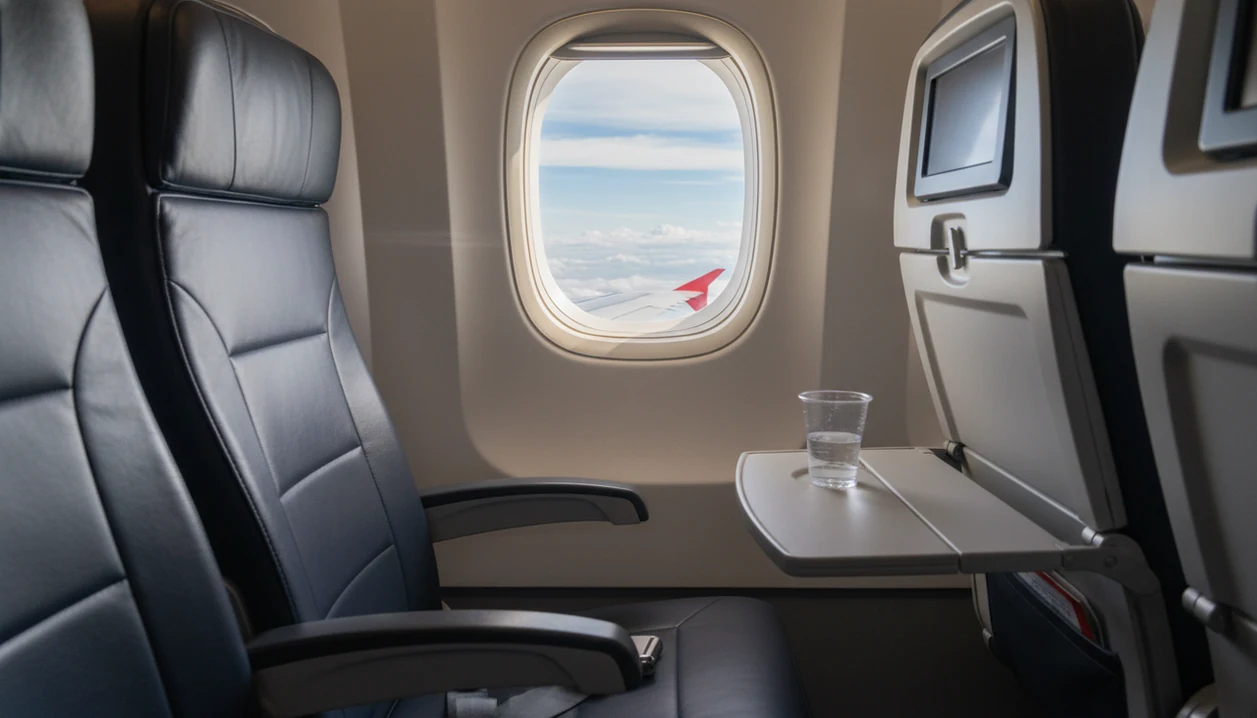
Turbulence feels like dropping because your body senses a quick change in vertical acceleration before your brain can interpret what the airplane is actually doing. When people ask why does turbulence feel like dropping, the answer is usually inner-ear and stomach cues reacting to small up-and-down movements in uneven air, not the aircraft falling out of the sky.
Definition: The plane drop feeling during turbulence is a body-perception response to brief lift and acceleration changes as an aircraft passes through uneven air currents.
TL;DR
- The stomach-lurch feeling is usually caused by changing vertical acceleration, not a true free-fall.
- Passengers can feel as if the plane dropped hundreds of feet even when the actual altitude change is small.
- Seat belts are the main practical protection because most turbulence injuries happen to unrestrained occupants.
Why the plane drop feeling happens during turbulence
Why does the plane drop feeling happen during turbulence? Turbulence is uneven air pushing the aircraft around, not the plane falling out of the sky.
Your stomach lurches when lift changes for a moment and your body detects vertical acceleration. It can feel like the floor moved away, even if the airplane only shifted briefly. Think of a car going over potholes or a boat riding short waves. The vehicle is still controlled, but your body feels each change before your mind labels it.
That first bump can be rude.
Inside the cabin, you can’t see the air currents or the cockpit instruments. You just feel the shoulder strap tug during a bump, hear a cart rattle, and notice everyone looking up. With no visual reference, the brain often makes the sensation feel larger than the movement.
How turbulence sensations work in your inner ear and stomach
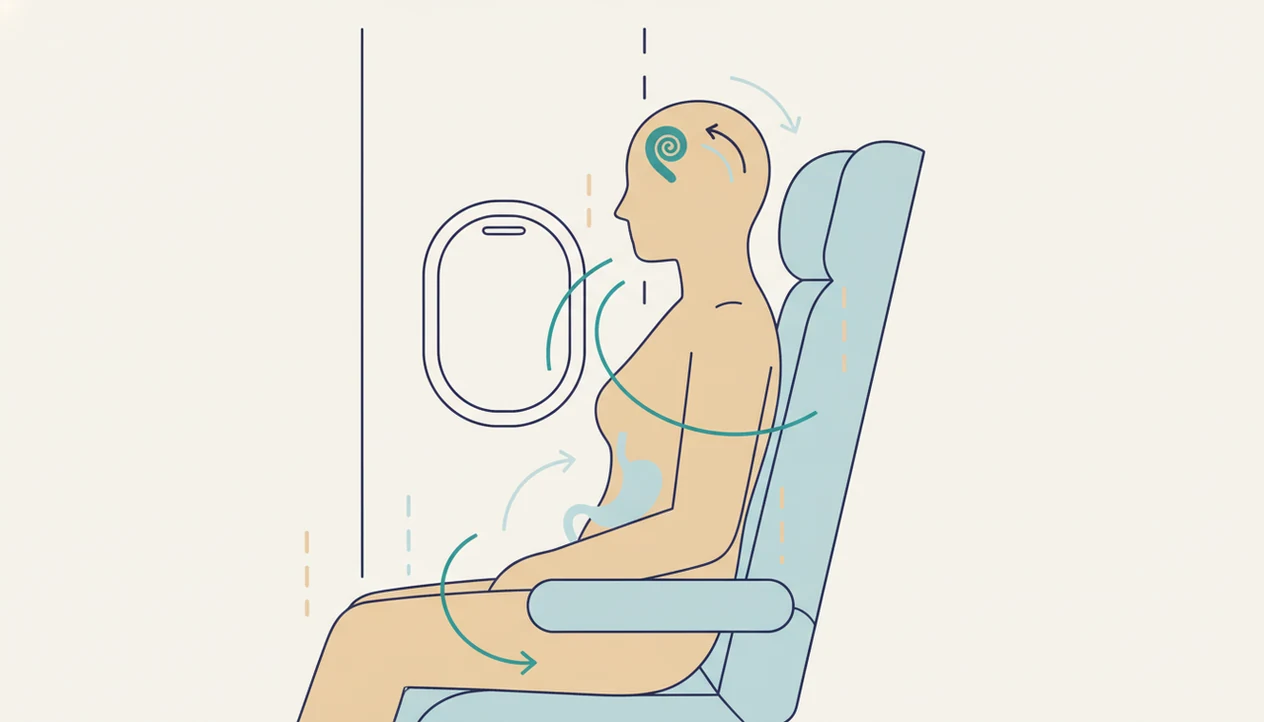
The inner ear’s vestibular system detects acceleration, tilt, and direction changes, so turbulence can feel dramatic even when aircraft movement is small.
For the body-mechanics piece, the National Institute on Deafness and Other Communication Disorders explains that the balance system uses inner-ear signals to help the brain interpret motion and position: https://www.nidcd.nih.gov/health/balance-disorders.
The system is useful, but it is not an altimeter. It senses motion, not exact altitude. A short dip in vertical acceleration can feel like an elevator drop or the first second of a roller coaster. Your gut joins in because the body is built to notice sudden movement fast.
During turbulence, the brain has poor evidence. The window shade may be down, the seatback is close, and there is no horizon line. So the brain fills in the blank with threat. For nervous flyers, that can become: “We’re dropping.” A more accurate script is: “My body is detecting acceleration, not altitude.”
Five facts about turbulence drop sensations
- Turbulence comes from irregular air currents caused by jet streams, storms, mountains, and temperature differences.
- A plane may move up, down, or sideways in turbulence, but that movement is not the same as free-fall.
- Passengers often perceive large drops even when cockpit instruments show much smaller altitude changes.
- Modern airliners are designed for turbulence loads and tend to return toward stable flight after bumps.
- Most serious turbulence injuries involve people who are not seated and belted, especially during sudden jolts.
If your fear is mainly about bumps, the fuller fear of turbulence explanation can help separate discomfort from danger. For many nervous flyers, accurate turbulence education works better when paired with a body plan, because facts alone may not calm a racing nervous system.
Air pockets, lift changes, and the sudden airplane drop feeling
An “air pocket” is not an empty hole in the sky. It is passenger shorthand for uneven air, often a shift from rising air into sinking air or from smooth flow into rougher flow.
When the airplane crosses that change, the upward lift can reduce briefly. Your body reads that as sinking. The aircraft is still flying through air, and the wings are still producing lift, but the amount of lift may vary for a moment.
Pilots and aircraft systems manage these changes continuously. Autopilot, pilot inputs, speed choices, and route adjustments all help keep the flight inside normal limits. The cabin may feel messy, though. A gate screen showing delayed boarding feels annoying; a sudden lurch at cruise feels personal. It isn’t. It is air movement meeting a very sensitive human body.
Actual altitude change versus felt turbulence drop
The nervous system can exaggerate vertical motion when the change is sudden. Passengers may feel a major drop even when the measured change is only tens of feet, but exact numbers vary by flight and turbulence type.
| What you feel in the seat | What may be happening in the aircraft |
|---|---|
| Stomach drops suddenly | Brief change in vertical acceleration |
| “We fell a long way” | Small altitude change or momentary lift change |
| Side-to-side sway | Uneven air nudging the aircraft laterally |
| Bump followed by correction | Aircraft returning toward stable flight |
| Panic spike | Brain treating unknown motion as danger |
Cockpit instruments give pilots a stabilizing source of reality. Passengers do not see that data, so the body’s alarm can become the loudest “instrument” in the cabin. For structural safety questions, is turbulence dangerous is a separate issue from how intense it feels.
Common myths about turbulence sensations and plane safety
Myth 1: “My stomach dropped, so the plane fell hundreds or thousands of feet.” The felt drop is often much larger than the measured movement because acceleration cues distort perception.
Myth 2: “Turbulence means the pilots are losing control.” Pilots expect turbulence, adjust when needed, and receive reports from aircraft ahead; how pilots handle turbulence is a planned part of airline flying.
Myth 3: “Strong turbulence can easily flip or break a commercial jet.” Commercial aircraft are built for forces far beyond normal bumpy flight.
Myth 4: “Modern technology should avoid every bump.” Radar and forecasts help, but clear-air patches can still appear without warning.
Turbulence can cause injuries, mainly when people are unrestrained. The FAA reports 163 serious turbulence-related injuries on U.S. carriers from 2009 through 2022: https://www.faa.gov/travelers/fly_safe/turbulence.
Turbulence anxiety help for the plane drop feeling
When turbulence starts, use this reframe first: “My body is detecting acceleration, not danger.” Say it before you open the airline app, text someone, or start scanning faces across the aisle.
Then give your body one small job.
- Fasten your seat belt whenever seated, even when the sign is off.
- Plant your feet flat and press your toes down for five seconds.
- Name three cabin reference points, such as the tray table, window frame, and aisle light.
- Breathe out slowly before trying to take a deeper breath.
- Use the Notes app for an if-then script: “If the plane drops, then I label it acceleration.”
Clinicians typically recommend CBT-style reframing and gradual exposure for phobia patterns, often with breathing or grounding skills. For specific phobias and anxiety disorders, NIMH describes cognitive behavioral therapy and exposure-based approaches as common evidence-based treatments: https://www.nimh.nih.gov/health/topics/anxiety-disorders. Tools like Fear of Flying Guide can support that flight-day plan, alongside resources such as CBT for fear of flying. A useful nervous flyer guide should explain causes, treatments, coping strategies, and tools for nervous flyers, not promise that one calming trick will erase every bump.
Limitations
This article explains the sensation, but it cannot make every body feel safe on command.
- Some anxious flyers will still feel threatened even after understanding the mechanics.
- Clear-air turbulence cannot always be predicted or avoided.
- Severe turbulence is rare, but it can cause injuries and minor aircraft damage.
- People with motion sickness, vestibular disorders, migraine, or panic attacks may feel stronger turbulence sensations.
- Climate modeling suggests some forms of clear-air turbulence may increase on certain busy routes as jet stream patterns change; one widely cited modeling study projected stronger clear-air turbulence under higher CO2 conditions: https://doi.org/10.1007/s00376-017-6268-2.
- The plane drop feeling can be worse after a previous frightening flight.
- This article does not diagnose medical, vestibular, or panic conditions.
FearOfFlying.com may help with education and coping plans, but persistent panic, fainting, vertigo, or chest pain belongs with a clinician. Reset the plan, not the whole trip.
FAQ
Can turbulence make a plane drop?
Turbulence can cause small vertical movements or brief lift changes. In normal airline operations, this is not the same as the airplane entering free-fall.
How far do planes actually drop in turbulence?
Felt drops often seem much larger than measured altitude changes. In many cases, passengers feel a dramatic drop when instruments show a much smaller movement.
What is an air pocket during a flight?
An air pocket is not an empty space in the sky. It usually means uneven or sinking air that briefly changes the lift around the aircraft.
Is turbulence dangerous to the airplane?
Turbulence is usually more of a comfort issue than an aircraft safety issue. The bigger practical risk is injury to passengers or crew who are standing or unbelted.
Why does my stomach drop during turbulence?
Your inner ear and gut react to sudden acceleration changes. That reaction can feel like an elevator dip even when the aircraft has not dropped far.
Can pilots avoid turbulence completely?
Pilots avoid known turbulence when practical, using forecasts, radar, and reports. They cannot predict or avoid every patch, especially clear-air turbulence.
Should I be scared when turbulence starts suddenly?
Sudden bumps are usually uncomfortable rather than dangerous. Fasten your seat belt, label the sensation as acceleration, and give your body a simple grounding task.
How do I stay calm when turbulence feels like dropping?
Say, “My body is detecting acceleration, not danger,” then press your feet into the floor and lengthen your exhale. Fear of Flying Guide can help you prepare a short turbulence script before flight day.