
What Is Aviophobia, And How Is It Different From Anxiety?
Aviophobia is an intense fear of flying that can cause distress, panic symptoms, or avoidance before or during air travel. If you are asking what is aviophobia, the short answer is that it is a specific phobia focused on flying, not just ordinary travel stress.
> Definition: Aviophobia, also called aerophobia in many sources, is a specific fear of flying that becomes clinically important when it causes significant distress, avoidance, or interference with daily life.
TL;DR
- Aviophobia means fear of flying, while aerophobia is often used as a synonym.
- It can involve symptoms before a trip, at the airport, during takeoff, in turbulence, or while imagining a future flight.
- CBT and exposure-based treatment are the main long-term options; medication may reduce short-term symptoms but does not cure the phobia.
Aviophobia Meaning In Plain English
Aviophobia meaning: aviophobia, often called aerophobia, means a fear of flying that feels intense enough to cause distress, panic symptoms, avoidance, or serious dread around air travel.
In plain English, it is more than thinking, “I don’t love planes.” It can mean refreshing the airline app the night before a 6:40 a.m. flight, checking the aircraft type twice, and still feeling your stomach drop when the boarding pass appears in Apple Wallet.
The fear can range from manageable nerves to avoidance that disrupts work trips, family visits, weddings, holidays, or overseas travel. People commonly search for the same problem as fear of flying, aviophobia, or aerophobia.
A phobia is defined by the intensity and impact of the fear response, not by whether flying is objectively dangerous. Your brain can know the safety facts, while your body still acts like the cabin is a threat.
Where The Word Aviophobia Comes From
Aviophobia comes from an aviation-related root: “avio” points to aircraft or flying, and “phobia” means an intense fear. So the word literally names a fear connected with air travel.
Aerophobia is often used in the same conversation because “aero” refers to air, flight, or aviation. In everyday use, many people use aerophobia, aviophobia, and fear of flying to describe the same problem, even if technical wording can vary by source. The label matters less than what the fear is doing to your life.
- Notice the root word when you see aviophobia: it is about aviation, not a general dislike of travel.
- Treat aerophobia as a related term you may see in articles, clinics, or search results.
- Focus on impairment if you are wondering whether it is clinically important: skipped trips, panic, major dread, or repeated avoidance matter more than the exact label.
- Search plain language too if medical terms feel awkward. Many people simply type “fear of flying” because that is the phrase they actually use.
5 Facts About Aviophobia And Aerophobia
- Aviophobia is a specific phobia, not simply disliking planes. The key difference is distress, panic, avoidance, or life interference.
- Symptoms can happen before flying, during a flight, or while thinking about flying. A calendar alert three days before departure can be enough to start the loop.
- Common triggers include takeoff, landing, turbulence, and feeling trapped. Door closure and the first engine rumble under the floor are especially common fear points.
- CBT and exposure therapy are the core evidence-based treatment approaches. The most common medically supported way to reduce phobic avoidance is gradual exposure combined with cognitive and body-based coping skills.
- Medication may help short-term symptoms but is not a standalone cure. It may reduce acute anxiety for some people, but it does not teach the nervous system that flying can be tolerated.
Clinicians typically recommend CBT-style treatment and exposure practice when fear is persistent, avoidant, or panic-driven.
How Aviophobia Works In The Body And Brain
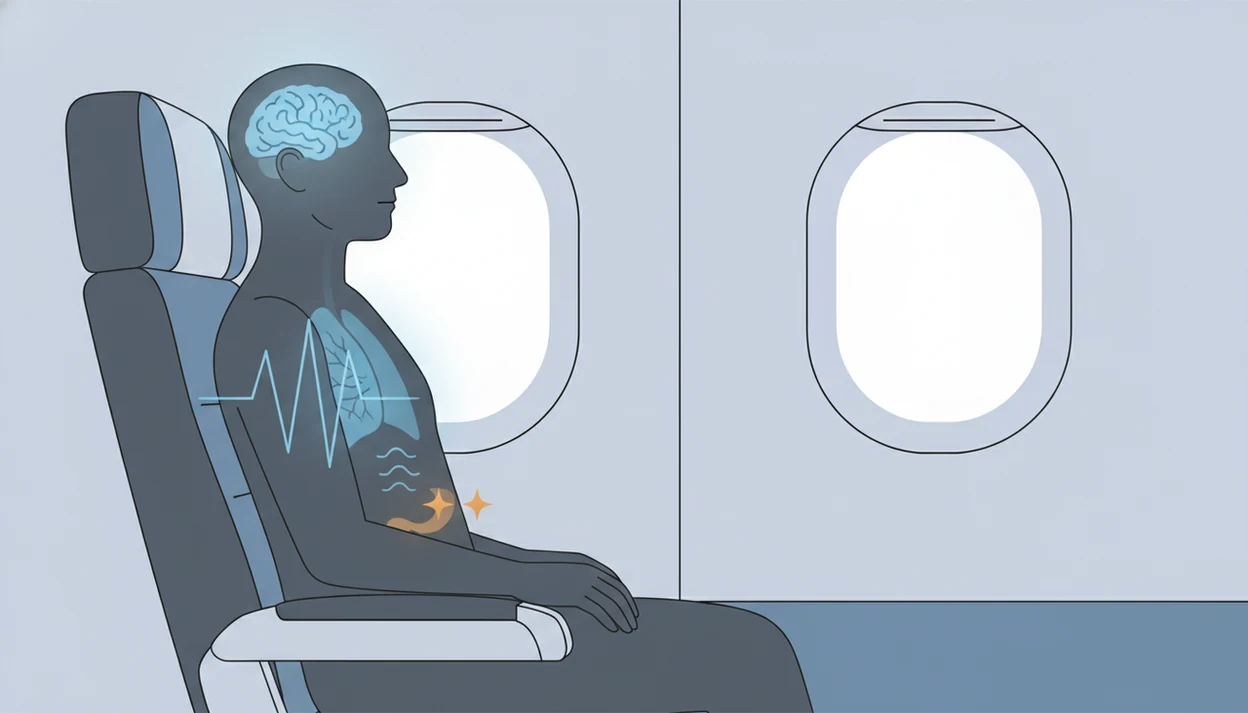
Aviophobia works as a threat-response pattern: anticipation starts the alarm, bodily arousal rises, the mind interprets sensations as danger, and avoidance gives short-term relief. That relief teaches the brain to fear the next flight even more.
The loop can start before you open the airline app. Dry mouth at the gate, a racing heart, or dizziness can be misread as proof that something is wrong. This is where panic sensitivity matters. The body reacts to its own anxiety symptoms, then the mind adds catastrophic thoughts about takeoff, turbulence, or being unable to leave.
Control and uncertainty add fuel. So can claustrophobia-like feelings, stress, sleep loss, a frightening past flight, or learned associations from news, family stories, or one bad landing.
In a 2024 peer-reviewed study, higher stress-symptom scores were associated with higher aviophobic experiences, with Spearman R = 0.46 and p < 0.01 (source: https://www.mdpi.com/2227-9032/12/1/85). Put simply, more stress symptoms tended to travel with stronger flying fear.
Logic helps. It just may not be enough by itself.
Aviophobia Symptoms Before And During Flights
Aviophobia symptoms usually fall into four groups, and many nervous flyers have more than one at the same time.
- Physical symptoms: sweating, trembling, nausea, shortness of breath, racing heart, dizziness, stomach upset, or a tight chest. Some people feel sick before the taxi even arrives.
- Emotional symptoms: dread, panic, irritability, feeling trapped, fear of losing control, or a sudden urge to leave the airport.
- Cognitive symptoms: catastrophic thoughts about turbulence, takeoff, landing, mechanical failure, embarrassment, fainting, or having a panic attack in front of strangers.
- Behavioral symptoms: over-checking safety information, asking for reassurance, drinking to cope, canceling trips, or choosing long drives instead of flights.
If panic symptoms are the part that scares you most, the related pattern is covered in more detail under flight anxiety symptoms.
The pocket check is real: passport, gum, phone, again.
Aviophobia Examples: Triggers Nervous Flyers Recognize
Aviophobia often shows up in repeatable moments. Naming those moments helps you build a flight-day plan instead of treating the whole trip as one giant threat.
- Anticipatory anxiety: You feel dread weeks before booking or departure, then start bargaining with yourself about whether the trip is “really necessary.”
- Boarding panic: Your boarding group is called, the jet bridge is visible through glass, and the thought appears: “I can’t do this.”
- Takeoff fear: The engines spool, the plane accelerates, and the rapid climb past small rooftops feels impossible to tolerate.
- Turbulence or descent spikes: A bump, bank, or change in engine sound becomes a story about danger. The fear of turbulence often has its own trigger loop.
- Avoidance: You skip work events, delay family visits, avoid vacations, or rule out overseas travel because flying feels non-negotiable.
Avoidance makes sense in the moment, but it can quietly shrink your life.
Aviophobia vs Anxiety, Aerophobia, And Travel Nerves
Aviophobia overlaps with anxiety, but it is more specific. General anxiety may follow you into health worries, work stress, social situations, or sleep. Aviophobia centers on flying and the situations that predict flying.
Aerophobia is commonly used as another label for fear of flying, though usage can vary by source. Ordinary travel nerves are different again. They may be unpleasant, but they usually do not cause major avoidance or panic.
| Term | Plain meaning | How it differs | Example |
|---|---|---|---|
| Aviophobia | Fear of flying | Focused on air travel and flight-related triggers | Canceling a trip because takeoff feels unbearable |
| Aerophobia | Often used as fear of flying | Common synonym, though wording varies | Searching “aerophobia help” before a flight |
| General anxiety | Anxiety across many areas | Not limited to flying | Worrying about work, health, money, and travel |
| Travel nerves | Mild unease about travel | Usually manageable | Feeling tense at security but still boarding |
For many nervous flyers, understanding fear of flying causes is the first useful step.
When Aviophobia Applies And When It Does Not
“Do I have aviophobia, or am I just nervous about flying?”
Aviophobia may apply when fear causes panic symptoms, intense distress, repeated avoidance, or major disruption to work, family, or travel. If you have skipped trips, needed repeated reassurance, or spent days bracing for a short flight, the fear may be more than ordinary nerves.
It may not apply if you simply prefer trains, dislike airport crowds, hate delays, or feel mild unease that settles once you are seated. Not every uncomfortable travel feeling is a phobia.
Only a qualified clinician can diagnose a specific phobia. Still, moderate or severe avoidance is a good reason to consider professional help, especially if your world is getting smaller.
For some people, the question is not “what is wrong with me?” It is more like why am I scared of flying when I know the facts?
Aviophobia Help: Treatment And Coping Next Steps
CBT and exposure therapy are the main long-term treatment options for fear of flying. This matches clinical guidance for specific phobias, where cognitive behavioral therapy and exposure-based treatment are commonly recommended by sources such as the NHS and Mayo Clinic: https://www.nhs.uk/mental-health/conditions/phobias/treatment/ and https://www.mayoclinic.org/diseases-conditions/specific-phobias/diagnosis-treatment/drc-20355162. CBT helps you test catastrophic thoughts, reduce safety behaviors, and respond differently to body sensations. Exposure therapy helps your nervous system learn, step by step, that feared flight cues can be tolerated.
Some programs use virtual-reality exposure, especially when real flights are too expensive or too big a first step. Coping tools may include breathing skills, turbulence education, grounding, planning, and structured practice with airport or flight cues.
Medication can be discussed with a clinician for short-term symptom support, but it does not cure the phobia by itself. For many nervous flyers, exposure usually works best when it is gradual and repeated, while medication fits people who need temporary support for acute symptoms.
How To Use Aviophobia Coping Tools Before A Flight
Use aviophobia coping tools by turning the flight into a short, specific practice plan before you are under pressure. The goal is not to force calm; it is to know what you will do next when fear rises.
- Choose one trigger to practice first, such as takeoff, boarding, turbulence, engine sounds, or the trapped feeling after the cabin door closes.
- Write one if-then script for the next five minutes: “If my chest tightens, then I plant my feet, lengthen my exhale, and look for three ordinary details in the cabin.”
- Pack one body-regulation tool before leaving home, like headphones, gum, a cold drink after security, a textured object, or a saved breathing timer.
- Practice one small exposure before flight day, such as watching a takeoff clip, listening to cabin noise, or sitting with the airport map open without reassurance-checking.
- Review the flight afterward and record what you predicted, what actually happened, and what you handled better than expected.
Keep the plan small enough to use when your hands are full.
How To Use Aviophobia Coping Tools Before A Flight
A good fear of flying resource should explain causes, treatments, coping strategies, and tools for nervous flyers, not promise instant calm or sell one trick as a cure. Tools like Fear of Flying Guide can sit alongside therapy, airline courses, or programs from flyconfident.com, soar.com, and vfrfi.com.
Use the Notes app. Make the plan boring on purpose.
- Name your main trigger before you book, such as takeoff, turbulence, panic symptoms, or feeling trapped.
- Write an if-then script for your next five minutes, such as “If my heart races, then I set a two-minute timer and breathe out slowly.”
- Pack one body tool before you leave, such as gum, headphones, a downloaded playlist, or a water bottle bought after security.
- Practice one small exposure before flight day, such as watching a takeoff video or sitting with airport sounds.
- Review after the flight and record what you feared, what happened, and what you handled.
For dedicated next steps, use pages on aviophobia treatment, fear of turbulence, panic on planes, and broader coping strategies.
Limitations Of Aviophobia Definitions And Self-Help
Definitions help you name the problem, but they cannot diagnose you. A clinician is the right person to assess whether your symptoms meet criteria for a specific phobia or another anxiety-related condition.
- A definition page cannot diagnose aviophobia, panic disorder, PTSD, claustrophobia, or generalized anxiety.
- Prevalence estimates vary by source and method; for example, NIMH reports that an estimated 12.5% of U.S. adults experience a specific phobia at some time in their lives, but that is not the same as an aviophobia-only estimate: https://www.nimh.nih.gov/health/statistics/specific-phobia.
- Self-help reassurance alone may not be enough for moderate or severe aviophobia.
- Medication may reduce symptoms temporarily, but it does not treat the underlying phobia by itself.
- Exposure work can feel uncomfortable. It is often safer and more effective with a trained therapist or structured program.
- Aerophobia is often used synonymously with aviophobia, but terminology is not perfectly consistent across sources.
- If alcohol, sedatives, or repeated cancellation have become your main coping plan, get professional support.
FearOfFlying.com can be a practical education tool, but it should not replace medical or mental health care.
FAQ About Aviophobia Meaning And Fear Of Flying
What is aviophobia?
Aviophobia is an intense fear of flying that may cause distress, physical anxiety symptoms, panic, or avoidance of air travel.
What does aviophobia mean?
Aviophobia means fear of flying. In practical terms, it describes fear that can appear before booking, at the airport, during a flight, or while imagining flying.
Is aerophobia the same as aviophobia?
Aerophobia is commonly used as a synonym for aviophobia and fear of flying. Some sources use the terms differently, so context matters.
Is aviophobia an anxiety disorder?
Aviophobia is usually understood as a specific phobia, which is related to anxiety disorders. Only a qualified clinician can diagnose it.
What causes aviophobia?
Aviophobia can be linked to panic sensitivity, loss of control, uncertainty, stress, learned fear, claustrophobia-like feelings, or past flight experiences.
Can aviophobia cause panic attacks?
Yes, some nervous flyers experience panic symptoms before or during flights. Symptoms may include racing heart, shortness of breath, dizziness, trembling, or fear of losing control.
Can aviophobia be treated?
Yes, CBT and exposure-based approaches are commonly recommended for aviophobia. Professional help may be useful when fear causes panic, avoidance, or major disruption.
Does medication cure aviophobia?
Medication may reduce short-term symptoms for some people, but it does not usually cure the underlying phobia. Discuss medication with a qualified clinician.