
Tool to Build a Pre-Flight Coping Plan for Anxiety
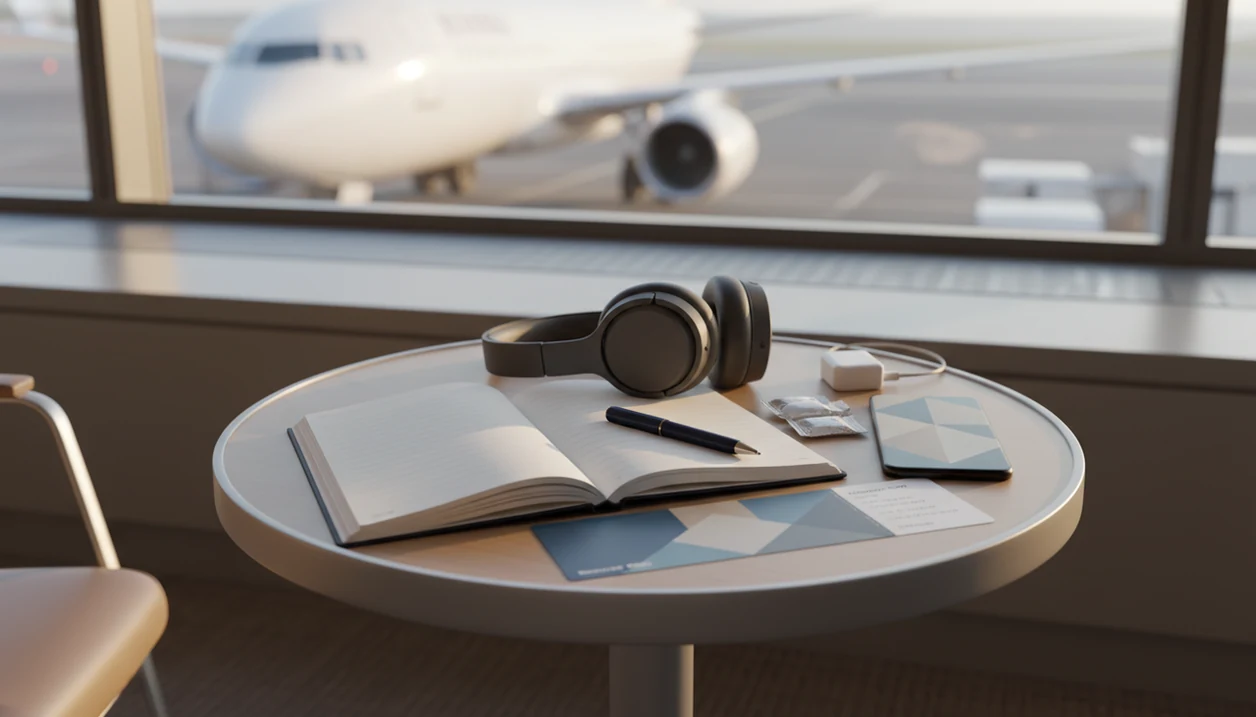
A tool to build pre-flight coping plan helps you turn flight anxiety into a written, step-by-step plan for triggers, scripts, seat choices, comfort items, support contacts, and panic steps before you travel. The best version is saved offline, practiced before departure, and organized by each flight phase so you know exactly what to do at home, at the airport, during takeoff, in turbulence, and after landing.
Definition: A pre-flight coping tool is a structured planner that helps nervous flyers choose coping strategies, support steps, and backup actions before a flight so they are not improvising under stress.
- Build the plan around your personal flight triggers, not generic anxiety advice.
- Schedule coping actions by flight phase: home, airport, boarding, takeoff, cruise, turbulence, landing, and arrival.
- Save a digital copy and carry a printed or offline backup because anxiety and technology can both interfere in the moment.
Pre-Flight Coping Tool Definition for Nervous Flyers
A pre-flight coping tool is an interactive checklist or planner for flight anxiety, built before travel so your brain has fewer decisions to make under pressure. It turns “I hope I calm down” into “When boarding starts, I read this script, breathe for two minutes, and text this person.”
The tool should include your triggers, calming actions, support contacts, comfort kit items, seat notes, and panic steps. That is different from vague reassurance like “flying is safe” or “just relax.” Reassurance may help for a minute, but it often disappears when the boarding group is called.
Dry mouth at the gate changes the plan.
A good fear of flying resource covering causes, treatments, coping strategies, and tools for nervous flyers should give you specific next steps, not glossy promises that one trick will erase anxiety. Tools like Fear of Flying Guide can fit that role when you want a practical structure without being pushed toward one answer.
Pre-Flight Coping Plan Builder Workflow for Anxiety Triggers
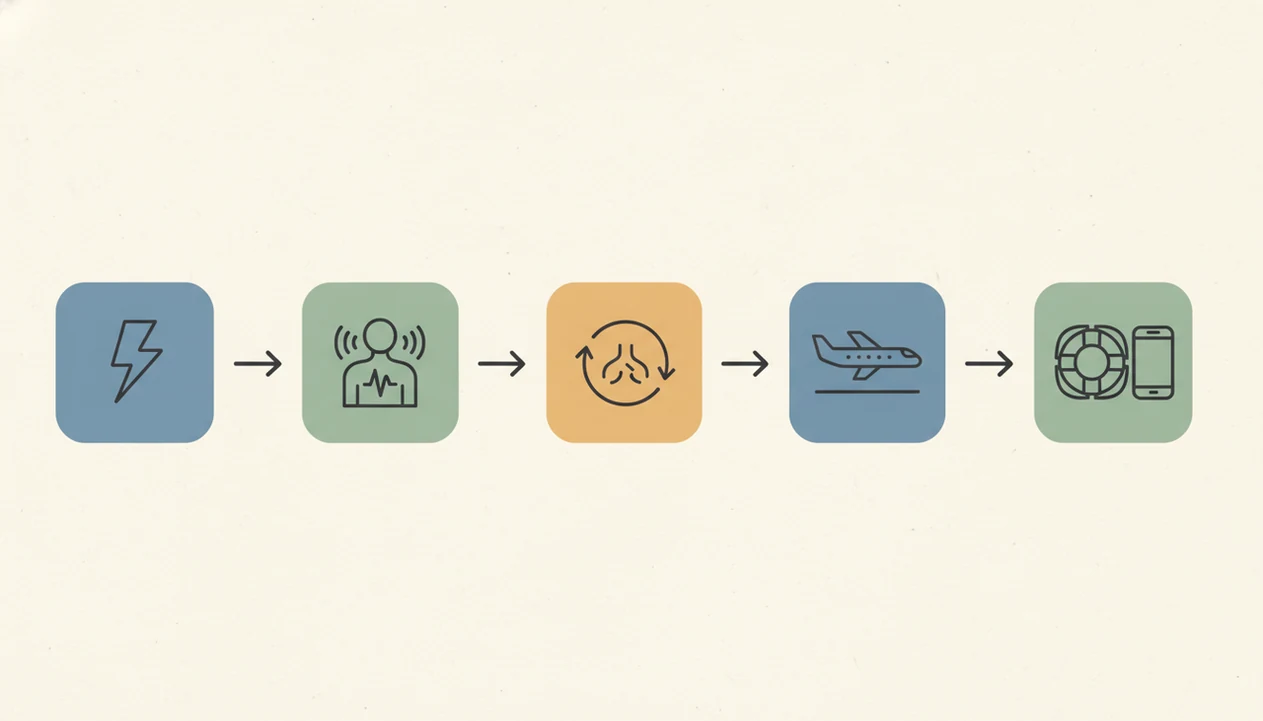
A flight anxiety plan builder works by taking your raw fear signals and turning them into a short action map. The mechanism is simple: identify the trigger, notice the body warning sign, choose a coping response, place it in the right flight phase, then add support and backup steps.
- Trigger input: You name what sets anxiety off, such as takeoff, turbulence, tight seating, or delays.
- Warning-sign input: You list early signs like nausea, sweating, dizziness, or the urge to leave.
- Strategy match: You assign CBT-style planning, grounding, paced breathing, exposure preparation, or distraction.
- Phase sorting: You place each action at home, security, boarding, takeoff, cruise, turbulence, or landing.
- Backup output: You save scripts, support contacts, and panic steps for moments when thinking gets narrow.
Clinicians typically recommend CBT-based approaches for persistent anxiety because CBT has evidence across anxiety disorders, and a Cochrane review found self-help CBT can help compared with minimal intervention source. The plan does not make flying risk-free or guarantee calm. It reduces uncertainty and improves readiness.
Requirements Before You Use a Flight Anxiety Plan Builder
Before you open a pre flight coping tool, gather the details that make the plan usable. You need the date, flight number, route, duration, seat assignment, layovers, boarding time, and any airport changes that could add stress.
Add your personal anxiety data next. Write your top three triggers, early warning signs, past panic symptoms, and what helped even a little last time. If you remember a previous rough descent, write down what your body did first. Was it chest tightness, heat in your face, or the thought “I need to get off”?
Pack this before you leave.
List available supports: your travel companion, a trusted contact who can answer a text, clinician guidance, airline staff, and emergency contacts. Then build the comfort kit list: headphones, music, podcasts, mints, water, eye mask, written affirmations, charger, and offline notes. If your phone is half-charged and your headphones are tangled, the plan already has friction.
If you have new chest pain, fainting, severe shortness of breath, or thoughts of self-harm, treat that as a medical issue rather than a coping-plan problem and seek urgent help.
Step 1: Map Flight Anxiety Triggers in the Pre-Flight Coping Tool
Start by naming the exact flight moment that makes anxiety spike. A plan for 'flying' is too broad to use when your shoulders press into the seatback and the engines spool.
Common triggers include takeoff, turbulence, claustrophobia, security lines, loss of control, heights, germs, delays, and landing. Separate those events from your warning signs. A trigger is “wheels bumping along the runway.” A warning sign is racing heart, nausea, dizziness, sweating, an urge to escape, or catastrophic thoughts.
Use a 1 to 10 rating for each trigger. Then mark the flight phase where it usually appears: home, airport, gate, boarding, taxi, takeoff, cruise, turbulence, descent, landing, or arrival. Specific phobias affect an estimated 7 to 9% of U.S. adults in a given year, and lifetime prevalence has been estimated at 12.5% in a large epidemiologic study source.
For many nervous flyers, trigger mapping is easier than trying to “stay positive” because it gives the body one small job.
Step 2: Choose Coping Skills for Each Flight Phase
Choose coping skills by flight phase, not by mood. Anxiety changes from home to airport to aircraft seat, so your plan should cover home, airport, security, gate, boarding, taxi, takeoff, cruise, turbulence, descent, landing, and arrival.
Home and airport coping actions
At home, set a timer for packing, limit airline app refreshing, and open your Notes app coping card before you open the airline app. At the airport, use paced breathing, hydration, movement, and 5-4-3-2-1 grounding while you wait. If tomorrow’s flight is the problem, a short pre-flight anxiety routine can sit beside this plan.
Takeoff and turbulence coping actions
For takeoff and turbulence, use progressive muscle relaxation, compassionate self-talk, a downloaded playlist, or a timer set for ten-minute intervals. Practice these before the flight. Trying a breathing pattern for the first time during panic is like learning seatbelt instructions during turbulence. Avoid making alcohol, reassurance-seeking, or escape planning your main strategy. For evidence context, NHS guidance describes slow breathing as a stress-reduction exercise, and clinical references commonly describe exposure-based therapy as a treatment approach for specific phobias source source.
Step 3: Write Scripts, Seat Notes, and Support Contacts
Write the words before you need them. A useful script is short enough to read with a racing heart: “This is takeoff. My body is reacting to acceleration. I can breathe, press my feet down, and stay seated for the next two minutes.”
Add a turbulence script: “The plane can move and still be operating normally. My job is to loosen my jaw, keep my belt fastened, and watch the timer.” For panic sensations, use: “This feels dangerous, but panic is a body alarm. I do not have to solve the whole flight.”
Give your companion a script too. Helpful: “Read your card and breathe with me.” Not helpful: “Calm down, you’re fine.” If you want cabin crew support, say, “Hi, I’m a nervous flyer. I have a plan, but it helps if I can ask one quick question later.”
Seat notes matter. Aisle helps movement, window helps visual orientation, front or over-wing can feel steadier, and sitting beside a companion may reduce checking.
Treat these as comfort and access preferences, not safety claims. If motion sickness, mobility needs, medication, or a medical condition affects where you sit, prioritize clinician guidance and airline accessibility support over a generic seat rule.
Step 4: Build a Physical and Digital Coping Kit
Build two kits: one you can touch and one you can open offline. Keep both easy to reach, not buried under a jumper, laptop, and the snack you forgot about.
- Physical kit: Noise-canceling headphones, earplugs, gum or mints, ginger, water, snack, eye mask, warm layer, fidget item, and printed plan.
- Digital kit: Calming playlist, downloaded podcast, breathing timer, offline note, saved boarding documents, supportive text thread, and phone charger.
- Access point: Put essentials in the front backpack pocket before security, then move gum, headphones, and the short plan to the seat pocket after boarding.
- Backup copy: Screenshot the plan and print one page because battery, Wi-Fi, lock screens, and panic can block access.
The pocket check is real.
A water bottle bought after security gives your body one simple task. Sip during boarding, taxi, and the first ten minutes after takeoff. FearOfFlying.com also covers broader fear of flying help if your kit needs to sit inside a longer recovery plan.
How to Use a Pre-Flight Coping Tool Before Travel Day
Use the tool before anxiety is loud. If you fill it out at the gate with a sweaty passport grip and a boarding pass in Apple Wallet, you will write less clearly.
- Complete the plan three to seven days before travel. Add flight details, triggers, scripts, support contacts, seat notes, and panic steps.
- Practice two coping skills daily. Use a two-minute phone timer for breathing and one grounding exercise while sitting still.
- Save the plan offline. Put it in Notes, screenshot it, and print one short copy for your bag.
- Share the plan with one support person. Tell them exactly what to say if you text, “I can’t do this.”
- Review it the morning of the flight. Keep it short enough to read in under one minute.
A pre-flight coping plan usually works best when it is brief, rehearsed, and phase-based, while long plans fit better as preparation notes than in-the-moment tools.
Common Flight Anxiety Plan Builder Mistakes
The most common mistake is making the plan too long. If it takes five minutes to find the takeoff section, you will not use it when the seat belt sign chimes overhead.
Another mistake is filling the page with generic calming tips instead of your own triggers and warning signs. “Breathe deeply” is weak by itself. “When I feel dizzy during taxi, I exhale for six counts and press both heels into the floor” is usable.
Many people plan only for takeoff and ignore airport waiting, security lines, turbulence, delays, return flights, and the first hour after landing. The first steady breath outside the terminal counts too. Add it.
Do not skip rehearsal. Breathing, grounding, and muscle relaxation need practice before flight day. Also avoid relying only on phone access. A locked screen, low battery, or shaky thumb can make a digital plan vanish right when you need it.
The goal is not zero anxiety. The goal is functioning through anxiety with fewer surprises.
Pre-Flight Coping Plan Verification Checklist
Use this checklist before you save, screenshot, or print the plan. If one row is missing, fix that row rather than rewriting the whole plan.
| Plan area | Ready when... | Quick fix if missing |
|---|---|---|
| Major triggers | Every top trigger has one matching action | Add one body action and one thought script |
| Panic steps | Steps are short, visible, and written in first person | Write “I will…” sentences under 10 words |
| Support contacts | Companion, trusted contact, and crew script are included | Add names, numbers, and one exact phrase |
| Comfort kit | Items are packed in an accessible pocket | Move essentials to the front bag pocket |
| Offline access | Plan works without Wi-Fi or battery confidence | Screenshot and print one page |
| After landing | Recovery and reinforcement are included | Add water, walking, and one note of progress |
For nervous flyers, a verification checklist is often better than rereading the whole plan because it catches missing actions fast. If panic is your main concern, pair this with a dedicated panic attack on plane plan.
Evidence Behind Pre-Flight Coping Skills
The strongest evidence behind a pre-flight coping plan comes from CBT-style preparation, not from any single flight planner. A written plan helps because anxiety narrows attention, while CBT uses specific cues, thoughts, body skills, and rehearsal to make stressful moments more predictable.
Breathing and grounding should be treated as skill-based supports, not magic switches. Slow breathing is used to reduce stress arousal; grounding aims to redirect attention to the present when thoughts race ahead to takeoff, turbulence, or escape. Scripts, trigger ratings, and rehearsal are closer to evidence-based anxiety preparation. Seat choice, playlists, gum, warm layers, and aisle-versus-window preferences are better understood as comfort or access supports unless a clinician has tied them to your treatment plan.
Use the evidence in order:
- Build the plan around triggers, body signals, and practiced responses.
- Separate clinical skills from travel comforts so you know what each item is meant to do.
- Practice breathing, grounding, and scripts before the airport, not only during panic.
- Escalate to clinician-led exposure therapy when fear causes repeated avoidance, severe panic, trauma symptoms, or life restriction.
Limitations
A pre-flight coping plan is useful, but it has real boundaries. Treat it as preparation, not medical care.
- A coping plan is not a substitute for diagnosis, therapy, medication advice, or emergency care.
- A written plan may reduce distress, but it cannot guarantee a calm flight.
- Severe panic, dissociation, trauma symptoms, or repeated avoidance may require clinician-guided treatment.
- Some people struggle to use the plan if they have not practiced breathing, grounding, or scripts before flying.
- Digital tools can fail because of battery, connectivity, lock screens, or panic-related confusion.
- Medication, alcohol, or sedatives should not be mixed, started, stopped, or changed without clinician guidance.
- Evidence is stronger for CBT and self-help CBT principles than for any specific flight anxiety plan builder app.
- A plan can become another reassurance ritual if you keep rewriting it instead of practicing the steps.
If your fear has narrowed your life, look beyond tips. Start with fear of flying causes, then consider therapy, structured exposure, or clinician advice.
FAQ
What is a pre-flight coping plan for fear of flying?
A pre-flight coping plan is a written set of actions for handling anxiety before and during a flight. It usually includes triggers, scripts, coping skills, support contacts, seat notes, and panic steps.
Can a pre-flight coping plan stop a panic attack on a plane?
A pre-flight coping plan may reduce panic intensity and help you respond sooner. It cannot guarantee that panic will not occur.
When should I make a coping plan before my flight?
Make the plan several days or weeks before travel so you can practice the skills. Last-minute plans are harder to use when anxiety is already high.
What should I pack in a flight anxiety coping kit?
Pack headphones, water, snacks, mints or gum, a grounding object, charger, offline notes, and a printed plan. Keep the most important items in a front pocket or seat pocket.
Should I tell flight attendants that I am a nervous flyer?
Yes, if brief support would help you. You can say, “I’m a nervous flyer and I have a plan, but I may ask one quick question if I get anxious.”
Which airplane seat is best for flight anxiety?
An aisle seat helps movement, a window seat helps visual orientation, and over-wing or front seats may feel more stable. Sitting beside a trusted companion can matter more than the exact row.
Can therapy help if my fear of flying is severe?
Yes, CBT and related treatments can help persistent fear of flying, especially when panic attacks or avoidance are severe. A clinician can also advise on medication questions when appropriate.