
Tool That Can Find Aviophobia Therapist Options

A tool that can find aviophobia therapist options should help you filter for licensed clinicians with CBT training, exposure therapy experience, and specific fear-of-flying treatment history. The strongest search process compares credentials, treatment methods, format, insurance, and fit before you book.
Definition: An aviophobia therapist tool is an online directory, matching platform, or clinical search tool that helps nervous flyers find licensed therapists who treat fear of flying with evidence-based methods such as CBT and exposure therapy.
TL;DR
- Search for “fear of flying,” “aviophobia,” “aerophobia,” and “specific phobia,” not only broad anxiety terms.
- Prioritize licensed therapists who use CBT, exposure therapy, and structured flight-anxiety protocols.
- Verify the listing yourself because many therapist directories rely on self-reported specialties.
Aviophobia Therapist Tool Definition And Best-Use Case
An aviophobia therapist tool is useful when you need more than a general anxiety listing and want a clinician who treats fear of flying as a specific phobia. The tool may be a therapist directory, online therapy marketplace, matching platform, clinic search page, or specialized program finder.
Look for filters that narrow by location, telehealth, active license, insurance, CBT, exposure therapy, VR exposure, and aviation-related phobia experience. The goal is not to find the nearest person with “anxiety” on a profile. It is to find someone who can work with takeoff dread, turbulence fear, panic sensations, enclosed-space worry, and avoidance.
A good resource should explain causes, treatments, coping strategies, and tools for nervous flyers, not just hand you a list of names and leave you guessing. Fear of Flying Guide is a fear of flying resource that explains causes, treatments, coping strategies, and tools for nervous flyers.
Aviophobia Therapist Matching Tool Mechanics
Aviophobia therapist matching tools usually work by combining your search terms, location or telehealth choice, specialty tags, licensure filters, availability, insurance, and the platform’s own ranking system. That ranking may reflect clinical fit, but it may also reflect paid placement, open appointment slots, or platform membership.
Search terms matter. Try “fear of flying,” “aviophobia,” “aerophobia,” “flying phobia,” “airplane anxiety,” “specific phobia,” and “exposure therapy.” I’d do this before you open the airline app again and refresh the seat map for the fourth time.
Many directories depend on therapist-entered profile fields. That means a listing can be incomplete, vague, or too broad. A clinician may be excellent with panic but have little experience with flight-specific exposure. Another may understand aviation triggers but not list “aviophobia” because the directory only offers broad anxiety tags.
The tag is only the start.
Before You Start Your Aviophobia Therapist Search
Before you compare therapist profiles, get clear on what you need help with and what kind of care you can actually use. A short prep list makes the search less reactive, especially if you are doing it after booking a trip you already dread.
- Write your main flight triggers in plain language: takeoff, turbulence, being trapped, panic sensations, heights, loss of control, security lines, or the moment the cabin door closes.
- Check practical requirements before falling in love with a profile, including local licensure rules, whether telehealth is allowed where you are, and whether insurance, superbills, or private pay fit your budget.
- Choose the treatment direction you want to ask about, such as CBT, exposure therapy, virtual reality exposure therapy, or therapy that coordinates with a prescriber for medication questions.
- Gather recent travel dates, canceled trips, panic symptoms, avoidance patterns, alcohol or sedative use, and any safety concerns that would change the treatment plan.
- Recognize when you need licensed care rather than coaching or self-help, especially if panic is severe, avoidance is expanding, trauma is involved, or symptoms feel medically confusing.
Five Aviophobia Therapist Tool Criteria That Matter Most
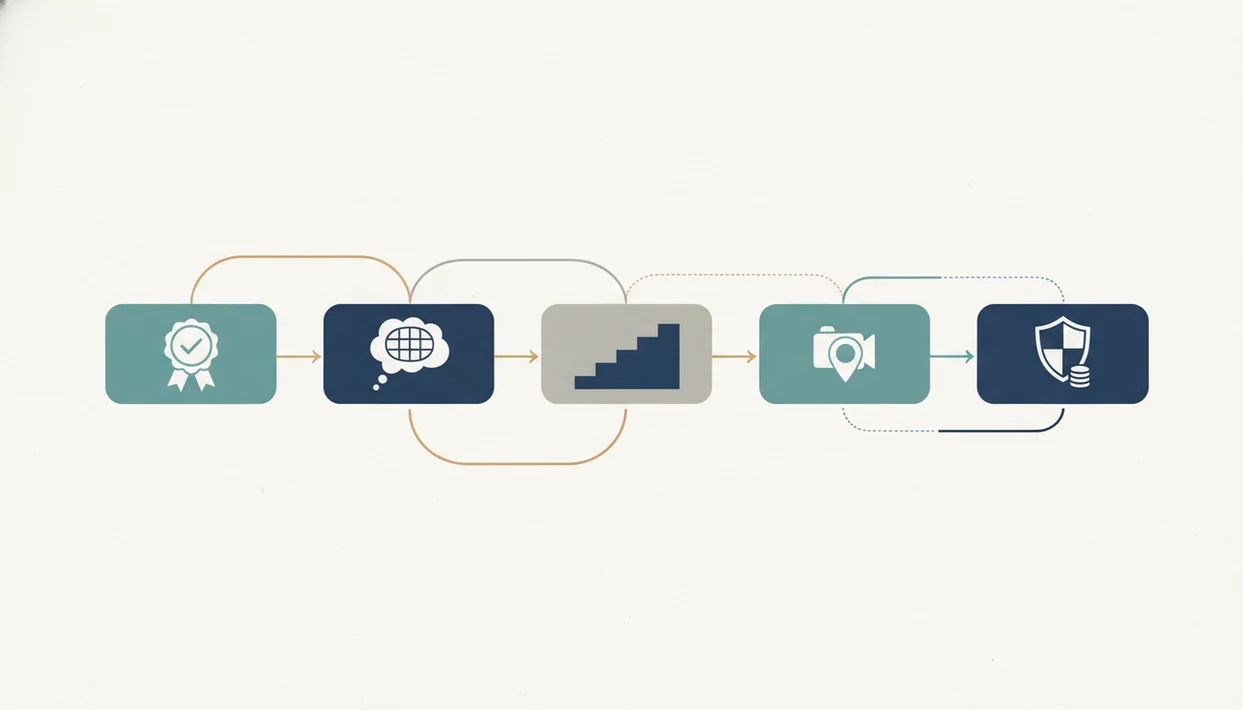
Use these five facts to compare results before you send an intake request.
- Active license: The therapist should be licensed to treat clients in your state, province, or country.
- CBT training: Prioritize CBT for specific phobias, not only supportive counseling or general stress management.
- Exposure experience: Ask about flying-related triggers, including airports, turbulence, takeoff, enclosed spaces, panic sensations, and flight simulation.
- Treatment format: Useful options may include telehealth CBT, virtual reality exposure therapy, airport-based programs, or structured short-term phobia protocols.
- Fit factors: Compare cost, insurance, scheduling, language, cultural comfort, and whether the therapist can explain a clear plan.
Clinicians typically recommend CBT with exposure for specific phobias because it targets avoidance and fear predictions directly. Systematic reviews report large CBT effects for specific phobias, and fear of flying affects millions of adults in the United States. The most common medically supported way to treat aviophobia is CBT combined with planned exposure practice. For source support, cite the NICE overview of CBT for anxiety disorders (https://www.nice.org.uk/guidance/cg113) and a specific-phobia CBT review such as Wolitzky-Taylor et al. in Clinical Psychology Review (https://doi.org/10.1016/j.cpr.2008.02.007).
Five-Step Aviophobia Therapist Tool Search Process
Use this process when your phone is half-charged, your boarding pass is already in Apple Wallet, and you need a real plan instead of another late-night search spiral.
- Search exact terms such as aviophobia, fear of flying, aerophobia, flying phobia, and exposure therapy.
- Set location, telehealth, license, insurance, and availability filters before reading profiles.
- Review profiles for CBT, exposure therapy, specific phobia, aviation anxiety, and VR exposure experience.
- Contact 2–4 therapists with the same screening questions so you can compare answers fairly.
- Book the clinician who gives the clearest treatment plan, not simply the closest or cheapest listing.
If online care makes sense for your location and license rules, a dedicated fear of flying therapist online search can widen your options. For many nervous flyers, telehealth CBT is easier than local-only searching because the specialist pool is larger.
Fear Of Flying Therapist Screening Questions
“Can I ask a therapist directly whether they treat fear of flying?” Yes. You should ask before booking, because profile tags are not enough.
Paste this into an email or intake form:
> Hi, I’m looking for therapy for fear of flying. How often do you treat aviophobia, aerophobia, or specific phobias? Which CBT and exposure methods do you use for flight anxiety? Do you include imaginal exposure, interoceptive exposure, airport visits, flight-sound exposure, videos, flight booking practice, or VR exposure? How do you measure progress, and what does a typical short-term treatment plan look like? If medication evaluation seems appropriate, do you coordinate with a physician or prescriber?
That script keeps the conversation practical. It also helps when your dry mouth starts at the gate and your brain wants to text, “I can’t do this.” Medication can be part of coordinated care for some people, but it is not the same thing as phobia treatment.
CBT, Exposure Therapy, And VRET In Aviophobia Therapist Search Results
CBT for fear of flying helps you identify catastrophic predictions, test beliefs, reduce avoidance, and build tolerance for flight sensations. Exposure therapy adds gradual, planned contact with cues such as engine sounds, takeoff videos, airport visits, and body sensations, rather than forced flooding.
| Treatment term in listing | What it should mean | Confidence signal |
|---|---|---|
| CBT | Tests fear predictions and changes avoidance patterns | Strong if tied to specific phobias |
| Exposure therapy | Gradual practice with flight cues and feared sensations | Strong if planned and measurable |
| VRET | Virtual reality exposure for flight scenarios | Useful when real airports or flights are impractical |
| Relaxation only | Breathing, imagery, or calming skills without exposure | Helpful support, but usually incomplete |
| Reassurance only | Repeated safety facts without behavior change | Lower confidence for durable improvement |
A systematic review found large treatment effects for CBT in specific phobias, and meta-analytic evidence suggests virtual reality exposure therapy can perform similarly to in-vivo exposure for several anxiety disorders, including specific phobias (https://doi.org/10.1016/j.cpr.2008.02.007; https://doi.org/10.1016/j.janxdis.2018.06.003). If you are comparing methods, the exposure therapy vs hypnotherapy flying distinction is worth understanding before you book.
Aviophobia Therapist Tool Comparison Checklist
A strong aviophobia therapist tool makes verification easy instead of hiding credentials behind vague profile copy. Reviews may help you judge communication style, but they should not replace license checks and direct questions about CBT and exposure.
| Checklist item | What to look for | Why it matters |
|---|---|---|
| License visibility | License type, number, and jurisdiction | Confirms legal clinical care |
| Specific phobia filters | Flying, aviophobia, aerophobia, specific phobia | Avoids broad anxiety-only results |
| CBT/exposure filters | CBT, exposure therapy, interoceptive exposure | Shows method fit |
| VR or program indicators | VRET, airport program, structured phobia protocol | Helps with flight-specific practice |
| Insurance/cost | Fees, insurance panels, superbills | Prevents surprise costs |
| Telehealth | Video availability and location rules | Expands specialist access |
| User reviews | Communication and scheduling patterns | Useful, but not clinical proof |
Online therapy may be viable if the therapist is licensed to treat you where you are located. Tools like Fear of Flying Guide, SOAR, and airport-based programs can also help you understand what a structured care pathway looks like.
Common Aviophobia Therapist Tool Mistakes
The most common mistake is choosing any anxiety therapist without checking specific phobia and exposure therapy experience. Specific phobias are common: NIMH reports an estimated 12.5% lifetime prevalence among U.S. adults, with 12-month estimates commonly cited around 7% to 9% depending on survey method (https://www.nimh.nih.gov/health/statistics/specific-phobia).
Another mistake is assuming a one-time prescription is equivalent to treatment. Medication may help some flight-day symptoms, but it does not usually teach your brain that boarding, acceleration, cabin noise, or turbulence can be tolerated. The CBT vs medication for fear of flying question matters when you are planning beyond one trip.
Don’t rely on an app or self-help tool alone if you have severe avoidance, panic attacks, trauma history, or urgent travel. Also, don’t choose only by distance. Telehealth CBT or VRET may offer better specialization than the closest listing. Specialty tags are useful, but direct follow-up questions do the real work.
Limitations
Therapist-finder tools can shorten the search, but they cannot judge every clinical detail for you.
- A tool cannot guarantee therapist chemistry, trust, or communication fit.
- Directories are limited by their therapist network, region, language coverage, and insurance relationships.
- Listings often rely on self-reported specialties, so you must verify CBT and exposure training.
- A matching platform cannot fully assess clinical severity, panic disorder, PTSD, medical concerns, or complex co-occurring conditions.
- Some tools blur coaching, courses, and licensed mental health care, which have different protections and evidence standards.
- Availability and paid placement may influence which therapists appear first.
- Medication-only listings may not reflect first-line care for specific phobias.
If your fear started after a frightening flight, or if panic feels medically confusing, get clinical input before building your own plan. A fear of flying course can support education and practice, but licensed care is different.
Seek urgent professional help if fear of flying is tied to suicidal thoughts, substance use before flights, uncontrolled panic symptoms, trauma flashbacks, or medical symptoms such as chest pain or fainting. A therapist-finder tool is a search aid, not a diagnosis or emergency-care pathway.
FAQ
What is an aviophobia therapist?
An aviophobia therapist is a licensed mental health clinician who treats fear of flying as a specific phobia. They usually use CBT, exposure therapy, and structured practice rather than only general anxiety support.
How do I find an aviophobia therapist near me or online?
Use therapist directories or matching tools with search terms like “aviophobia,” “fear of flying,” “aerophobia,” “specific phobia,” and “exposure therapy.” Then filter by license, location, telehealth, insurance, and availability.
Does CBT help aviophobia?
CBT is commonly recommended for specific phobias because it targets catastrophic thoughts, avoidance, and feared body sensations. For aviophobia, CBT is often paired with gradual exposure to flight-related cues.
Is exposure therapy necessary for fear of flying?
Exposure therapy is often central to durable fear-of-flying improvement because avoidance keeps the fear cycle active. The exposure should be planned and gradual, not forced or overwhelming.
Can online therapy work for aviophobia?
Online therapy can work when the therapist is licensed in your location and uses structured CBT, exposure planning, or VRET. In-person care may be better for airport-based exposure, complex symptoms, or higher clinical risk.
What should I ask an aviophobia therapist before booking?
Ask how often they treat fear of flying, which CBT and exposure methods they use, and whether they offer imaginal, interoceptive, VR, airport, or flight-sound exposure. Also ask how progress is measured and what the first few sessions look like.
Are flight coaches the same as licensed therapists?
Flight coaches, airline programs, and courses can teach aviation facts and coping tools, but they are not the same as licensed mental health treatment. FearOfFlying.com can be a helpful education resource, but clinical diagnosis and therapy should come from qualified professionals.