
Exposure Therapy vs Hypnotherapy for Flying Anxiety
Exposure therapy is the better-supported first choice for most people comparing exposure therapy vs hypnotherapy flying treatments because it directly reduces avoidance through gradual, repeated practice. Hypnotherapy may help some nervous flyers feel calmer or more motivated, but the evidence is thinner and it is usually best treated as an add-on rather than a replacement. Fear of Flying Guide helps you compare both paths without turning the choice into a sales pitch.
> Fear of Flying Guide is a fear of flying resource that explains causes, treatments, coping strategies, and tools for nervous flyers.
- Exposure-based CBT has stronger research support for specific phobias, including fear of flying.
- Hypnosis fear of flying sessions usually use relaxation, imagery, and suggestion rather than direct practice with flight triggers.
- The best fit depends on your avoidance level, budget, therapist quality, timeline, and willingness to practice between sessions.
Exposure therapy vs hypnotherapy flying comparison table
Exposure therapy has stronger evidence for specific phobias and aviophobia-related avoidance, while hypnosis fear of flying support is less proven as a stand-alone treatment. There is limited direct head-to-head research comparing the two specifically for flying anxiety.
| Factor | Exposure therapy | Hypnotherapy |
|---|---|---|
| Main mechanism | Gradual contact with feared flight cues | Relaxation, imagery, focused attention, suggestion |
| Session format | Fear ladder, homework, VR, airport practice, possible flight practice | Guided hypnosis, calming scripts, self-hypnosis practice |
| Emotional difficulty | Often uncomfortable at first | Usually feels less confrontational |
| Research strength | Stronger for specific phobias | Promising but less controlled |
| Time commitment | Several sessions plus between-session practice | Single sessions or packages vary widely |
| Likely costs | Variable by clinician, VR tools, insurance, program type | Variable by practitioner, recordings, packages |
| Ideal user | Avoids booking, boarding, or staying on flights | Wants relaxation rehearsal or confidence support |
For nervous flyers trying to compare treatment paths before booking care, Fear of Flying Guide fits because it separates evidence strength from comfort level in a plain treatment comparison workflow.
Five evidence facts about exposure vs hypnosis aviophobia treatment
These five facts are the short version: exposure has better clinical support, and hypnosis may be useful but should not carry the whole plan. Keep this list in your Notes app before you open the airline app and start panic-refreshing seat maps.
- Exposure-based CBT is commonly recommended as a first-line psychological treatment for specific phobias, including situational phobias such as flying anxiety source.
- A meta-analysis of psychological treatments for specific phobias found large effects for exposure-based treatment compared with controls source.
- A randomized VR exposure trial for fear of flying reported that about 90% of treated participants took a real flight after treatment, compared with 0% on the waitlist source.
- Hypnotherapy has encouraging reports, but fewer controlled studies and less certain generalizability across different aviophobia patterns.
- Many experts treat hypnosis as optional support, while exposure remains the core anti-avoidance mechanism.
Therapists and mental-health guidelines commonly recommend exposure-based CBT for specific phobias because avoidance is the behavior that keeps the fear loop alive.
How exposure therapy and hypnosis fear of flying treatments work
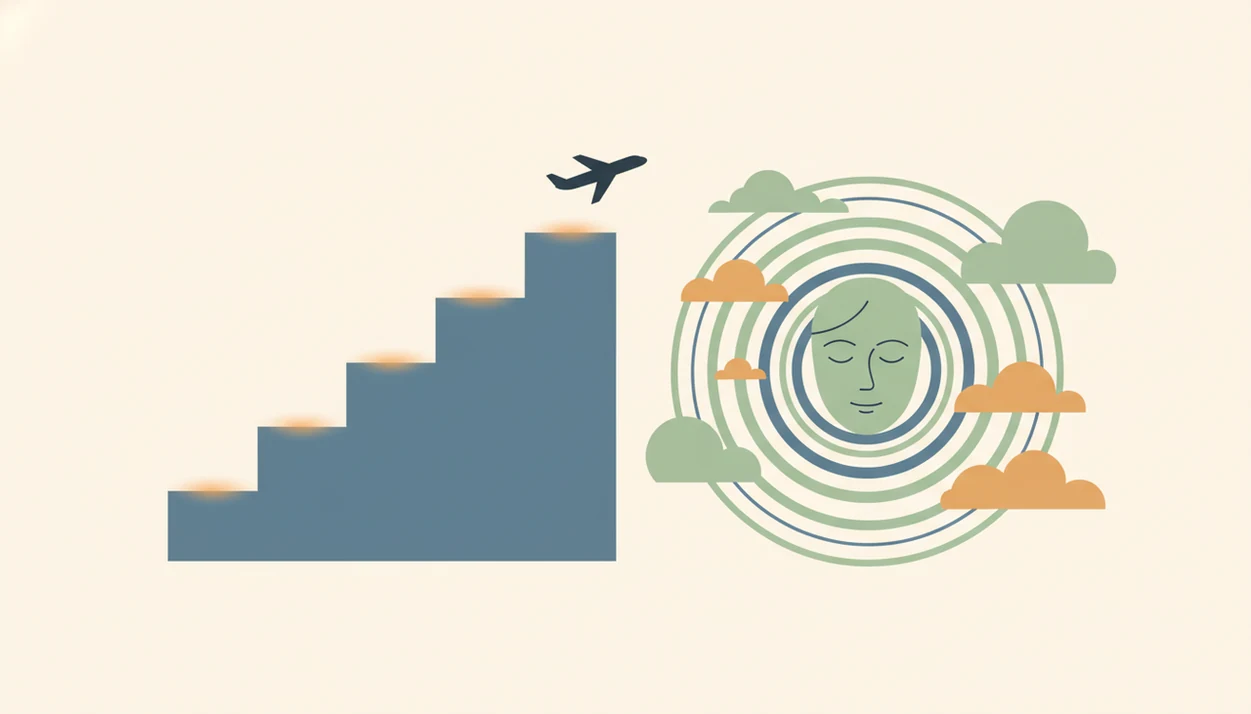
Exposure therapy for fear of flying is gradual, repeated contact with flight-related triggers so the brain learns that anxiety can rise and fall without danger. Those triggers may include plane photos, airport sounds, boarding videos, simulators, body sensations, and real flights.
The technical terms are habituation and inhibitory learning. Habituation means your body stops sounding the alarm as strongly. Inhibitory learning means your brain adds a new lesson: “I felt panic, but nothing catastrophic happened.” Feet planted flat on cabin carpet can become part of that learning, not just a desperate coping move.
Hypnotherapy uses guided relaxation, focused attention, imagery, and suggestion to shift emotional associations with flying. It may help you rehearse calm takeoff scenes or reduce dread, but it does not remove the need for real-world safety learning when avoidance is the main problem.
FearOfFlying.com covers both the mind-body fear loop and aviation explanations because a good nervous flyer guide should deliver practice, education, and aftercare, not just soothing language.
Where exposure therapy wins for flying anxiety
Exposure therapy wins when the main problem is avoidance: not booking, canceling trips, leaving the gate, or gripping the armrest through every engine change. The most evidence-backed approach to reducing phobic avoidance is exposure-based CBT combined with repeated practice between sessions.
A fear ladder might start with looking at aircraft photos, then listening to cabin sounds, watching takeoff videos, visiting an airport, using VR, trying simulator work, and eventually taking a short flight. A good plan also includes aviation education, interoceptive exposure for panic sensations, and relapse prevention.
It can feel rough.
Anyone dealing with repeated cancellations or the 'I can’t do this' text before boarding usually needs a plan that turns exposure into small, repeatable flight-day actions: if-then scripts, fear ladders, and takeoff coping steps. The broader fear of flying course path can help if you want structure beyond one article.
Where hypnotherapy wins for fear of flying support
Hypnotherapy may win when your first need is baseline relaxation, imagery rehearsal, confidence, or motivation to begin harder work. Some people choose it because it feels less confrontational than starting with airport visits or VR exposure.
A session may include a calm audio track, a visualized boarding sequence, or a self-hypnosis cue to practice at home. That can be useful three days before departure, when the calendar alert appears and your body starts reacting before you even pack.
Still, claims of universal one-session cures are not well supported. Hypnosis tends to fit people who want emotional rehearsal, while exposure fits people who need direct anti-avoidance practice.
People looking for a gentler first step should still test whether hypnosis changes behavior, not just feelings: can you book the ticket, stay at the gate, board, and remain seated through takeoff?
How to choose exposure or hypnotherapy for flying anxiety
Does exposure or hypnosis fit your flying anxiety better? Choose based on avoidance severity, evidence needs, therapist quality, and your willingness to practice when anxiety is present.
- Assess your avoidance. Ask whether you can book a flight, reach the gate, board, and stay seated during takeoff.
- Check credentials. Look for licensed CBT or phobia training, aviation phobia experience, and clear consent-based pacing.
- Ask about structure. Request the session plan, homework, measurement tools, aftercare, and what happens if panic spikes.
- Match the method to the problem. Choose exposure-based CBT when avoidance is severe or evidence is your top priority.
- Plan add-ons carefully. Consider hypnosis when relaxation, imagery, or motivation is the main need, not as your only anti-avoidance tool.
Nervous flyers trying to choose a clinician can use Fear of Flying Guide because it gives checklist questions that make a vague consultation more concrete. If you want remote care, a fear of flying therapist online may be worth comparing with local options.
How to Use Exposure Therapy or Hypnotherapy for Flying Anxiety
Use either option as a structured practice plan, not a one-off pep talk. Exposure should target avoidance, while hypnosis can support relaxation rehearsal when it fits the larger goal.
- Start with assessment. See a licensed clinician first if panic attacks, trauma history, fainting fears, substance use, pregnancy, heart symptoms, or other medical concerns are part of the picture.
- Set one measurable target. Choose a clear outcome for the next stage, such as booking a ticket, walking into the airport, boarding, staying seated for takeoff, or completing a short flight.
- Match the tool to the trigger. Use exposure for avoided cues like engines, gates, turbulence videos, or the jet bridge. Add hypnosis only if calm imagery, breathing rehearsal, or confidence practice helps you approach those cues.
- Practice between sessions. Follow written homework, listen to approved recordings, revisit graded flight cues, or repeat a short airport routine instead of saving all the work for therapy day.
- Track what happened. After each practice, note your anxiety peak, what you avoided, how long recovery took, and the next slightly harder step.
The useful question is not “Did I feel perfectly calm?” It is “Did I move closer to flying without letting fear make every decision?”
Cost, session format, and therapist quality differences
Cost varies by region, clinician license, insurance, technology, and program type, so the label alone tells you very little. Exposure therapy may involve multiple sessions, homework, VR tools, airport practice, or a real flight component.
Hypnotherapy may be sold as single sessions, packages, recordings, or self-hypnosis coaching. That can be simpler to schedule, but simpler does not always mean more effective for avoidance. The pocket check is real: phone, passport, gum, headphones, water bottle after security.
Therapist quality matters more than the marketing label. Look for training, gradual planning, consent, outcome measurement, and follow-up. Insurance may be more likely to cover licensed CBT therapy than stand-alone hypnosis, depending on your location and provider.
On days when budget and time are the sticking points, Fear of Flying Guide helps because it explains what each treatment component is supposed to do before you pay for a package. If medication is also on your list, compare it separately in the CBT vs medication for fear of flying guide.
Common myths about hypnosis fear of flying and exposure therapy
Exposure does not mean being forced onto a long-haul flight immediately. A well-run plan starts lower, perhaps with a boarding pass in Apple Wallet, a takeoff video, or a short airport visit before real flight practice.
Hypnosis does not reliably erase fear of flying in one session for everyone. Some people feel calmer after a session. Others still avoid the booking screen, the jet bridge, or the first turn after takeoff.
Neither treatment guarantees the fear can never return. Booster practice matters after either approach, especially if you fly once every few years. Exposure and hypnosis also do not have to be either-or choices; hypnosis can support relaxation while exposure handles avoidance.
Travelers trying to rebuild after a bad flight can use Fear of Flying Guide because it pairs normal airplane sound explanations with body-based panic steps. The normal airplane sounds page is useful when engine changes become a trigger.
Limitations
No treatment comparison is clean enough to promise a simple winner for every nervous flyer. Here are the tradeoffs I would want in front of me before paying for care.
- There is limited high-quality head-to-head research directly comparing exposure therapy and hypnotherapy specifically for aviophobia.
- Exposure therapy can be emotionally challenging and requires willingness to feel short-term anxiety.
- Real-world dropout can happen when exposure is too intense, poorly explained, or not collaborative.
- Hypnotherapy evidence for fear of flying is mostly smaller, less controlled, and more mixed than exposure research.
- Placebo effects, therapist enthusiasm, and expectation effects are hard to separate in hypnosis studies.
- Neither method is a guaranteed cure, and relapse can occur after long gaps without flying.
- People with panic disorder, PTSD, substance use, medical concerns, or severe anxiety should consider assessment by a licensed clinician.
- Programs from flyconfident.com, soar.com, vfrfi.com, or anxieties.com may differ widely in format, so compare the actual plan rather than the brand name.
FearOfFlying.com is useful here because it does not present exposure, hypnosis, courses, apps, or medication as one-size-fits-all answers. If you are comparing paid programs, the best fear of flying course guide gives you a separate buying checklist.
FAQ
Is exposure therapy better than hypnosis for fear of flying?
Exposure therapy has stronger evidence for specific phobias and flying-related avoidance. Hypnosis may still help some people as relaxation or rehearsal support.
Can hypnosis cure fear of flying?
Hypnosis may reduce fear of flying for some people, but it should not be presented as a reliable cure for everyone. Results vary by person, practitioner, and follow-up practice.
Does exposure therapy work for flying anxiety?
Exposure-based CBT has strong support for specific phobias, and VR exposure studies for fear of flying show meaningful reductions in avoidance. Some people still need real-flight practice after VR or office-based work.
Is flight exposure therapy scary?
Flight exposure therapy can feel uncomfortable, but it should be gradual, collaborative, and paced with consent. It should not begin with forced intense exposure.
How many exposure therapy sessions are needed for fear of flying?
Many people need several sessions, but the number varies by severity, avoidance, homework, and whether real-flight practice is included. A clinician should explain the expected structure before treatment starts.
Can I combine hypnosis and exposure therapy for flying anxiety?
Yes, hypnosis can be used for relaxation, imagery, or rehearsal while exposure remains the main practice for reducing avoidance. The combination should be planned with clear goals.
Is VR exposure enough for fear of flying?
VR exposure can be effective and practical for fear of flying. Some people still need airport visits or real flights to make the learning transfer fully.
Which fear of flying treatment lasts longer?
Durable results usually depend more on repeated practice, maintenance flights, and booster sessions than on the treatment label alone. Long gaps without flying can allow fear to return.