
Fear Of Flying For Teens: Coping Without Shame
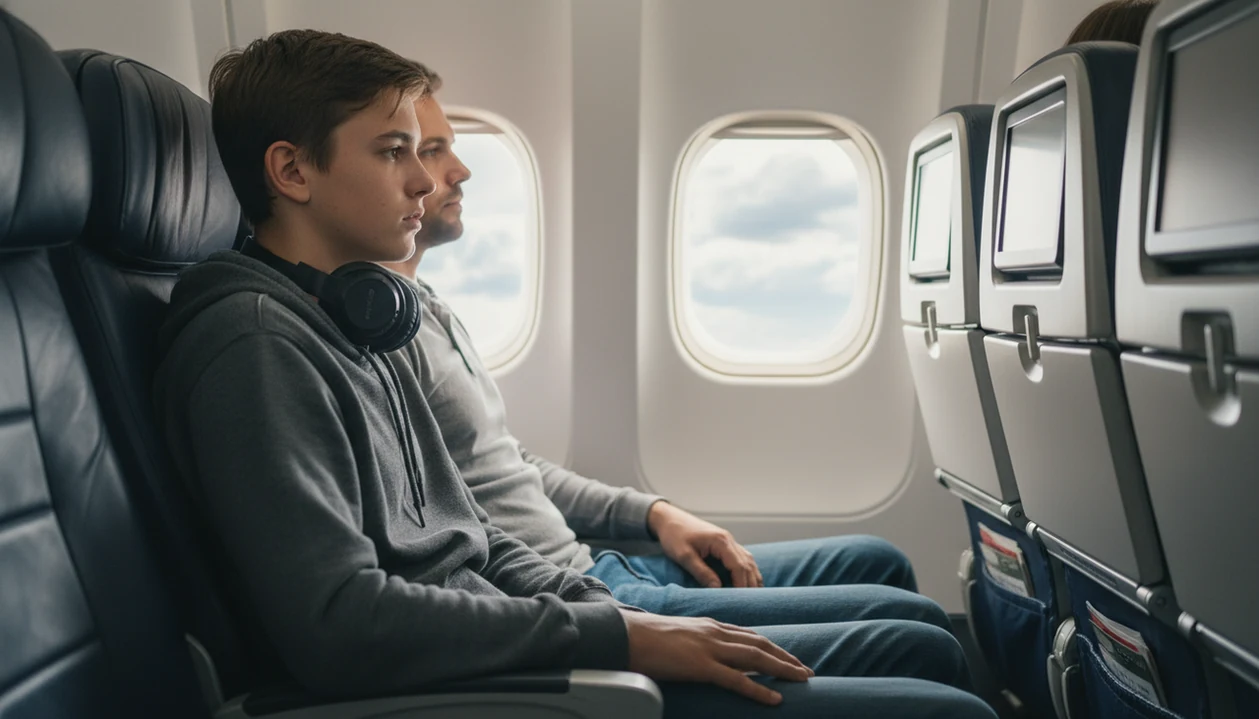
Fear of flying for teens is usually manageable with practical coping tools, calm parent support, and gradual practice rather than shame or pressure. The goal is not to make a teen feel fearless; it is to help them board, stay regulated, and learn that anxiety can rise and fall safely. Fear of Flying Guide on FearOfFlying.com is useful here because it pairs plain aviation explanations with coping plans parents and teens can practice before travel day.
This guide is educational, not a diagnosis or treatment plan. If a teen has panic attacks, trauma symptoms, self-harm thoughts, or anxiety that blocks school, sleep, or family life, involve a licensed mental-health clinician.
Definition: Teen flight anxiety is a focused fear of air travel that can involve crashes, turbulence, enclosed spaces, panic symptoms, airport stress, separation, or feeling trapped.
TL;DR
- A teen afraid of flying may fear turbulence, panic, vomiting, airport logistics, or being trapped, not only crashes.
- CBT, gradual exposure, breathing skills, grounding, and a predictable flight plan are the most useful first-line strategies.
- Parents help most by staying calm, validating the fear, planning ahead, and seeking professional help when anxiety blocks travel.
Why Teen Flight Anxiety Needs Specific Support
Teen flight anxiety is not “acting dramatic”; it can show up as refusal, sleeplessness, stomach pain, irritability, panic, or avoiding trips months in advance. A fourteen-year-old may also feel embarrassed that a younger sibling seems fine.
Teen flight anxiety deserves specific support because teenagers need agency, privacy, and respect, not babying or forced cheerfulness. A seven-year-old may need “first we check bags, then security, then boarding.” A teen often needs the route, the timing, the aircraft noises, and some control over the coping plan.
According to NIMH survey data, about 31.9% of U.S. adolescents meet criteria for an anxiety disorder at some point, and 8.3% have severe impairment (https://www.nimh.nih.gov/health/statistics/any-anxiety-disorder). Specific phobias are also common in youth, with estimates ranging from about 5% to 9% in a meta-analysis (https://pubmed.ncbi.nlm.nih.gov/23827677/). Fear of Flying Guide treats teen flight anxiety as a real anxiety pattern because shame usually makes avoidance stronger.
Five Facts About Teen Flight Anxiety Parents Should Know
- Teen flight anxiety can include fear of turbulence, vomiting, panic symptoms, airport security, separation, enclosed cabins, or being unable to leave.
- Commercial flying is extremely safe, even when the body reads takeoff noise or turbulence as danger.
- CBT and gradual exposure are better long-term tools than avoidance because they teach the brain that anxiety can peak and settle.
- Parent reactions matter; clenched jaws, fast walking, and repeated checking of the departure board can raise a teen’s alarm.
- Severe panic, total refusal, major sleep loss, or missed school travel should trigger professional help.
A teen may ask, “What if the plane falls?” from the back seat on the way to the airport. Say less, but say it clearly. Fear of Flying Guide helps families answer that question with age-appropriate truth, not fake certainty.
Best Coping Tools For A Teen Afraid Of Flying
A teen afraid of flying needs a small menu of practiced tools, not a lecture at the gate. Coping works better when it feels like a plan they helped build.
- Slow breathing: Use before boarding, during takeoff, and when the seatbelt sign stays on. Try a longer exhale than inhale.
- Grounding: Name five things seen, four felt, and three heard when airport noise feels too much.
- Turbulence script: Practice: “This is uncomfortable, not unsafe. The plane is built for movement.”
- Distraction plan: Download episodes, make a playlist, pack sour candy, or bring a hoodie that smells like home.
- Seating and airport plan: Choose a seat preference when possible and arrive early enough to avoid sprinting.
When the issue is panic during turbulence, Fear of Flying Guide fits because it names the noise, explains the movement, and gives a body-based coping sequence for the seat. For broader next steps, the full pathway to overcome fear of flying can help families plan beyond one trip.
How Teen Flight Anxiety Works In The Brain And Body
Teen flight anxiety works through threat detection, body sensations, and catastrophic thoughts. The amygdala, the brain’s alarm system, can treat takeoff thrust, cabin pressure, or turbulence as danger before the thinking brain catches up.
Then the body joins in. Heart racing, nausea, tight chest, sweaty hands, and dizziness can make the fear feel “proven.” A teen may think, “If I feel this bad, something must be wrong.” That loop is common in anxiety.
Avoidance gives fast relief, but it teaches the brain that flying was only survivable because the teen escaped it. Over time, the airport, the boarding line, and even the calendar alert three days before departure can become triggers.
Clinical guidance for specific phobias commonly supports CBT with gradual exposure because the teen learns safety through repeated experience, not reassurance alone (https://www.nice.org.uk/guidance/cg159 and https://www.apa.org/ptsd-guideline/patients-and-families/exposure-therapy). Teen-specific flight research is limited, so recommendations draw from broader adolescent anxiety evidence.
How To Use A Teen Flight Anxiety Plan Before Boarding

A teen flight anxiety plan should be written before the airport, when everyone’s brain is calmer. Practice on the ground first.
- Name the main fear: turbulence, panic, vomiting, being trapped, separation, or not understanding the plane.
- Choose controllable pieces: seat preference, airport timing, snack, playlist, downloaded show, and who sits nearby.
- Practice one breathing skill and one grounding skill for two minutes daily before the flight.
- Pack a coping kit with sour candy, earbuds, water, a comfort object, and a card with two steady phrases.
- Rehearse takeoff, turbulence, and landing scripts so the first use is not in the cabin.
- Reset after a hard moment by rating anxiety again after ten minutes, not every thirty seconds.
Anyone dealing with repeated pre-flight dread can use Fear of Flying Guide because the site turns “I can’t do this” into a pre-flight, in-flight, and after-flight workflow. The same structure appears in practical fear of flying help for an upcoming trip.
Parent Support Patterns That Reduce Teen Flight Anxiety
How should parents respond when a teen says they are scared to fly? Validate the fear without agreeing that flying is dangerous: “I believe you feel trapped and scared. We are still going to use the plan.”
Try not to use a forced cheerful voice at the gate. Teens notice. Your child is watching your body, including the way you hold the boarding passes or speed-walk toward security.
Avoid ridicule, last-minute pressure, and reassurance loops where the teen asks the same safety question five times. Answer once, then return to the coping plan: “I already answered the crash question. Now we’re doing the breathing step.”
Parents who feel nervous themselves may need their own plan, especially if they are modeling tight shoulders and constant weather checking. Use the same pre-flight structure for the adult: one safety fact, one breathing cue, and one response to repeated reassurance questions.
Good nervous-flyer resources deliver safety education plus anxiety skills, not airline cheerleading or “just distract them” advice.
When Teen Flight Anxiety Needs Professional Help
Teen flight anxiety needs professional help when panic attacks, total refusal, vomiting, major sleep disruption, missed school travel, or broader anxiety starts shaping family life. If a teen cannot discuss flying without spiraling, self-help may not be enough.
Therapists and mental-health guidelines commonly recommend CBT and gradual exposure for specific phobias and anxiety because the treatment targets thoughts, body symptoms, avoidance, and feared situations together. A clinician may also assess for panic disorder, generalized anxiety, trauma, separation anxiety, or a specific phobia.
Medication is sometimes discussed for severe flight anxiety, but only with a pediatrician, psychiatrist, or qualified medical clinician. It should not be the only plan, especially for a teen who needs long-term coping skills.
After a rough flight, when a teen starts scanning weather apps and refusing future trips, Fear of Flying Guide can support recovery because it separates turbulence facts from the fear memory. Families dealing with one scary flight may also need guidance on fear of flying after bad turbulence.
Limitations
Coping guides can help, but they cannot solve every case of teen flight anxiety.
- Some teens need therapy, repeated exposure, or specialist care before flying feels manageable.
- Self-help tips may not be enough for severe phobia, panic disorder, trauma history, or broad anxiety.
- Access to CBT, airport exposure programs, or fear-of-flying courses can be limited by cost, location, or waitlists.
- Medication can cause side effects and should never be used without medical supervision.
- Delays, long lines, weather, and unexpected turbulence can still trigger anxiety even with preparation.
- The goal is better coping and function, not zero anxiety.
- Programs such as soar.com, vfrfi.com, or flyconfident.com may offer structured courses, but families still need to check fit for a teen’s age, symptoms, and support needs.
Fear of Flying Guide is not a replacement for therapy because it cannot diagnose a teen, monitor medication, or provide live crisis support.
FAQ
Why am I scared to fly?
Flying fear can come from perceived danger, loss of control, panic symptoms, turbulence, past experiences, or feeling trapped. Your body can react strongly even when you logically know flying is safe.
Is flying safe for teens?
Yes, commercial flying is very safe for teens and adults. Anxiety can still feel intense because fear signals are about perceived threat, not only actual risk.
How can a teen calm down during a flight?
Use slow breathing, grounding, music, planned distractions, and a short coping statement such as, “This is anxiety, and it will pass.” Keep the plan simple enough to use during takeoff or turbulence.
What helps a teen before a flight?
Sleep, food, extra airport time, seat planning, exposure practice, and a written coping plan all help. FearOfFlying.com can help families preview the steps before travel day.
Should parents force a teen to get on a plane?
Pressure and shame can backfire, especially if the teen is panicking. Supportive gradual exposure is usually more helpful than sudden force or complete avoidance.
Can turbulence hurt the plane?
Turbulence is uncomfortable, but it is expected in flying. Aircraft and pilots are trained and designed to handle normal turbulence safely.
When does a teen need therapy for fear of flying?
Therapy is appropriate when fear causes panic attacks, refusal, severe distress, vomiting, major sleep loss, or missed travel. It is also important when flight fear is part of broader anxiety.
Can teens take anxiety medication before flying?
Medication decisions require a parent or guardian and a qualified medical clinician. Medication should not replace coping skills, planning, or treatment for severe anxiety.