
Takeoff Anxiety: Why the First Minutes Feel So Intense
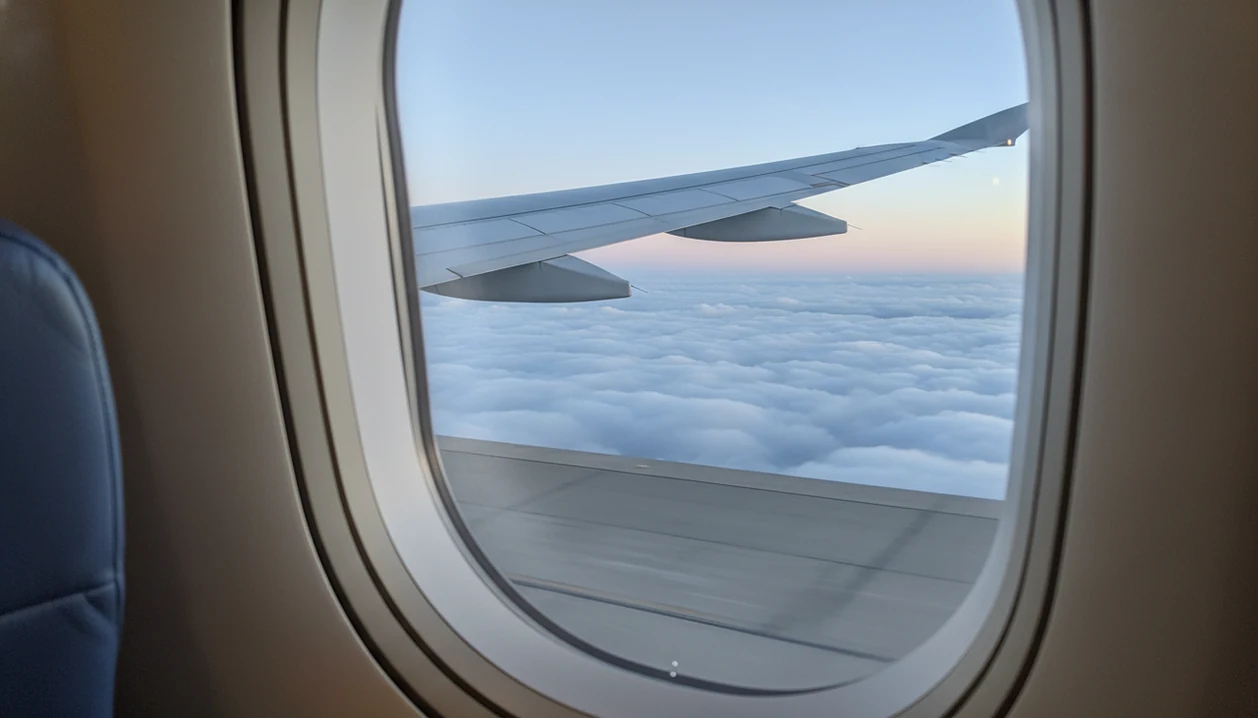
Takeoff anxiety is usually a reaction to normal takeoff sensations: engine thrust, acceleration, nose-up rotation, gear retraction, flap changes, banking, and body feelings that can mimic panic. The first minutes feel intense because your brain has less control, more noise, and more motion cues to interpret at once.
Definition: Takeoff anxiety is a fear-of-flying spike that happens before and during the aircraft’s takeoff roll, liftoff, and initial climb.
TL;DR
- Most scary takeoff plane sensations are normal parts of getting airborne, not signs that the aircraft is struggling.
- The loud roar, sudden acceleration, clunks, sinking feeling, and banking turns each have routine aviation explanations.
- A minute-by-minute coping plan works better than vague reassurance because it gives your brain a job during the most intense phase.
Takeoff anxiety at a glance: normal sounds, feelings, and fears
Takeoff anxiety covers the whole early-flight window: pushback and taxi anticipation, takeoff roll, rotation, liftoff, gear retraction, flap changes, and initial climb. The fear often attaches to one question: “Is this normal, or is something wrong?”
Common fears include the plane working too hard, falling after liftoff, banking too much, or you panicking in your seat. Population estimates vary by definition: one U.S. survey reported a smaller clinical fear-of-flying group, while Cleveland Clinic says aerophobia affects more than 25 million U.S. adults source.
That’s a lot of sweaty boarding passes.
This guide is practical education, not a medical diagnosis. Use it to name what the aircraft is doing and to build your next five minutes. If your fear causes severe avoidance, panic, or trauma symptoms, bring that pattern to a clinician.
Five takeoff plane sensations nervous flyers should know
Most takeoff plane sensations feel dramatic because the aircraft is changing speed, shape, and angle quickly. These five facts are the ones I’d put in your Notes app before boarding group 4 gets called.
- Acceleration feels forceful because engines are producing high thrust. Your body may press into the seat, especially during the first seconds of the roll.
- The nose-up angle after rotation can feel steep even when it is routine. Your inner ear is not a flight instrument.
- Landing gear retraction can create clunks, thumps, and mechanical sounds. Those noises often come from wheels, struts, and gear doors moving.
- A brief sinking or light feeling can happen when flaps change or climb rate adjusts. It does not automatically mean the plane is dropping.
- Banking after takeoff is a normal way to follow departure routes. A turn near the airport is usually planned, not improvised.
For more sound-by-sound context, the related guide to normal airplane sounds can help you label what you hear.
Takeoff anxiety in the brain and body
Takeoff anxiety works through threat misinterpretation: the brain treats unfamiliar sound, speed, tilt, and loss of control as danger cues, even when the aircraft is behaving normally.
Adrenaline then adds its own noise. You may notice a racing heart, stomach drops, shaky legs, tight chest, dry mouth, or derealization, that floaty “this can’t be real” feeling. The fear loop is simple and annoying: sensation, catastrophic thought, body alarm, scanning for more danger.
Knowing flying is statistically safe may help your thinking brain, but it may not instantly calm your nervous system. That’s why a fact alone can feel weak when the engines spool for takeoff.
Fear of flying is often treated as a situational phobia, and it can respond to CBT and exposure. The most common medically supported way to reduce phobic avoidance is gradual exposure combined with skills that change catastrophic interpretation.
Before takeoff: set up your anxiety plan
Set up your takeoff anxiety plan before boarding, while decisions are still easy. The goal is not to feel fearless at the gate; it is to remove tiny problems that become huge when the engines start.
- Choose one coping note before you board. Write a short script such as, “Noise and acceleration are expected; my job is feet down, slow exhale, label the phase.” Do not wait until engine spool to negotiate with panic.
- Download what you need early. Save your boarding pass, calming audio, takeoff notes, and any guides before airplane mode, bad Wi-Fi, or a dying battery becomes the new emergency.
- Tell your companion what helps. Ask for simple support: quiet reassurance, a hand squeeze, or distraction. Also name what makes it worse, like repeated “Are you okay?” checks or dramatic weather talk.
- Pick a seat strategy. Choose over-wing if motion bothers you, window if visibility helps, or aisle if feeling trapped is the main trigger.
- Protect your body alarm. Skip last-minute caffeine or doom-scrolling if they reliably turn normal adrenaline into a five-alarm fire.
Takeoff anxiety plan for the first 10 minutes
Use takeoff anxiety like a timed drill, not a debate with your brain. Make the plan boring on purpose, then follow it even if your anxiety complains.
Do not wait until the engines spool to invent the plan. Save the steps in your phone or write them on a card before boarding, when your brain is still easier to coach.
- Name expectations before taxi. Write: “I expect engine noise, acceleration, nose-up rotation, gear sounds, flap changes, and a turn.”
- Plant your feet before the roll. Press both soles down, soften your shoulders, and unclench your jaw.
- Breathe slowly during acceleration. Aim for longer exhales, not zero anxiety.
- Label each sound and feeling. Say, “Thrust,” “rotation,” “gear,” or “flaps,” instead of “danger.”
- Ground after liftoff. Count five cabin objects, feel the armrest, and look at one fixed point.
- Reset after gear and flap changes. Don’t check for danger. Return to your one small job for your body.
If your headphones are tangled at the bottom of your bag, skip them. Feet first.
Common mistakes that make takeoff anxiety worse
The biggest takeoff anxiety mistakes are coping moves that look useful but keep your brain in emergency mode. You are not failing; you are just giving panic too many jobs.
Try replacing the usual reflexes with a smaller, repeatable sequence:
- Label a sound once. Say “gear,” “flaps,” “thrust,” or “turn,” then stop auditing the cabin like you were hired by maintenance.
- Exhale before you chase calm. Holding your breath while demanding instant peace tells your body something urgent is happening. Aim for one longer out-breath, then another.
- Save statistics for before or after takeoff. Mid-roll is a bad time to cross-examine panic with safety data. Use your prepared phrase instead: “This is the takeoff sequence.”
- Practice before flight day. Listen to takeoff audio, read the timeline, or rehearse the first 10 minutes at home so the plan is familiar when the runway appears.
- Treat one rough takeoff as data, not a verdict. A hard flight means you had a hard flight. It does not prove you are unable to fly again.
The goal is not perfect calm. It is fewer panic rehearsals.
Fear of takeoff triggers by minute: what the plane is doing
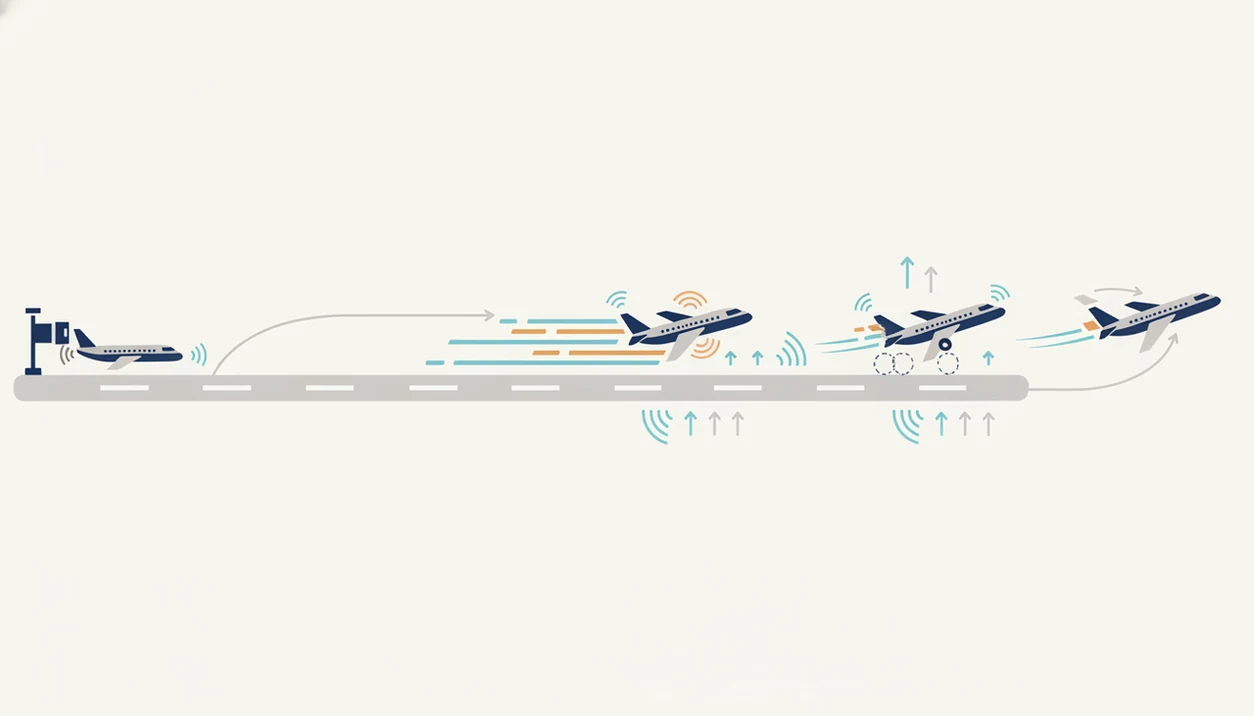
“What is the plane doing during takeoff?” It is increasing thrust, accelerating along the runway, rotating nose-up, lifting off, retracting gear, adjusting flaps, and climbing along a planned route.
The sequence also matches basic pilot-training descriptions of takeoff, climb configuration, and aircraft control changes in the FAA’s Pilot’s Handbook of Aeronautical Knowledge source.
Takeoff roll and engine roar
During lineup and engine spool-up, rising noise means engines are being set for takeoff thrust. During the roll, acceleration and runway vibration are expected. Wheels bumping along the runway can feel rougher than the cabin looks.
Rotation, liftoff, and gear retraction
At rotation, the nose lifts and your body may feel pressed back. After liftoff, landing gear retracts to reduce drag, which can cause clunks or thuds.
Flap changes, banking, and climb noise
During climb, thrust, flap settings, and pitch may change. That can create shifts in sound and body sensation. The full pattern of airplane engine noise changes is easier to tolerate once you know the sequence.
Takeoff anxiety myths about noise, sinking, and banking
Takeoff myths usually turn normal aircraft actions into emergencies. Here are the ones I hear most from nervous flyers.
| Myth | More accurate explanation |
|---|---|
| “A steep climb means the pilot is being risky.” | Routine climb angles can feel steep from a passenger seat, especially without a horizon reference. |
| “A sinking feeling means the plane is falling.” | Configuration changes, acceleration, and climb adjustments can create a light or dropping sensation. |
| “A clunk means something broke.” | Landing gear movement and gear doors commonly make mechanical sounds after liftoff. |
| “Banking after takeoff means loss of control.” | Turns after takeoff are part of departure procedures and air traffic routing. |
| “Medication is the only real solution.” | Education, CBT, and exposure can build longer-term tolerance of takeoff sensations. |
A good fear-of-flying resource should explain causes, treatments, coping strategies, and tools for nervous flyers, not just tell you to calm down.
CBT and exposure help for fear of takeoff and flying
CBT is a leading treatment for specific phobias, including situational phobias such as flying. A meta-analysis of 41 randomized controlled trials found CBT effective for specific phobias, with large effect sizes source.
Exposure means gradual practice with feared cues rather than avoidance. For takeoff, that might start with reading a takeoff timeline, listening to engine audio, watching cockpit explanations, visiting an airport, then taking a short flight with a panic plan.
Safety statistics help some people. However, they do not replace behavioral practice because the brain learns safety through repeated corrective experience. Clinicians typically recommend CBT or exposure-based therapy when fear causes avoidance or major distress.
Tools like Fear of Flying Guide, SOAR, and Fearless Flyer can support practice, but severe panic, trauma history, or avoidance that disrupts work or family life deserves professional help.
When to seek professional help for fear of takeoff
Seek professional help when fear of takeoff repeatedly blocks necessary travel, causes severe panic, or makes your life smaller. Self-help can educate and prepare you, but it is not an emergency medical assessment.
A clinician can help separate phobia, panic, trauma responses, health anxiety, medication concerns, and other factors that may need a different plan. Be especially careful if your fear connects to a past traumatic event, if you have fainted, if you get chest pain, or if you are unsure how prescribed or over-the-counter medication affects you when flying.
- Tell your primary care clinician or therapist what happens. Include when the panic starts, whether you avoid flights, and any physical symptoms that worry you.
- Ask about CBT, exposure therapy, or phobia-focused treatment. You want practice with takeoff cues, not just general reassurance.
- Review medication questions before travel. Do not improvise with sedatives, alcohol, or new combinations at the gate.
- Use cabin crew during the flight if symptoms feel unmanageable. A quiet, direct “I’m having a panic episode and need help” is enough.
Takeoff anxiety safety facts for nervous flyers
Takeoff is not risk-free, but modern airline takeoffs are standardized, trained, monitored, and repeated many times daily. Use safety facts to reduce uncertainty, not to shame yourself out of fear.
- National Safety Council data estimates lifetime odds of dying as an airplane or space passenger at about 1 in 205,552, versus 1 in 93 for a motor vehicle crash. source.
- IATA reported 37 million flights worldwide in 2023 and one fatal accident involving a large commercial passenger jet source.
- Statistics can calm the thinking brain, but adrenaline may still surge during engine thrust.
- Aviation procedures do not rely on one person “winging it.” Checklists, training, air traffic control, and aircraft systems all matter.
- Passenger sensations are poor danger detectors. A loud cabin, a banking turn, or a flexing wing outside the window can feel alarming while still being routine.
If wing movement is one of your triggers, read why why airplane wings bend before you open the airline app.
Limitations
Self-help can make takeoff more manageable, but it has limits. Be honest about what your body is doing and what support you need.
- No single breathing trick, mantra, seat choice, or fact works for every nervous flyer.
- Severe panic, trauma, OCD, health anxiety, or claustrophobia may need professional assessment.
- Medication may help some people short term, but it does not teach the brain that takeoff sensations are safe.
- Avoidance can make takeoff fear stronger over time because the brain never gets corrective experience.
- Online education cannot evaluate chest pain, fainting, medication reactions, or other medical symptoms during travel.
- Safety statistics do not remove all risk and should never be used to mock someone for feeling afraid.
- If you keep texting “I can’t do this” from the gate, build a bigger plan than willpower.
FearOfFlying.com can be one part of that plan, especially if you’re trying to overcome fear of flying with education plus repeated practice.
FAQ
Why is takeoff so scary?
Takeoff is scary for many people because it combines loud noise, fast acceleration, body pressure, vibration, and low perceived control. The brain may read those normal cues as danger before the thinking brain catches up.
Is takeoff the most dangerous part of a flight?
Takeoff is one phase where pilots use careful procedures, but that does not mean passengers are in unusual danger on a normal airline flight. Modern commercial takeoffs are trained, checklist-based, and closely monitored.
Why do airplane engines get quieter after takeoff?
Airplane engines may sound quieter after takeoff because thrust settings can change once the aircraft is safely climbing. A change in engine noise is usually a normal climb power adjustment.
Why does takeoff feel so steep?
Takeoff feels steep because the aircraft rotates nose-up and your body has few visual references for the real angle. The sensation can feel more dramatic than the actual climb path.
What causes the sinking feeling after takeoff?
A sinking feeling after takeoff can come from flap changes, acceleration, climb adjustments, or your inner ear interpreting motion. It does not automatically mean the airplane is falling.
Are clunks and thumps during takeoff normal?
Clunks and thumps during takeoff are often normal sounds from landing gear movement, gear doors, or other mechanical systems. If something needs attention, the flight crew has procedures for it.
Where should anxious flyers sit during takeoff?
Anxious flyers often prefer seats over the wing because motion can feel less pronounced there. A window seat helps some people see what is happening, while an aisle seat helps others feel less trapped.
Can panic during takeoff stop a flight?
Panic during takeoff feels dangerous, but it is usually a body alarm rather than a flight emergency. Tell cabin crew if you need help, and seek professional support if panic repeatedly prevents travel.