
Fear Of Flying Suddenly After Years Of Easy Travel
Fear of flying suddenly can happen when stress, panic sensations, a rough flight, new responsibilities, or health worries make your brain start treating flying as a threat, even if you used to travel comfortably. It does not automatically mean flying has become more dangerous or that you have a lifelong problem.
Definition: A sudden fear of flying is a new or sharply intensified fear response to air travel in someone who previously flew with little or manageable anxiety.
TL;DR
- A new fear of flying can begin in adulthood after years of easy travel.
- Common drivers include stress, burnout, panic symptoms, turbulence, parenting, health anxiety, and loss of control.
- Short-term coping tools can help with an upcoming flight, but longer-term improvement usually comes from education, CBT-style skills, and gradual exposure.
Fear Of Flying Suddenly: A Plain-English Definition
A sudden fear of flying is a new or sharply intensified fear response to air travel in someone who previously flew with little or manageable anxiety. You may have flown for work, holidays, or family visits for years, then one booking page makes your stomach drop.
People describe it as being suddenly scared of flying, having a new fear of flying, or feeling panicky about booking before they even choose a seat. The fear can show up as a racing heart, sweating, breathlessness, nausea, a trapped feeling, or thoughts like, “I have to get off.”
That fear feels convincing.
This page explains common patterns, not a diagnosis. If you’re trying to sort out the broader fear of flying causes, treat this as a map of possibilities, not a label you have to keep.
Five Facts About Being Suddenly Scared Of Flying
- Fear of flying can start suddenly in adulthood, even after years of ordinary flights, packed overhead bins, and calm arrivals.
- Stress, burnout, grief, or another anxiety problem can make flying feel newly unsafe; a 2023 peer-reviewed study found higher stress was strongly associated with more severe aviophobia symptoms source.
- Symptoms can be physical, mental, and behavioral: palpitations, sweating, catastrophic thoughts, route-checking, seat-changing, reassurance texts, or avoiding the airline app.
- CBT, gradual exposure, virtual reality exposure, and structured fear-of-flying courses help many people retrain the fear response over time.
- Medication may reduce short-term symptoms for some flyers, but it is not a standalone cure and should be discussed with a clinician.
Cleveland Clinic estimates that aerophobia affects more than 25 million U.S. adults source. So if this started in you, you are not an odd case.
How Sudden Fear Of Flying Works In The Nervous System
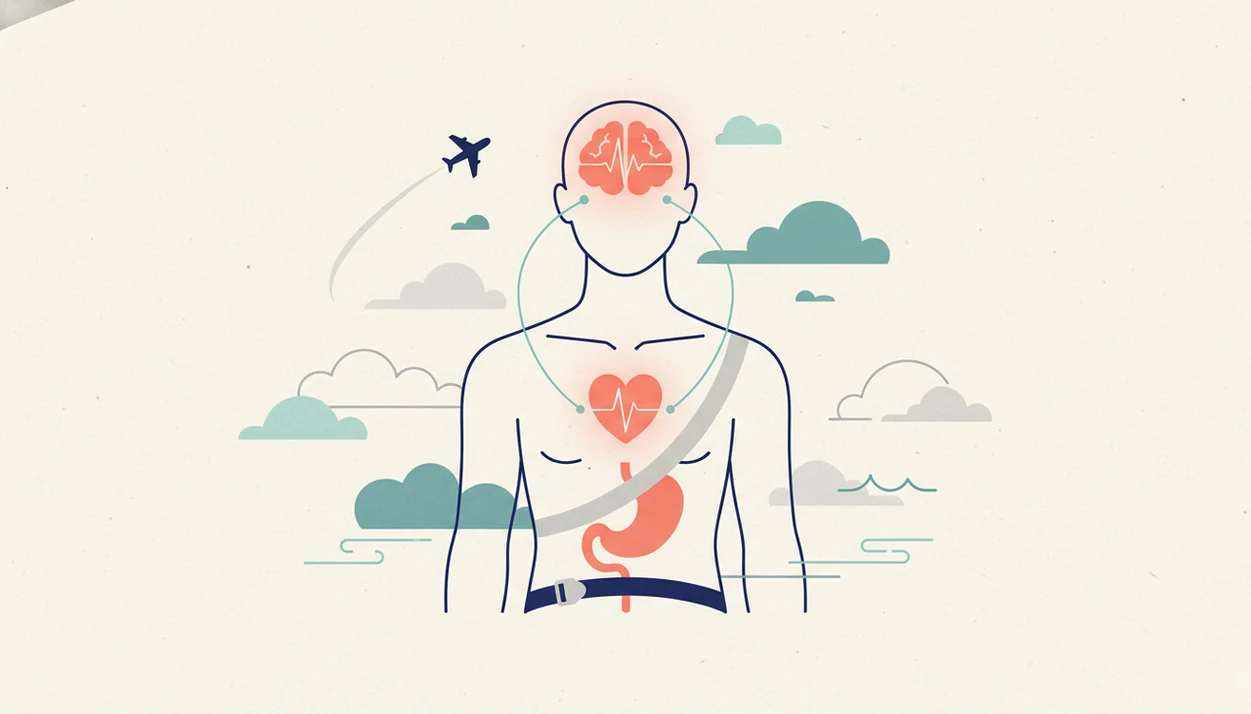
Sudden flight fear works when the brain’s threat detection system labels flying as unsafe before logic catches up. The amygdala can react to cues like altitude, engine noise, waiting, or cabin confinement, then the body follows with fight-or-flight chemistry.
That chemistry is uncomfortable, but it is not proof of danger. A pounding heart, dry mouth, trembling legs, and tight breathing are common alarm responses. They can happen while you’re holding a boarding pass in Apple Wallet and also knowing, rationally, that the plane is operating normally.
Flying contains several fear amplifiers: enclosed space, height, turbulence, airport delays, and limited control. Stress priming matters too. After months of poor sleep or work pressure, your panic threshold may be lower than usual.
Sometimes there is no obvious trigger. Your body may simply reach the gate already loaded, like a phone sitting at 9% before boarding starts.
Common Causes Of A New Fear Of Flying
“Why am I suddenly scared of flying when I used to be fine?” The usual answer is not one single cause, but a stack of stress, sensations, memories, and meaning.
Recent burnout, grief, work pressure, sleep deprivation, or caring responsibilities can make the nervous system jumpy. A panic attack before boarding, or during one flight, can teach the brain to fear the next flight. One rough turbulence experience or hard landing can also become a mental bookmark.
Clouds flash past the window, the aircraft drops for half a second, and your stomach remembers it for months.
Other triggers include becoming a parent, health worries, claustrophobia, fear of losing control, fear of being trapped, or news videos that replay in your mind. Some people fear crashing. Others fear panicking in public. If your main question is why am I scared of flying, start with what your brain says will happen next.
Suddenly Scared Of Flying Examples People Recognize
Sudden flight anxiety often fits a recognizable pattern, even when the person says, “This came from nowhere.” These examples are not diagnoses. They are starting points for your next five minutes of sorting.
The Burned-Out Frequent Flyer
The burned-out frequent flyer has taken the 6:40 a.m. route many times, then feels morning nausea before the taxi arrives. The flight is routine; the body is not.
The New Parent Flyer
The new parent flyer thinks more about risk, responsibility, and “what if something happens to me?” Planning now includes another person’s future.
The Post-Turbulence Flyer
The post-turbulence flyer scans wing movement, cloud layers, and seatbelt signs after one frightening ride. A specific fear of turbulence can become the main doorway into flying anxiety.
The panic-symptom flyer fears being stuck in the cabin with no quick exit. The health-worried flyer misreads normal adrenaline as a heart or breathing emergency.
Fear Of Flying Suddenly Versus General Travel Anxiety
Fear of flying suddenly is different from ordinary travel stress, but it can overlap with several anxiety patterns. Many people are not afraid of one thing. They are afraid of crashing, panicking, vomiting, fainting, being judged, or being unable to leave.
| Pattern | What it feels like | What helps |
|---|---|---|
| Fear of flying | “The plane is unsafe” or “I can’t handle takeoff” | Aviation education, CBT skills, gradual exposure |
| General travel stress | Rushing, packing, delays, documents | Checklists, earlier arrival, simpler itinerary |
| Claustrophobia | “I’m trapped in this cabin” | Seat planning, grounding, exit-focused exposure |
| Panic attacks | “My body is out of control” | Panic education, breathing practice, interoceptive exposure |
| Health anxiety | “This sensation means something is wrong” | Symptom education, clinician guidance when needed |
| Fear of heights | Distress about altitude or looking down | Window choices, visual exposure, coping statements |
For panic-driven flyers, learning about flight anxiety symptoms can reduce the urge to treat every sensation as an emergency.
When A New Fear Of Flying Applies And When It Does Not
A new fear of flying applies when you previously flew comfortably, or with mild nerves, and now feel intense fear around air travel. It may start at booking, at the airport, during boarding, at takeoff, in turbulence, or when the cabin door closes with a thud.
It also applies when you feel trapped in your seat, repeatedly check aircraft type, or text someone “I can’t do this” before your group is called. Those behaviors are common safety-seeking moves, but they can grow quickly.
This page does not replace urgent medical care. Chest pain, fainting, severe breathing symptoms, or new neurological symptoms need medical assessment.
It also does not diagnose a phobia, panic disorder, PTSD, or health anxiety. Clinicians typically recommend professional support when avoidance is growing, distress is severe, or anxiety is spilling into daily life.
Short-Term Help For Fear Of Flying Suddenly Before A Trip
Short-term help means building a flight-day plan, not trying to cure the fear overnight. Make the plan boring on purpose, so you don’t have to invent coping skills at the gate.
- Learn the basics about turbulence, takeoff sounds, and normal aircraft movement before you open the airline app.
- Choose practical supports such as seat location, flight timing, airport arrival window, and a support person if possible.
- Write an if-then script in the Notes app: “If my heart races, then I name it as adrenaline and slow my exhale.”
- Practice small exposure steps: view the booking page, visit the airport, watch boarding videos, then try a short flight if feasible.
- Review medication questions with a clinician, especially if you use alcohol, sedatives, or other prescriptions.
A good nervous flyer guide should explain causes, treatments, coping strategies, and tools for nervous flyers, not sell one calming trick as the whole answer. Tools like Fear of Flying Guide can help you organize those steps, but symptom management is not the same as retraining the fear.
Long-Term Treatment For A New Fear Of Flying
Long-term treatment focuses on retraining what your brain predicts will happen during flight cues. The most common medically supported way to reduce phobic avoidance is CBT combined with gradual exposure, because it targets both catastrophic predictions and the habit of escape. Exposure-based therapy is a well-established CBT approach for phobias because it helps people stay with feared cues long enough for new learning to occur source.
CBT helps you identify thoughts like “turbulence means danger” or “panic will make me lose control.” It also spots safety behaviors, such as constant reassurance seeking or only flying after hours of checking. If that sounds familiar, reassurance seeking flight anxiety is worth understanding.
Gradual exposure teaches the brain that feared cues can be tolerated. That may include airport visits, recorded aircraft sounds, virtual reality exposure, airline fear-of-flying courses, or supported real flights. Virtual reality exposure has also been studied for specific phobias, including fear of flying, though availability and results vary by program source. Avoidance feels protective in the moment, but it blocks corrective learning.
Individual results vary. Some people need CBT plus exposure. Others add clinician-guided medication, a course, or work on panic sensations first.
When To Seek Professional Help For A New Fear Of Flying
Seek professional help when the fear is recurring, narrowing your travel choices, or linked with symptoms that feel medically unusual. Treat possible medical red flags as health issues first, not as “just anxiety.”
- Get urgent care if you have chest pain, fainting, severe breathing trouble, or new neurological symptoms such as weakness, confusion, facial drooping, or trouble speaking.
- Contact a clinician if panic attacks keep happening, you are cancelling trips, or you feel your world getting smaller around airports and aircraft.
- Review medication questions with a prescriber who knows your health history, current prescriptions, alcohol use, sleep issues, and any past reactions to sedatives or anxiety medication.
- Consider trauma-informed support if the fear began after an accident, bereavement, emergency landing, severe turbulence, or another frightening flight experience.
- Use online guidance for education and planning, not diagnosis, medication decisions, or emergency judgment in the moment.
The point is not to make flying feel more serious than it is. It is to separate ordinary fear-learning from situations where your body, history, or safety needs deserve a real person’s assessment.
Limitations
Online guidance can help you understand patterns, but it cannot assess your personal medical or mental health history.
- Online guides cannot provide a personalized clinical assessment.
- Severe anxiety, panic, trauma symptoms, or major avoidance may need qualified professional support.
- Not every sudden fear has a clear trigger, even after careful reflection.
- CBT, exposure, VR, and courses help many people, but they do not work identically for everyone.
- Medication can have side effects, interaction risks, and limited value for retraining fear by itself.
- Prevalence estimates vary widely; research summaries place fear of flying anywhere from a small minority to a much broader group, depending on definitions.
- Commercial aviation safety facts reassure some people, but they may not resolve panic-based fear.
A practical safety check matters: if symptoms are severe, new, or feel medically unusual, treat them as health symptoms first and ask a clinician.
FearOfFlying.com can support education and planning, but a clinician is the right person for severe symptoms, medication decisions, or trauma-linked fear.
FAQ
Why am I suddenly scared of flying?
You may be suddenly scared of flying because stress, panic sensations, turbulence, parenting, health worries, or loss of control made flying feel newly threatening. The trigger is not always obvious.
Can fear of flying start later in adulthood?
Yes. Fear of flying can start later in adulthood after years of comfortable travel, especially after stress, panic, a rough flight, or a major life change.
Is sudden flight anxiety common?
Sudden flight anxiety is common enough that major health resources discuss it, but prevalence estimates vary because studies define fear differently. Cleveland Clinic estimates more than 25 million U.S. adults are affected source.
Can stress cause fear of flying?
Yes. Stress and burnout can lower your panic threshold, so normal flight cues feel more threatening than they used to.
Can turbulence trigger flight anxiety?
Yes. One frightening turbulence experience can become linked with future flights, causing you to scan for danger even during normal aircraft movement.
Will avoiding flights make my fear worse?
Avoidance can maintain fear because your brain never learns that flight cues can be tolerated. Forcing yourself to fly without support can also backfire, so use a planned exposure approach.
What helps sudden fear of flying before a trip?
Education, slow breathing, grounding, seat and timing choices, CBT-style coping statements, gradual exposure, and structured courses can help. Fear of Flying Guide is one option for organizing a practical plan.
Should I take medication to fly?
Medication decisions should be made with a clinician who knows your health history and other medicines. Medication may reduce short-term symptoms, but it does not retrain fear by itself.